Future stars: Edward Theuns

Theuns at the Clásica de Almería (Cor Vos)

The cobbled classics are back underway and with the likes of Fabian Cancellara and Tom Boonen coming towards the end of their careers, the focus naturally turns towards youth.

This season we are spoiled for choice with young cobbled talents making their breakthrough. AG2R have Alexis Gougeard, while at LottoNL-Jumbo there’s Tom Van Asbroeck and Mike Teunissen. Meanwhile Etixx-QuickStep can look to Yves Lampaert in the coming years.

We saw two others at Wednesday’s Dwars door Vlaanderen. In the front group there was 23 year-old Edward Theuns, sprinting to second place behind his Topsport Vlaanderen teammate Jelle Wallays to cap a memorable day for the Belgian squad. Just under a minute and a half later came 21 year-old Tiesj Benoot of Lotto-Soudal, winning the sprint for sixth place after leading the chase on behalf of his teammate Jens Debusschere for the best part of 40km.

The two men from Gent will be riding the Ronde van Vlaanderen next week, with Benoot riding today’s E3 Harelbeke and Theuns joint-leader at Sunday’s Gent-Wevelgem. Here’s a look at what Theuns has done in the past, and what is possible for the future. A piece about Benoot will follow later.

During his time at KSV Deerlijk-Gaverzicht

Theuns started out at local club Koninklijke Gent Velosport, combining cycling with playing football for KFC Merelbeke. After some strong results he moved to junior team KSV Deerlijk-Gaverzicht for 2009.

The most notable alumni of the team is the legendary Briek Schotte, winner of two World Championships, two Paris-Roubaix and two editions of the Ronde van Vlaanderen. Others that have passed through the ranks include Marcel Kint, Johan Bruyneel, Patrick Lefevere, Nico Eeckhout and current Etixx-QuickStep rider Julien Vermote.

Back to Theuns and he won his first race (the junior version of the Beverbeek Classic), taking seven other wins before changing team in 2010. The destination was VL Technics Abutriek, which would be his home for the next four seasons.

Combining racing with university studies, Theuns was successful straight away, winning a bunch sprint in the Triptyque des Monts et Châteaux stage race. Among the men he beat were now-familiar names like John Degenkolb, Taylor Phinney and Jetse Bol, all of whom were riding for much bigger development squads.

On the podium at the Triptyque des Monts er Châteaux
On the podium at the 2010 Triptyque des Monts er Châteaux

His second season was tougher, the only win coming in a smaller race at the end of the season. 2012 saw him participate in the Ronde van Vlaanderen espoirs for the first time as well as becoming the time trial champion of East Flanders. Later in the year he finished in the top ten of Paris-Tours espoirs.

The final year before turning professional was his best yet with consistent performances throughout the year. Spring saw him win the time trial at Triptyque des Monts et Châteaux before finishing sixth at Liège – Bastogne – Liège espoirs and then taking the mountains jersey at the prestigious stage race the Giro della Regione Friuli-Venezia Giulia.

A podium spot in the Belgian U23 TT Championships followed, before finshing eighth at the road race. His reputation as a strong time trialist was further enhanced by a win in the prologue of the Ronde van de Provincie Ost-Vlaanderen. Theuns rounded out his time as an amateur with a call-up to Belgium’s Worlds team and another eighth place Paris-Tours espoirs.

ProContinental team Topsport Vlaanderen came calling, and last year Theuns turned professional. He had a solid start at his new team, taking 21st at Omloop Het Nieuwsblad, sprinting to third in the Handzame Classic and finishing Paris-Roubaix.

His maiden pro victory (gpzottegem.be)

August was the best month of his first year as a professional though – he outsprinted Marcel Kittel to take third on stage two at the Arctic Race of Norway. Days later his first professional win came at the GP Stad Zottegem, as his team played the finale to perfection for Theuns to win a two-man sprint against Wanty’s Tim De Troyer.

2015 has seen him step up a gear, and three months into the season Theuns leads the UCI Europe Tour by 89 points. He started the season in France, taking seventh at the hilly GP la Marseilaise before consistent riding at the Etoile de Bessèges saw him take the points jersey fter four top ten finishes. Fifth in the sprint at the Clásica de Almería followed, and then a tough time in the mountains at the Vuelta a Andalucía (along with two top ten finishes) set him up for the start of the Belgian season.

Finishing 14th at both Omloop Het Nieuwsblad and Kuurne-Brussel-Kuurne were decent results, especially given how tough the former was. It wouldn’t be much longer until better results came though, winning the sprint from a five man lead group at the Ronde van Drenthe after riding on the front for most of the final kilometre.

The next day he was fourth at the Dwars door Drenthe, before taking fifth place at the weather-affected Ronde van Zeeland Seaports – a race which saw just twenty riders finish. We all know what came next, but we don’t yet know what is to come. Sunday sees the chance to measure himself against some of the best sprinters in the world as Kristoff, Sagan, Cavendish, Degenkolb and Greipel fight it out at Gent-Wevelgem. Beyond that, the big challenges of the Ronde van Vlaanderen and Paris-Roubaix..

Taking the win at the Ronde van Drenthe (Cor Vos)
Taking the win at the 2015 Ronde van Drenthe (Cor Vos)

Theuns has come to wider prominence on the cobbles, and that looks to be where his future targets lie. Theuns is a great all-rounder though – he is a strong sprinter, can time trial well and can get over hills too. In terms of style, Greg Van Avermaet seems a good comparison to make.

As is usually the case with talented Topsport Vlaanderen riders, a move to the WorldTour beckons. We have seen Kris Boeckmans, Sep Vanmarcke, Yves Lampaert and Tom Van Asbroeck all make the move in recent year, and with Theuns’ contract up at the end of the year it looks like he will follow.

You can follow Edward on Twitter here, and view his palmares here.
CIRC and the state of cycling in 2015

Finally, the time has come and the report we have all been waiting for has been released. At 228 pages in length it’s a bit of a slog, and with a great deal of emphasis on the past.

There’s talk of all the familiar faces – the tales of Hein, Lance and Pat are covered at length. We hear about the 1990s and the ‘period of containment’ that focused on limiting the health risks of doping rather than a policy focused on catching every wrongdoer.

Many pages are dedicated to failures in governance that occurred a decade or more ago, and there’s even a section walking us through the history of doping. We all knew how bad the past was – and now we have an official document to prove it. Almost as soon as it was released we saw a number of all-encompassing summaries of the report, including articles by the always great inrng, and Peloton magazine.

Rather than focus on the past though, I want to look at what it the report has to say about the current state of cycling, and what it could mean for the future. Here’s a look.


A turning point in anti-doping

With the cesspool of the 1990s behind us, and the Armstrong years already covered ad nauseum lets fast forward to 2006. The period from that year to 2008 is highlighted by CIRC as a turning point in the fight against doping. “Steady improvements and a growing willingness to combat doping at its roots” are cited.

It was indeed a period of change. At the UCI’s anti-doping unit with Lon Schattenberg (a man who shared the same ‘avoid scandals’ mindset as Verbruggen and McQuaid, notably writing letters to teams informing them of drug detection windows) left to be replaced by the Australian Anne Gripper. Other changes in personnel included the dismissal of a large number of doping control officers, described as receiving little training, prone to leaking information and often being close with teams.

Saunier Duval wielerteam 2008
Riccò & Piepoli both spoke to CIRC (Cor Vos, header image by Reuters)

With Gripper came a raft of changes. Targeted testing was brought in, while more and more out-of-competition tests were carried out. The Cycling Anti-Doping Foundation (CADF) was also introduced during her time at the UCI and funding for anti-doping was increased. An often unnoticed part of the fight – the introduction of post-race chaperones is also noted.

“UCI started to systematically use chaperones in 2008. However, it took some time for the chaperones to serve their purpose. Part of the reason for this, was due to sport-specific logistical obstacles (difficulty of spotting riders, packed finish area). By 2010 it was acknowledged that the chaperone-system was, in principle, working well.”


The biological passport

The biological passport (ABP) was brought in under Gripper’s watch in 2008 and has been hailed as a big advance in anti-doping. We have seen in the past that it isn’t a foolproof tool though, and the report tells us that there are deficiencies for riders to take advantage of – much like the 50% rule, it limits how much riders can dope, rather than eliminating doping altogether.

“In interviews with riders and athlete support personnel it appeared that the basic problem was that athletes would go to the limit of what is detectable and this has not changed. Furthermore, the incentive to try out substances that might give a performance enhancing effect, but are not on the prohibited list is still very present in the peloton.”

Meanwhile there are other problems. The report has found that riders are able to fine-tune doping programmes using ADAMS software – an unintended consequence but a disturbing finding. It is noted that riders can use the software to “assess and monitor their blood values and make sure that they stay within pre-defined parameters through fine-tuning.”

Further criticisms of the passport include the lengthy procedures involved in sanctioning riders (the Menchov and Kreuziger cases are cited), and the “conservative approach” of some of the ABP experts in wanting to pursue ‘doping scenarios’ thanks to the difficulty of analysing nuances in data. While we have seen dopers hide behind excuses like training at altitude or dehydration before, but they can be legitimate reasons for odd blood values. It’s a fact that only makes the job harder for the experts.


So how clean is cycling today?

There were varying responses in the report, and it seems that riders know about as much as we do. According to the CIRC, a common response when asked about how teams was “probably 3 or 4 were clean, 3 or 4 were doping, and the rest were a “don’t know”.”

One rider was asked about cleanliness levels in the peloton and put the figure at 90% but said he thought that “there was little orchestrated team doping” anymore. Another rider felt that 20% were doping, while many stated they just didn’t know who was clean and who was not. Of course, we don’t know who these riders are, so we have little idea of which figure is closer to the mark. And that’s before we get to the question of what riders view as ‘doping’.

Vinokourov was another contributor (Cor Vos)
Astana boss Alexandre Vinokourov was another contributor (Cor Vos)

Meanwhile new methods of doping such as ozone therapy and AICAR are brought up, while CIRC also includes a staggeringly long list of substances that riders are currently using, or have been during the past few years. There’s even a small section dedicated to the possibility of mechanical doping, something that has been raised several times in the past.

These answers aren’t surprising, but they aren’t heartening either. None of us can safely say which number is more accurate, but we do know that the days of massive gains from doping are gone. The report echoes this, saying that “10-15% gains have become a thing of the past.” Instead, performances are enhanced perhaps 3-5% by new techniques such as microdosing.

So the playing field still isn’t a level one, but going by these figures it’s more level than it used to be.


Loopholes

Despite the heartening numbers, more work still needs to be done, as CIRC notes a number of ways in which riders are still gaining an advantage. The problems with the ABP have been outlined above, but there are further loopholes for riders to take advantage of.

The no-testing window between 11pm and 6am is one. CIRC states that, “riders are confident that they can take a micro-dose of EPO in the evening because it will not show up by the time the doping control officers could arrive to test at 6am.” This is a difficult problem to solve though, with the human rights of riders factoring into the equation.

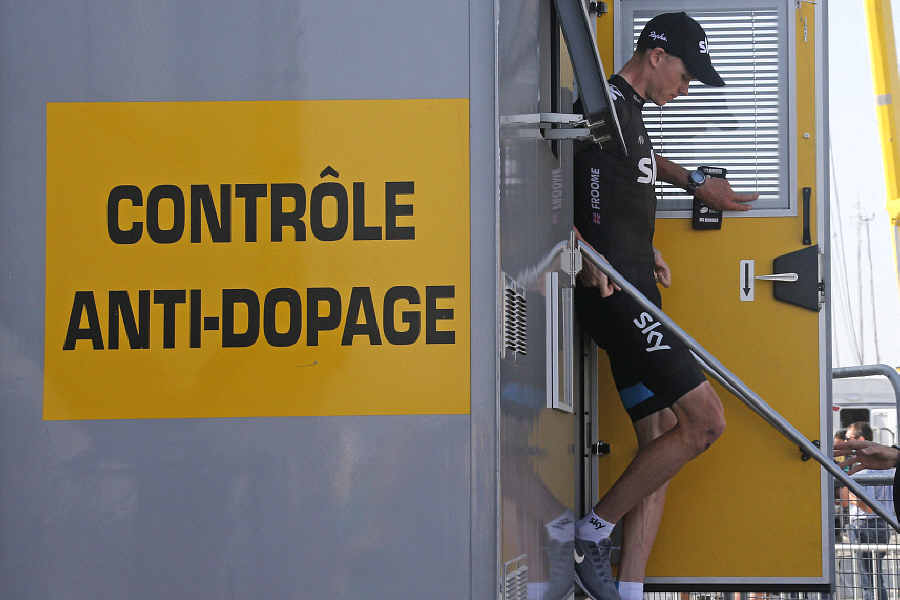
Chris Froome was another who spoke to CIRC (Reuters)
Chris Froome was the only named current rider who spoke to CIRC (Reuters)

Often a controversial topic, TUEs are another problem, with interviewees reporting that they are “systematically exploited by some teams and even used as part of performance enhancement programmes.” The abuse of corticoids and insulin in particular raise concern, while there was also a feeling that obtaining a TUE is too easy. One anonymous doctor told CIRC that corticoids were often used for weight loss as opposed to their stated function of pain relief.

Finally, concerns are raised regarding the use and abuse of substances not on WADA’s banned list. One rider talked of a ‘pill system’ he used, which involved him taking up to 30 pills a day, while also reporting the use of tranquilisers and anti-depressants on his team.

The report lists a various array of nutritional and homeopathic substances along with painkillers, caffeine tablets, Viagra and Cialis, with CIRC having been told that all were taken with the sole purpose of substance enhancement in mind. Just think back to the Kovalev brothers to get a glimpse of what this looks like.

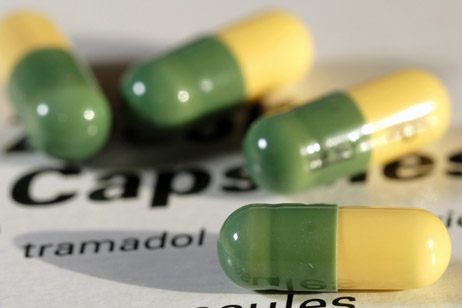
Tramadol use has also been in the news in the recent past. It cropped up again here, with interviewees of the opinion that if a rider needed to take it then they shouldn’t be racing. Similar sentiments were recorded regarding corticoids.

Tramadol (chm.bris.ac.uk)
Problem drug Tramadol (chm.bris.ac.uk)

Conclusion

So no revelations then, but a lot of information about what is going on in the peloton today. Or at least what is presumed to be going on – the lack of evidence and a reliance on hearsay is a problem. Proof is hard to come by though, and in this case we have to make the best of what we’ve been given.

There are some disappointments – look at the list of names and you only see 16 riders with Chris Froome the only non-retiree. Ten others have declined to be named, but Francesco Reda and Mauro Santambrogio are dead certs. 26 is still a very low number though, and the question of credibility comes up.

In any case, it’s less important to dwell on the individual stories than it is to think about what can be done in response to the report. While everything we have read might not be totally reliable, the raft of ideas that have been proposed seem, on the face of it, to be very useful.

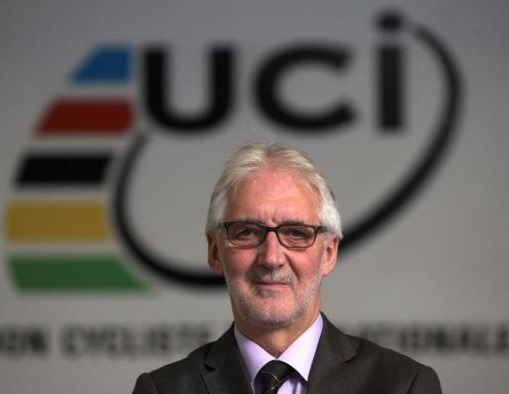
The old face of the UCI (Cor Vos)

At this stage they are somewhat vague but each idea is something the UCI needs to take notice of. There’s talk of intelligence sharing with governments as well as more intelligence gathering within CADF. On the testing side we read about re-testing samples and testing riders at night. Also mooted are sound ideas like a whistleblower desk, a review of the TUE process and improvements to the ABP.

If the UCI has changed – and both the commissioning of this report and the contents within point towards that being the case – then we can cross our fingers and hope that changes like these will be implemented. There’s still a long way to go, but things can get better.