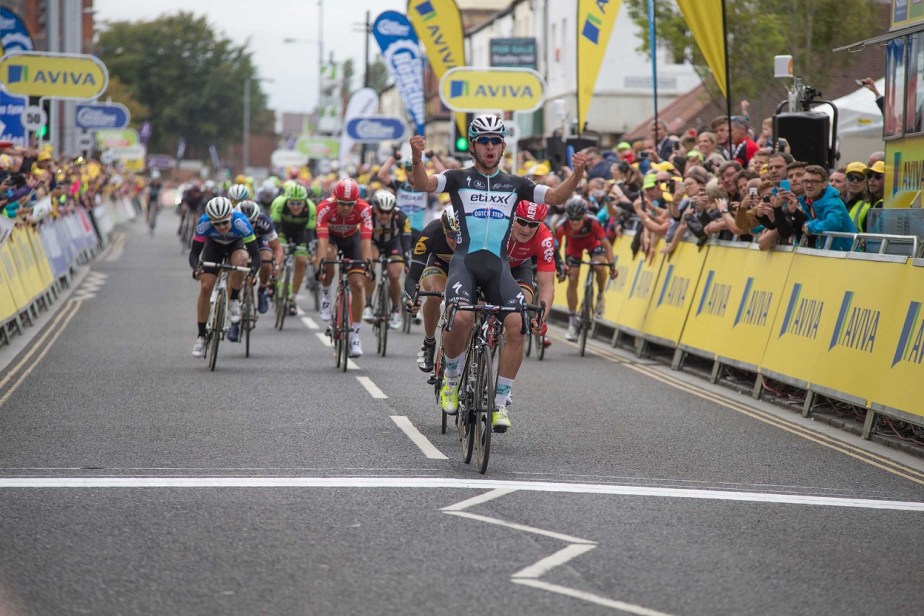
Etixx-QuickStep’s new sprint star Gaviria (Sweetspot)
Etixx-QuickStep’s stagiaire Fernando Gaviria made it two wins from four stages for the Belgian team, showing a great sense of timing to overhaul stage favourite André Greipel on a damp day in Blyth.
It was the Colombian’s fifth win of the season, the third since joining Etixx-QuickStep. Another two came at January’s Tour de San Luis, beating the man who helped him win today, Mark Cavendish.
“Cav put me into position ahead of him,” he said. “And when the sprint began I simply went for it and gave everything I had to win.”
The manner of Gaviria’s victory was impressive, as he came from a long way back in the sprint. Team Sky and Lotto-Soudal had done the lion’s share of the work in the final ten kilometres, with Etixx-QuickStep less prominent on the run-in as they had had Matteo Trentin in the main break of the day.
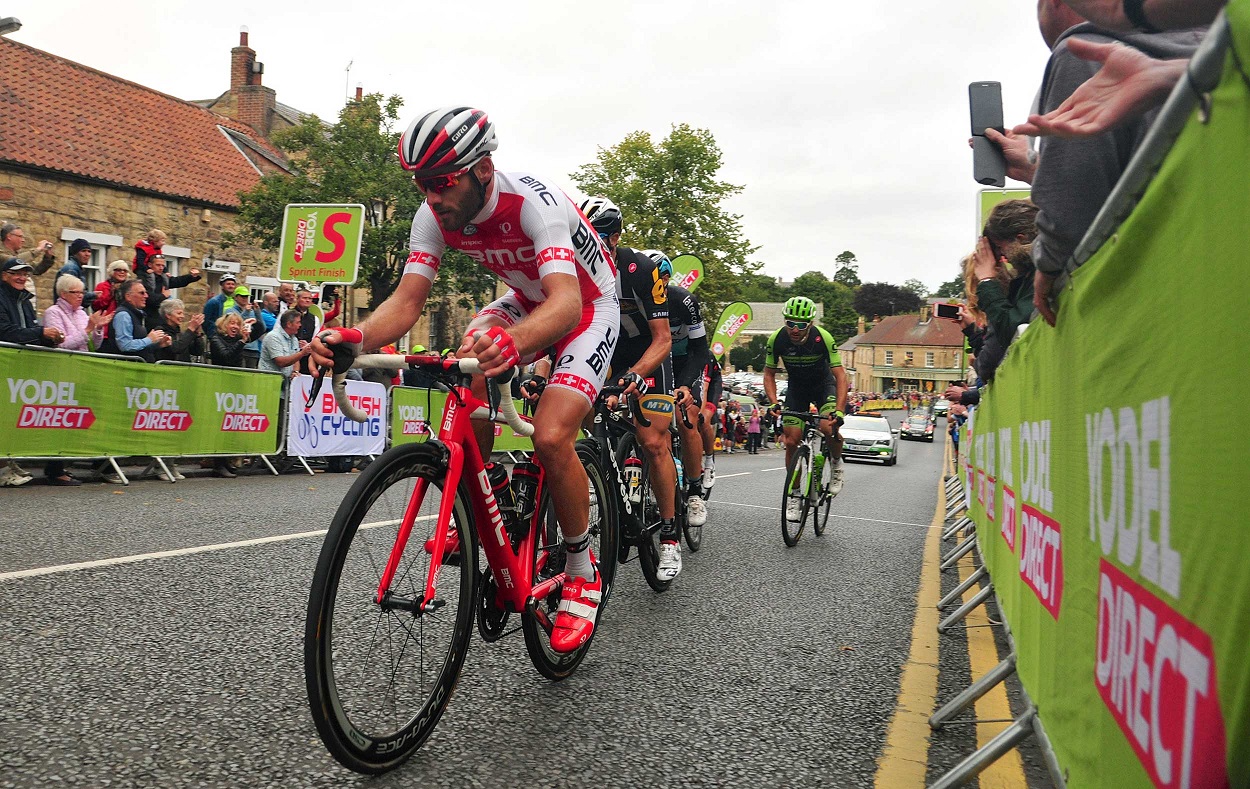
BMC’s Danilo Wyss leads the breakaway (Sweetspot)
Four-time Tour de France stage winner André Greipel (Lotto-Soudal) was the first to hit the front, and it looked as though Edvald Boasson Hagen (MTN-Qhubeka) would be his only competition.
Gaviria had other ideas though, and hopped into Boasson Hagen’s slipstream before speeding past on the outside to ease to victory.
After the stage, Etixx-QuickStep DS Brian Holm had high praise for his team’s new sprint star. “In the Czech Tour he was great. He was like Cav eight years ago,” he said. “He also has a twist of Sagan inside him. He’s fast, fearless and can climb a bit too.”
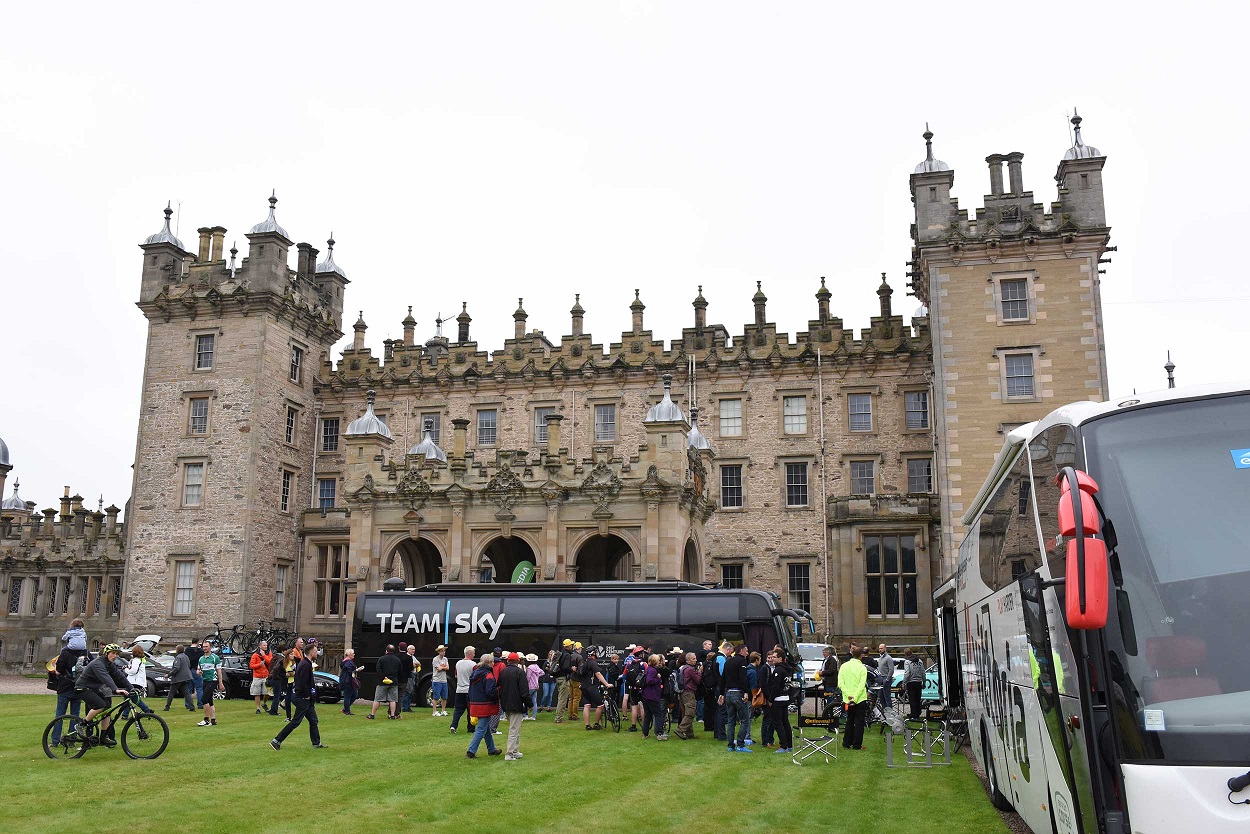
Elia Viviani of Team Sky took his second victory in three days at Kelso in the Scottish Borderlands, beating Movistar’s Juan José Lobato to the line in the shadow of Floors Castle. The win is Sky’s 200th victory since the inception of the team back in 2010.
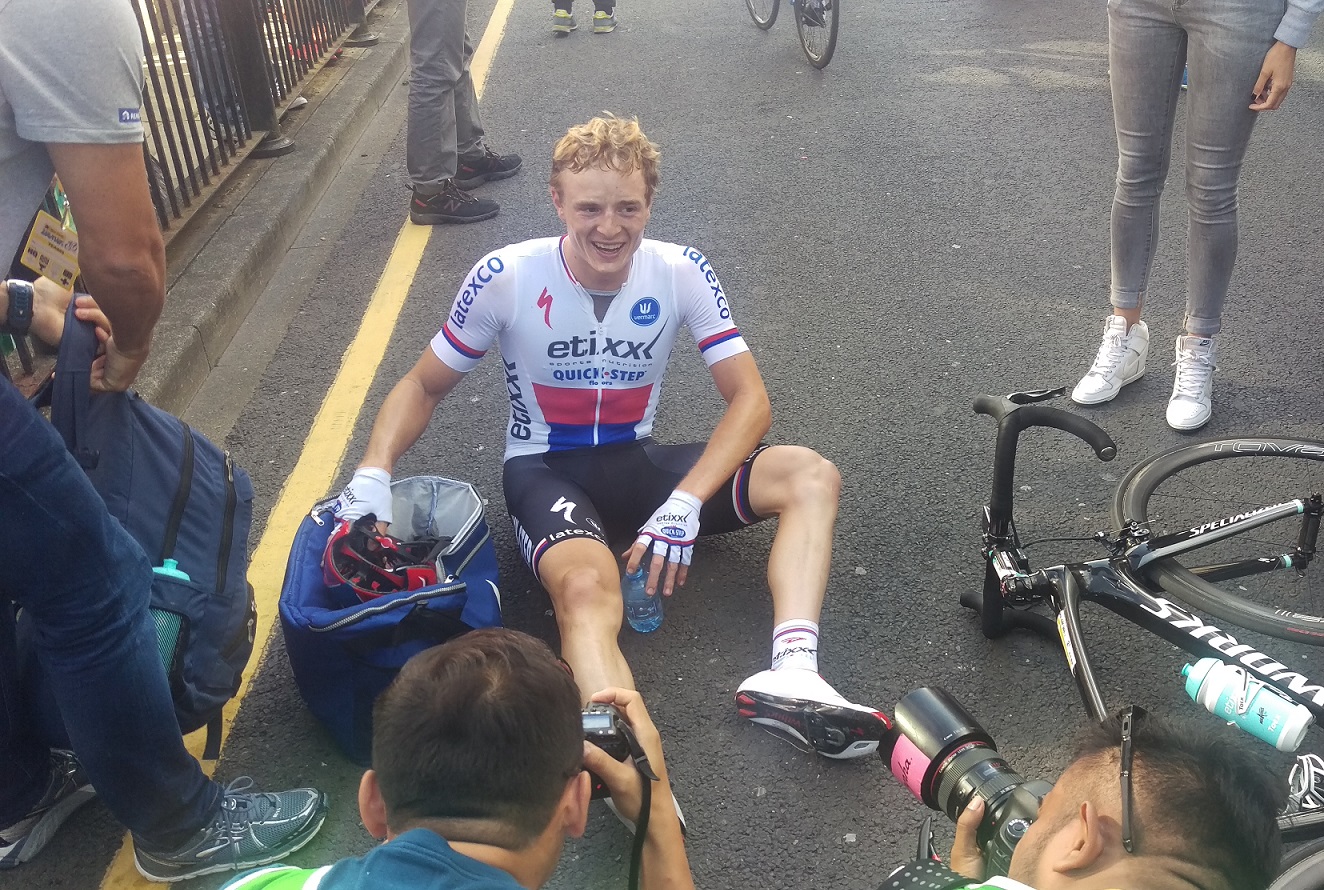
Despite missing out on the stage win, Lobato took over the race lead after Etixx-QuickStep’s Petr Vakoč crashed just outside the 3km to go mark, only a day after taking over the yellow jersey.
The Czech rider looked to be nursing an injury to his left hand as he rolled in ten minutes after Viviani, with teammate Fernando Gaviria at his side. At the time of publication it is unknown whether Vakoč will continue tomorrow.
A six-man break went away within the first 20km, with Tyler Farrar (MTN-Qhubeka), Matt Cronshaw (Madison-Genesis), Marcin Białobłocki (One Pro Cycling), Aidis Kruopis (An Post-ChainReaction), Johnny McEvoy (NFTO) managing to get away.
The peloton on the road to Kelso (Sweetspot)Today’s finish (Sweetspot)
For the most part it was a rather standard day of racing, though Tyler Farrar sprinting for mountain points raised a few eyebrows. Six minutes was the break’s maximum lead, before the sprinter’s teams started their work at the front of the peloton.
On the descent of Wilton Hill, the second category climb with 40km remaining, the lead group was slimmed down to three. Farrar, Cronshaw and Białobłocki were the lucky trio, pushing onwards to the finish.
It wasn’t to be for the break though. Their lead started to evaporate as Lotto-Soudal and Cannondale-Garmin took on the majority of the pace-setting on the run-in to the finish of the 216km stage. With 3km to go, they were caught and it would come down to a fight between the fastmen.
André Greipel was surprisingly leading out for teammate Jens Debusschere but the Belgian was swamped in the final metres, as IAM’s Sondre Holst Enger sped past with Viviani on his wheel. The Italian timed his sprint to perfection, easing over the line ahead of Lobato and Matteo Trentin (Etixx-QuickStep).
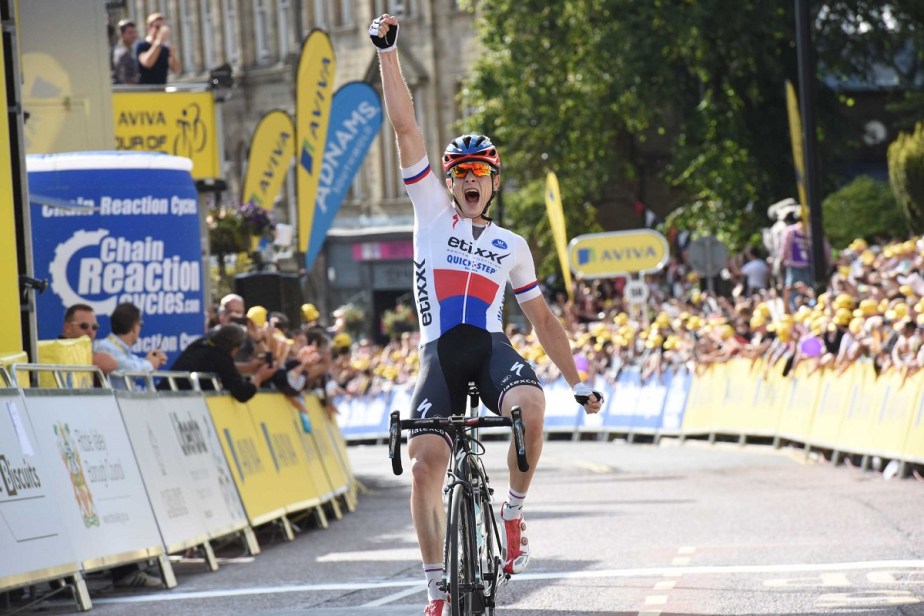
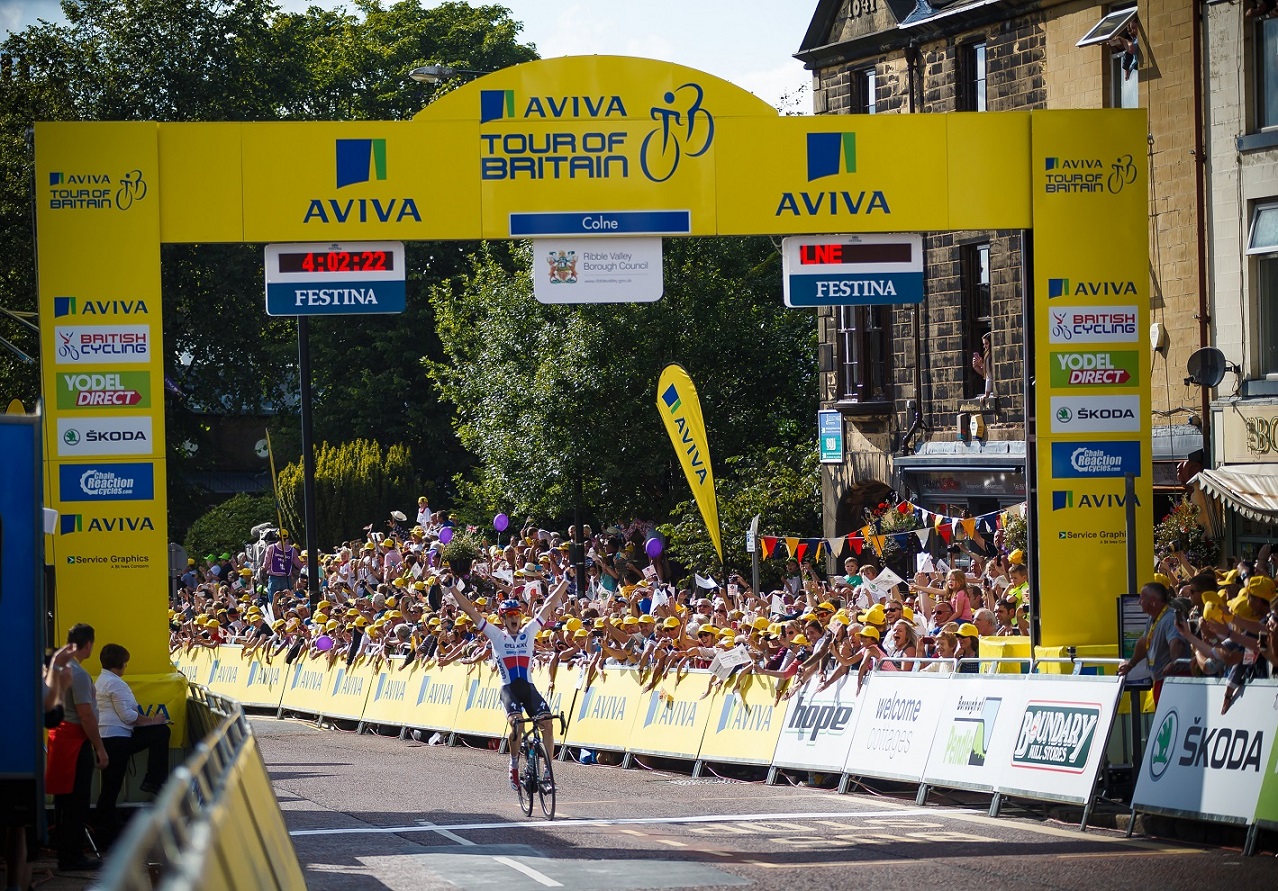
Etixx-QuickStep’s Petr Vakoč took over the lead of the Tour of Britain after a stunning solo victory on the second stage of the race into Colne. The Czech national champion attacked his breakmates with 19km to go, maintaining a small gap over the rampaging peloton all the way to the line.
The World University Champion and second-year pro said after the stage that he didn’t expect the win.
“Normally stages with such a hard start don’t do me any good but I started with really good feelings today,” he said. “When I went I thought somebody would go with me, but it was just me so I pushed as hard as I could.”
“The finish was pretty tough but I still had some energy left. At the end I was imagining that I was doing a bunch sprint,” he joked. “It was a beautiful victory.”
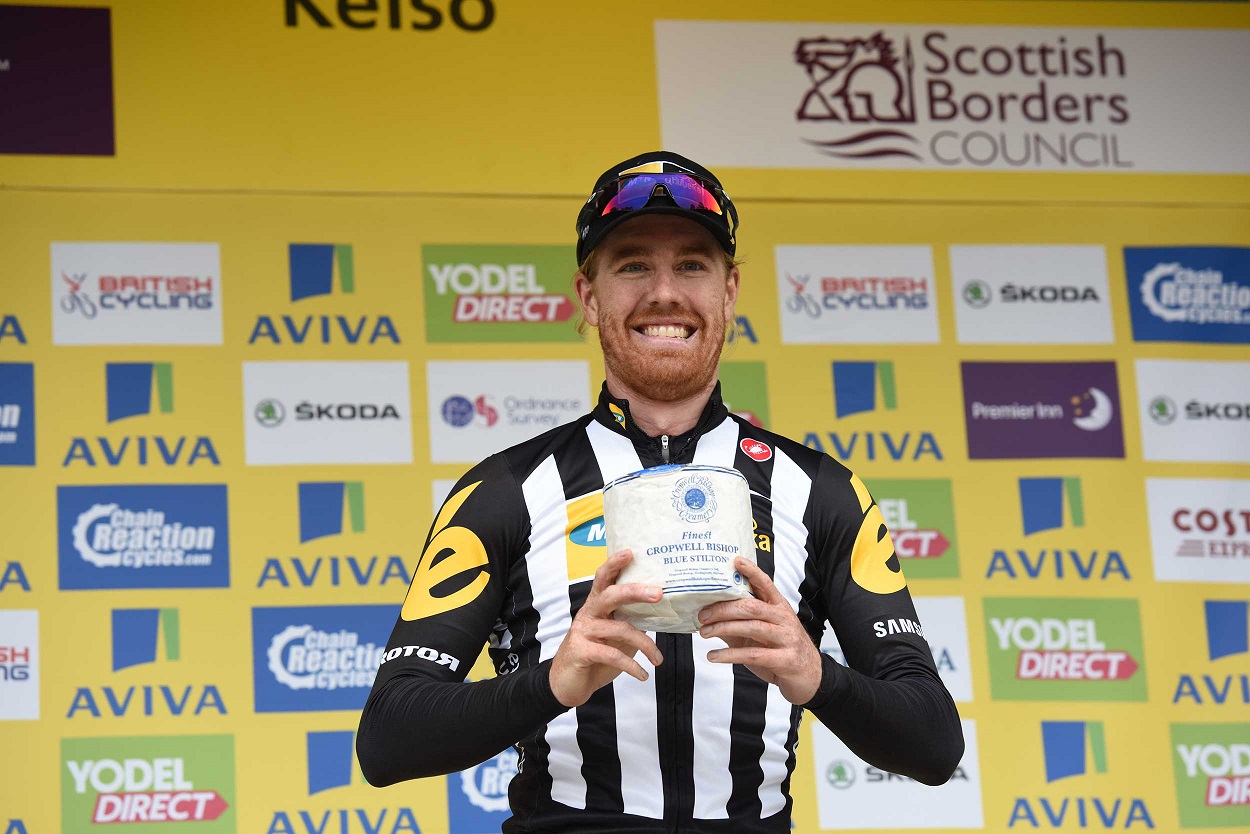
Earlier in the day, Peter Williams (One Pro Cycling) was on the attack once again, keen to secure another combativity awards and another block of cheese. Movistar’s Alex Dowsett, who led the race last year, joined Williams in an attempt to replicate his 2014 success.
Williams earned more cheese for the One Pro Cycling fridge (Sweetspot)
Dowsett was, however, forced to drop back as the Team Sky-led peloton looked loath to let him go up the road.
The race really got going on the second category climb of Bleara Moor, 100km into the 159km stage. A group of forty riders split away from the main peloton over the top as Williams was caught, with race leader Elia Viviani falling back.
Vakoč attacked on the descent, along with BMC’s Danilo Wyss and Great Britain’s Alex Peters, and the trio were soon joined by Wout Poels (Sky), Serge Pauwels (MTN-Qhubeka), Pim Ligthart (Lotto-Soudal), Rubén Fernández (Movistar) and Alberto Bettiol (Cannondale-Garmin).
The lead group never got a gap of more than fifty seconds, but with no race radios there was always a chance they would stay away.
With Tinkoff-Saxo and Lotto-Soudal leading the chase, the 23-year-old seized his moment, holding on to win by seven seconds before collapsing, exhausted, metres after the line.
Movistar’s Juan José Lobato led the peloton home, and perhaps he would’ve triumphed had the Spanish squad put in the work. Edvald Boasson Hagen of MTN-Qhubeka rounded off the podium.
Vakoč after the finish (inthedrops)
stage result
1
Petr Vakoc (Cze) Etixx – Quick Step
4:02:22
2
Juan Jose Lobato Del Valle (Esp) Movistar Team
0:00:07
3
Edvald Boasson Hagen (Nor) MTN – Qhubeka
0:00:09
4
Rasmus Guldhammer Pedersen (Den) Cult Energy Pro Cycling
Phinney with his fans at the Tour of Britain team presentation (Sweetspot)
May 26th 2014 – that was the day Taylor Phinney’s world stood still. Flung into a guardrail while speeding down a descent at the U.S. road race championships in Chattanooga, Tennessee, the then-23-year-old’s left leg was shattered in two places after a race motorbike attempted to pass him on the inside of a corner.
It was a potentially career-ending injury, but now he’s back. Seemingly back to his best too, with a stage win at the USA Pro Cycling Challenge in his native Colorado, only his second race back.
Now he’s in Britain, racing here for the first time, and looking ahead to the World Championships in the USA at the end of the month.
Phinney was in a positive mood after the first stage of the race, which finished in Wrexham. With BMC’s best finisher being Floris Gerts in eleventh, the Coloradan had a different reason for his upbeat attitude.
“There was sweet scenery on the first climb – that climb was very beautiful. I spent the whole way up just looking around,” he says. “It felt like I was on a very fast guided tour of North Wales, which was fun.”
Back to winning ways at the USAPCC in August (Cor Vos)
While Phinney could spend the first stage of the race admiring the scenery, there are more serious matters up ahead, with stage wins on the agenda for the young squad.
“We don’t necessarily have huge GC ambitions, but we want to get a stage or two,” Phinney says. “So we want to do that however we can make that happen – they’d probably come via breakaways or on the harder days I would guess.”
The team has several options, with Dylan Teuns (top ten last year as a stagiaire) returning. Promising Swiss neo-pro Stefan Küng is also racing, and has already shown his ability on similar terrain with an impressive 25km solo victory at the Tour de Romandie.
At 30-years-old, climber Danilo Wyss is the veteran of the squad, while stagiaire Gerts will get his chance to prove why he deserves to move up from the BMC Development Team for good.
Then there’s Phinney, as hungry as ever, but with his eyes ultimately on a bigger prize.
“I would love to win a stage here, and I think my legs will improve towards the end of the race. That’s how they seem to be these days,” he says. “But in terms of personal goals the Worlds is what I’m looking towards. Obviously with them being in Virginia it means a lot to me.”
Tasting gold in the 2010 U23 TT Worlds (Cor Vos)
Phinney has a varied history with the Worlds, winning the U23 time trial in 2010. Two years later in the senior race he missed out on gold to Tony Martin by six seconds, while his crash meant he wasn’t part of BMC’s winning ride in last season’s team time trial.
Indeed, talk soon turns back to that crash, the crash that threatened Phinney’s career but ultimately caused him to miss fifteen months of racing during his prime. Surely there’s some trepidation coming back to the peloton after such a long time out?
“Actually I wasn’t so nervous, partly because I was racing at home in Utah and Colorado – I’ve always been comfortable in those races,” says Phinney. “It was a fun next step, and coming here is the next step beyond that – the smaller roads, the twists and turns – you know. But I’m just trying to have fun with it.”
“I still have to stay on top of my rehab – my left leg is still a work in progress in terms of regaining the strength, but I’ll just keep on trucking.”
There’s much to say about the cause of his crash too – a subject that has reared its head in recent weeks as Jakob Fuglsang, Greg Van Avermaet, Peter Sagan and Sergio Paulinho have all been knocked from their bikes by passing race motorbikes.
Phinney’s teammate Greg Van Avermaet, one of many moto crash victims this season (Cor Vos)
“I don’t really know how it can be solved you know. It’s been a strange year with all the run-ins with motorcycles,” he says. “Maybe the answer is in the education [of the drivers] or maybe just have less motos on the road.”
“I think the main issue is that we never find out who those people are. It’s like – there’s a human on the moto, it’s not the moto itself. Right now they’re just guys with helmets on and not knowing who they are just kinda dehumanises them.”
So far though, Phinney has stayed out of trouble, and he’s still keen to emphasise the positives of motos in a bike race.
“In races like this we’re really thankful for the motos – with all the road furniture and stuff these guys really help us out and warn us about what’s coming up.”
Face-to-face with a potential early retirement just last year, Phinney is now back in the peloton, back where he belongs. As for this week, well there’s more scenery to take in, but another win would be nice.
Team Sky’s Elia Viviani took the opening stage of the 2015 Tour of Britain, sprinting to victory in one of the closest finishes the race has ever seen. Home favourite Mark Cavendish of Etixx-QuickStep was the runner-up, losing out in the photo finish.
“With 100m to go I thought it was too late,” said Viviani. “I thought Cav would start earlier but then he went to the middle of the road and I saw a small space and I thought ‘ok, I’ll go that way and we will see’.”
“It took a few metres after the line to realise I had won. I only understood that I had when I saw Cav say ‘Oh no’. We were close, eh?”
The win comes as a much-needed boost for the Italian, who admitted that he had been disappointed by his results in the Vattenfall Cyclassics and the GP Plouay late last month.
“I didn’t get the result I wanted there, but I’m really happy with this. It’s a good test for my condition, and good for the Worlds too because that’s a big focus for the end of my season.”
Viviani benefitted from a day’s worth of work from his team, with Brit Andy Fenn notably putting in big stints at the front of the peloton.
“He did great work and has really good condition,” said Viviani. “The six-man teams are strange for us, and with Wout Poels and Pete Kennaugh looking to GC, we needed to use Ben Swift and Andy for the sprint today.”
Earlier in the day a four-man break was established almost as soon as the peloton left the town of Beaumaris, with Peter Williams (One Pro Cycling), Conor Dunne (An Post-Chainreaction), Tom Stewart (Madison-Genesis) and Kristian House (JLT-Condor) out front for most of the day’s 178km.
House’s efforts saw him take the first Skoda King of the Mountains jersey of the race with a late attack over the final climb of the day at Bwlch. Dunne leads the Yodel Sprint classification.
With the might of Etixx-QuickStep and Sky riding at the front of the peloton for much of the day, there was no chance that the escapees would be allowed to contest the finish among themselves.
That didn’t stop House trying though, and his repeated attacks saw him secure a lump of local cheese and the Rouleur Combativity Award. Nevertheless, he and his breakmates were brought back with 1.5km to go.
The technical final kilometres saw Cavendish’s Etixx-QuickStep train then came to the fore, with Colombian Fernando Gaviria and Mark Renshaw leading out the Manxman, but in the end it was to no avail. Lotto-Soudal’s Andre Greipel rounded out the podium, while Team Wiggins’ Owain Doull put in a strong showing to finish fourth.
All photos provided by SweetSpot.
stage result
1
Elia Viviani (Ita) Team Sky
4:26:29
2
Mark Cavendish (GBr) Etixx – Quick-Step
3
André Greipel (Ger) Lotto Soudal
4
Owain Doull (GBr) Team Wiggins
5
Juan Jose Lobato Del Valle (Spa) Movistar Team
6
Pim Ligthart (Ned) Lotto Soudal
7
Mark Renshaw (Aus) Etixx – Quick-Step
8
Tyler Farrar (USA) MTN – Qhubeka
9
Alberto Bettiol (Ita) Cannondale-Garmin Pro Cycling Team
The end of the road for Giampaolo Caruso? (Cor Vos)
Yesterday saw the news that retrospective testing by the UCI had caught Damiano Caruso for taking EPO three years ago, with the sport’s governing body communicating that his sample “had been stored and was reanalysed in light of new scientific developments.”
The positive, which dates to March 2012, could mean a four-year ban for the Sicilian. Aside from the possible career-ending ban, the question on everybody’s lips has been ‘What does this mean for the future of Katusha?’
The questions comes in light of a UCI rule, which was introduced this year. The full rule, which can be found here, reads..
In short, two adverse analytical findings (AAF) from riders or staff on the same team means that the team is collectively punished with a racing ban of between 15 and 45 days. “Notified within a twelve-month period” is important here – the two AAFs don’t necessarily have to come within the same twelve months, so long as the team are notified of them within the same twelve months.
This is the rule that has seen Italian ProContinental team Androni Giocattoli-Sidermec sit out thirty days of racing after the positive tests of Davide Appollonio (EPO on June 14) and Fabio Taborre (FG-4592 on June 21).
Oscar Gatto sits out a month of racing thanks to the actions of his teammates (Cor Vos)
Things are different for Katusha though. Even though notification of both positive tests came within a twelve-month period, the fact that Caruso’s positive dates back to 2012 means that a different set of rules apply.
Both the UCI’s rules and the WADA Code (both 25.2) invoke the principle of ‘lex mitior’ – a legal term which means that in cases where a law has been changed, the more lenient of the two will be applied. In this case, the 2012 regulations apply, given that the rule which saw Androni Giocattoli-Sidermec banned was only introduced at the start of this year.
So Katusha will race on, though their Italian contigent is rapidly diminishing. The team called the news of Caruso’s positive a “complete shock”. It’s hard to know exactly how to take this, given that the Russian squad employs Massimo Besnati (worked alongside Ferrari and Ibarguren in the past, was prosecuted for steroid possession in 2001) and Andrei Mikhailov (a convicted criminal thanks to his time at TVM) as doctors.
Are they shocked Caruso was doping, or that he was caught?
Caruso after his win at Milano-Torino last year (Cor Vos)
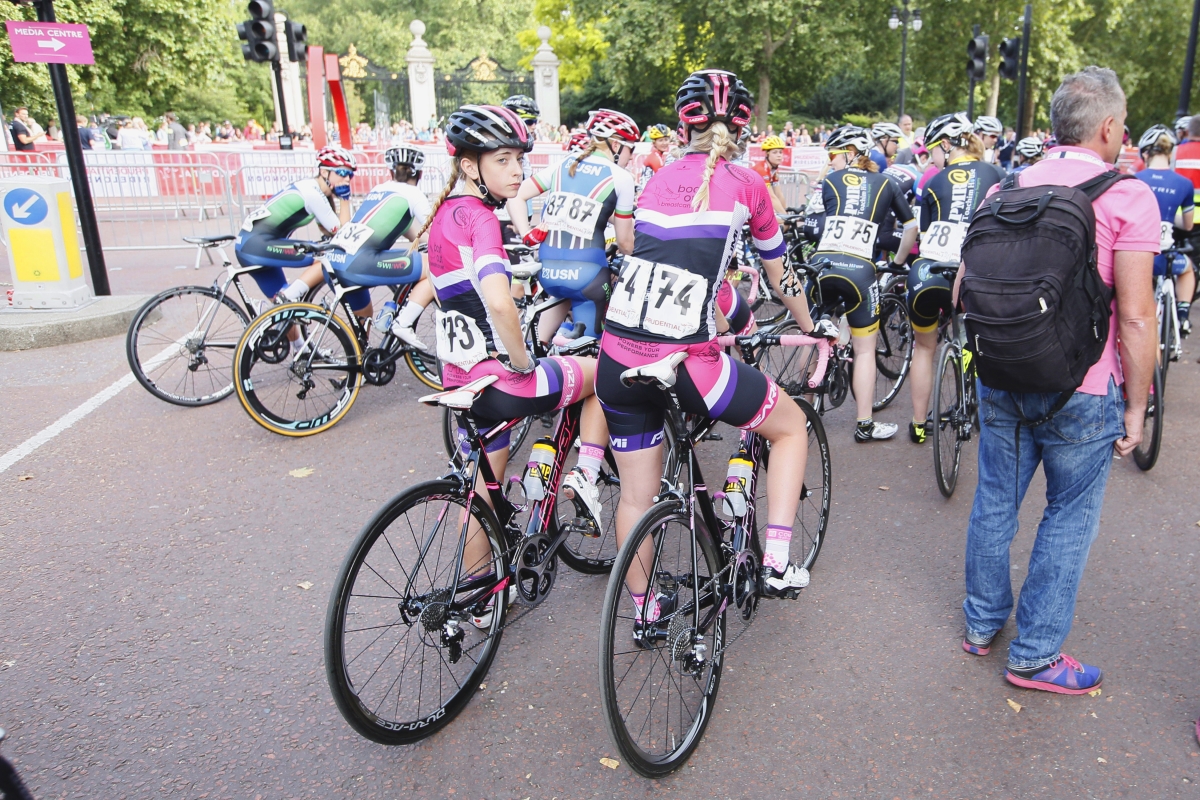
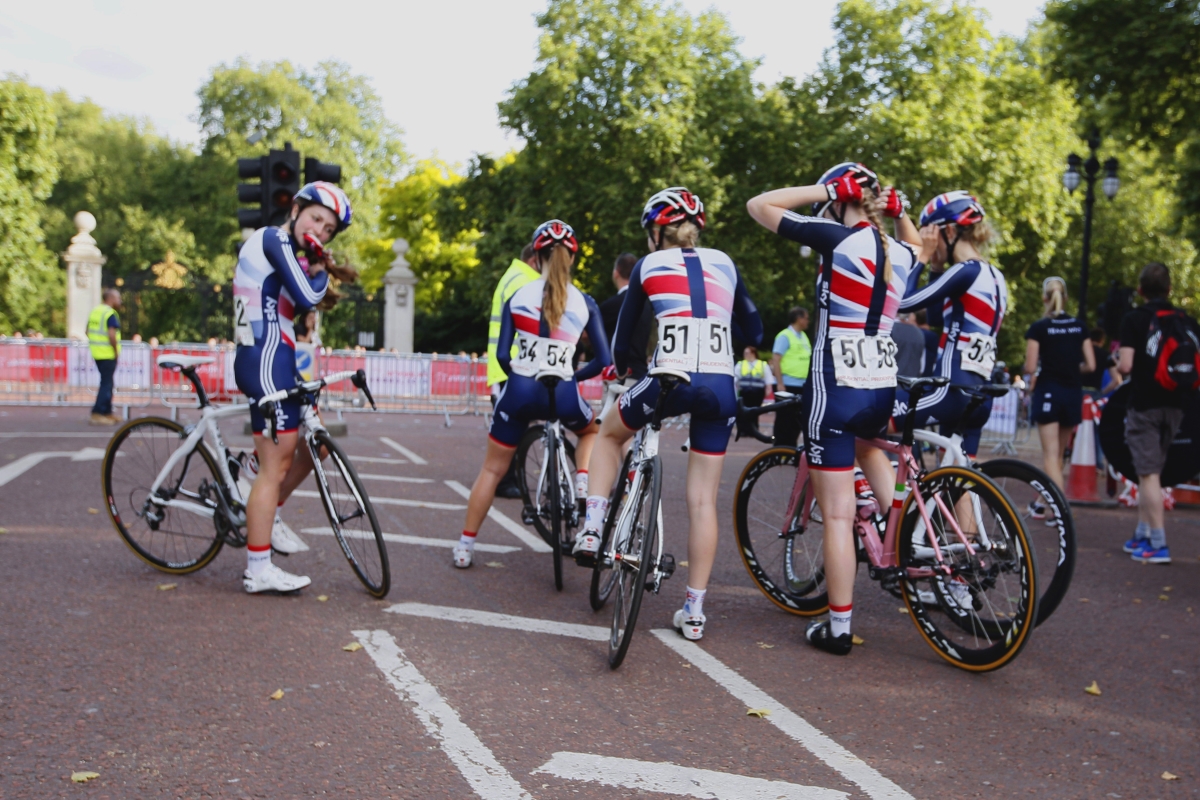
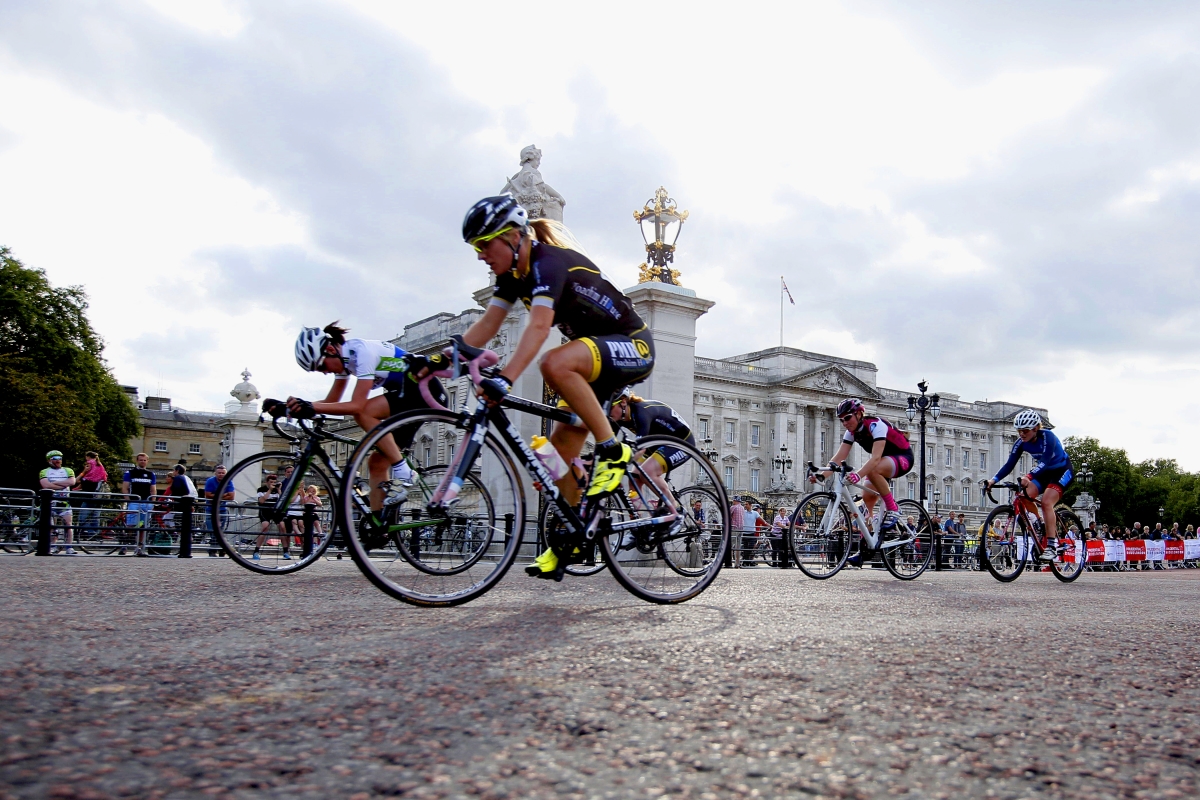
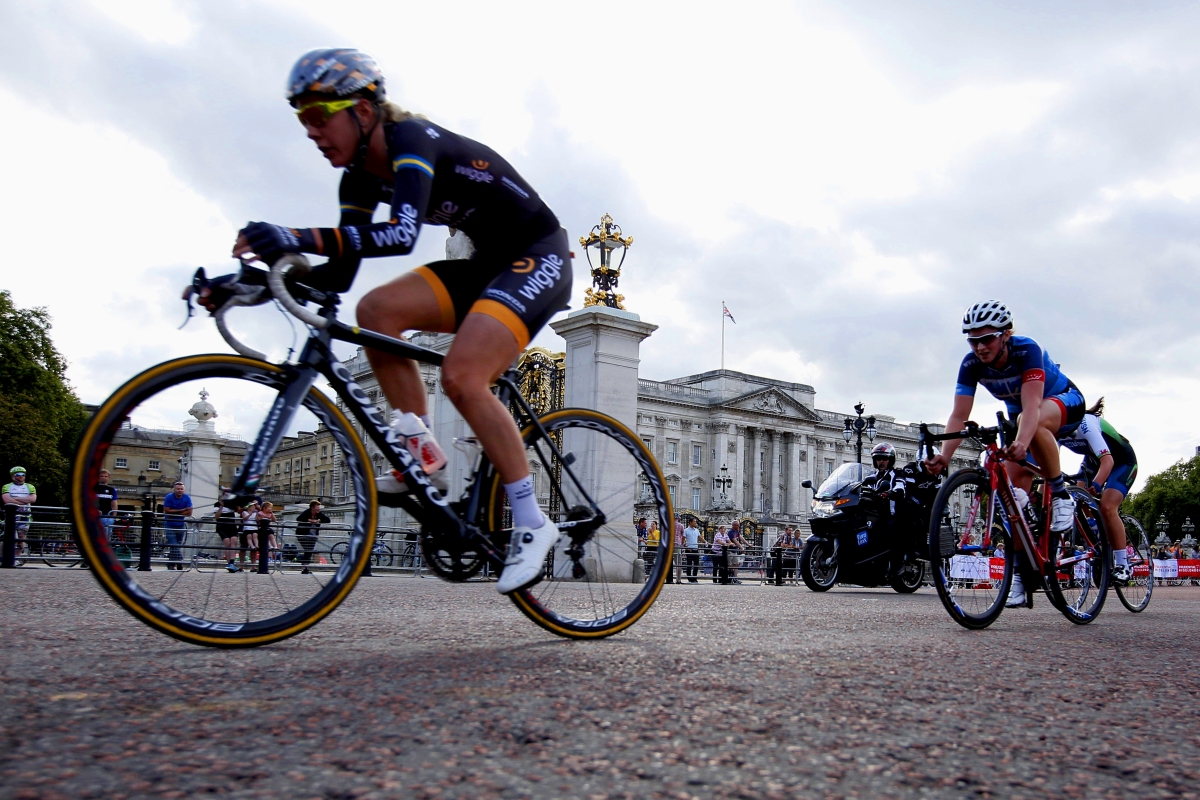
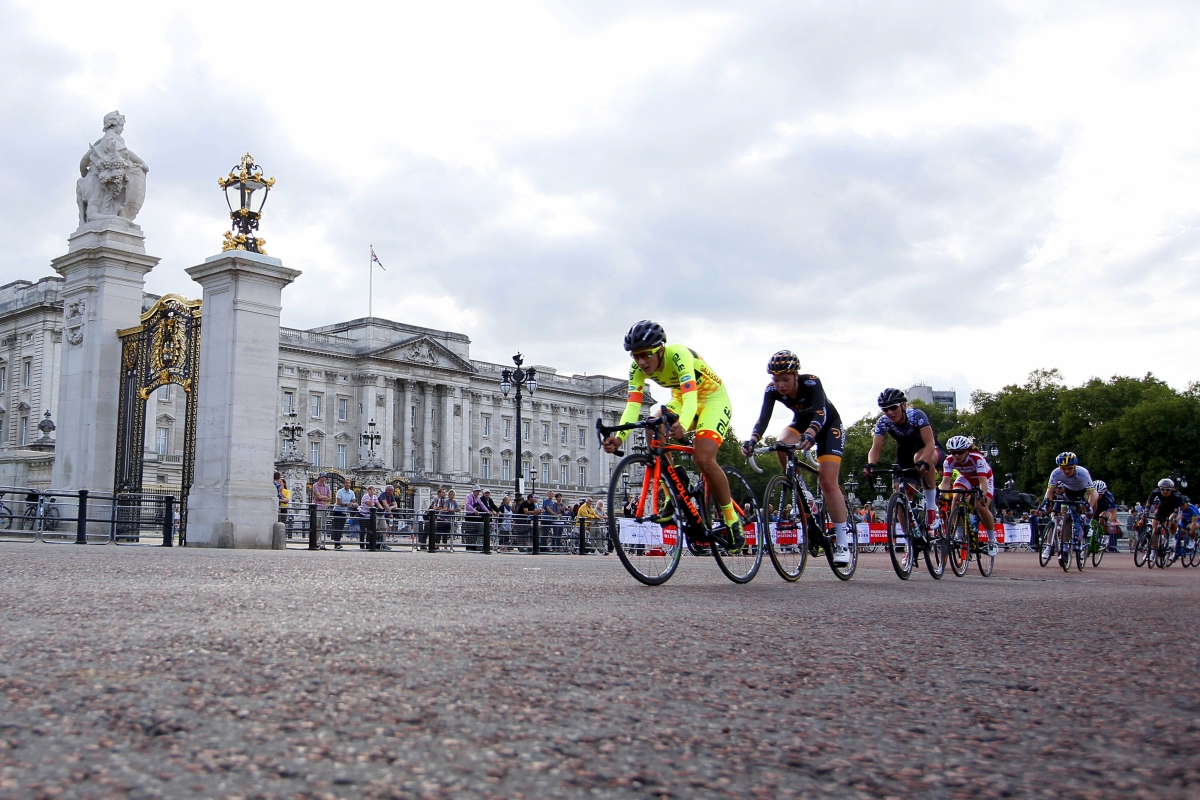
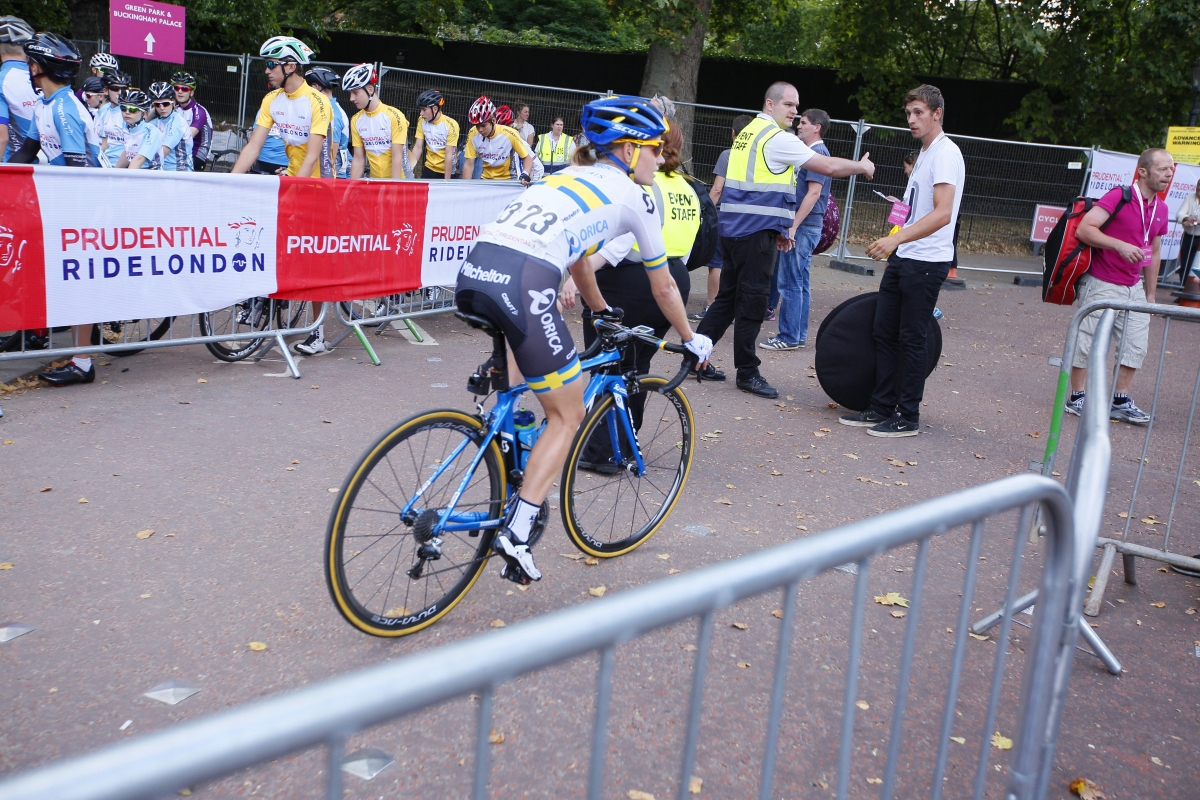
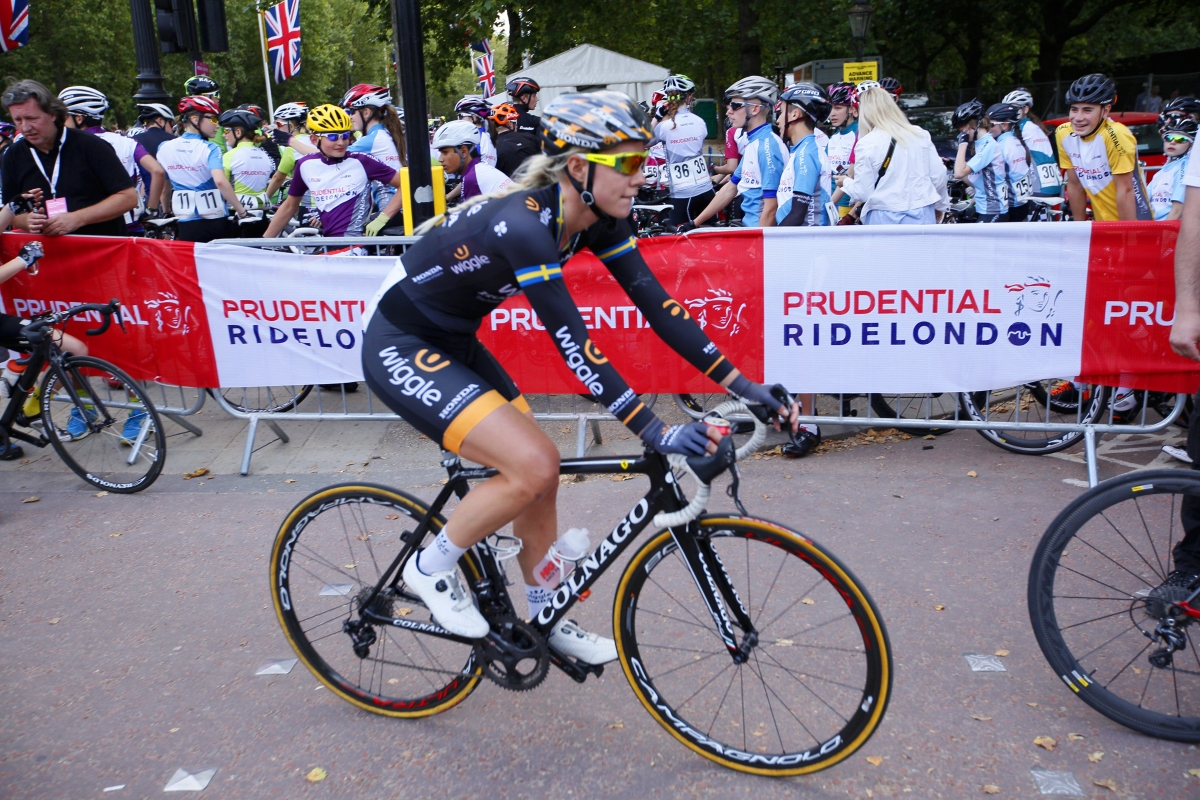
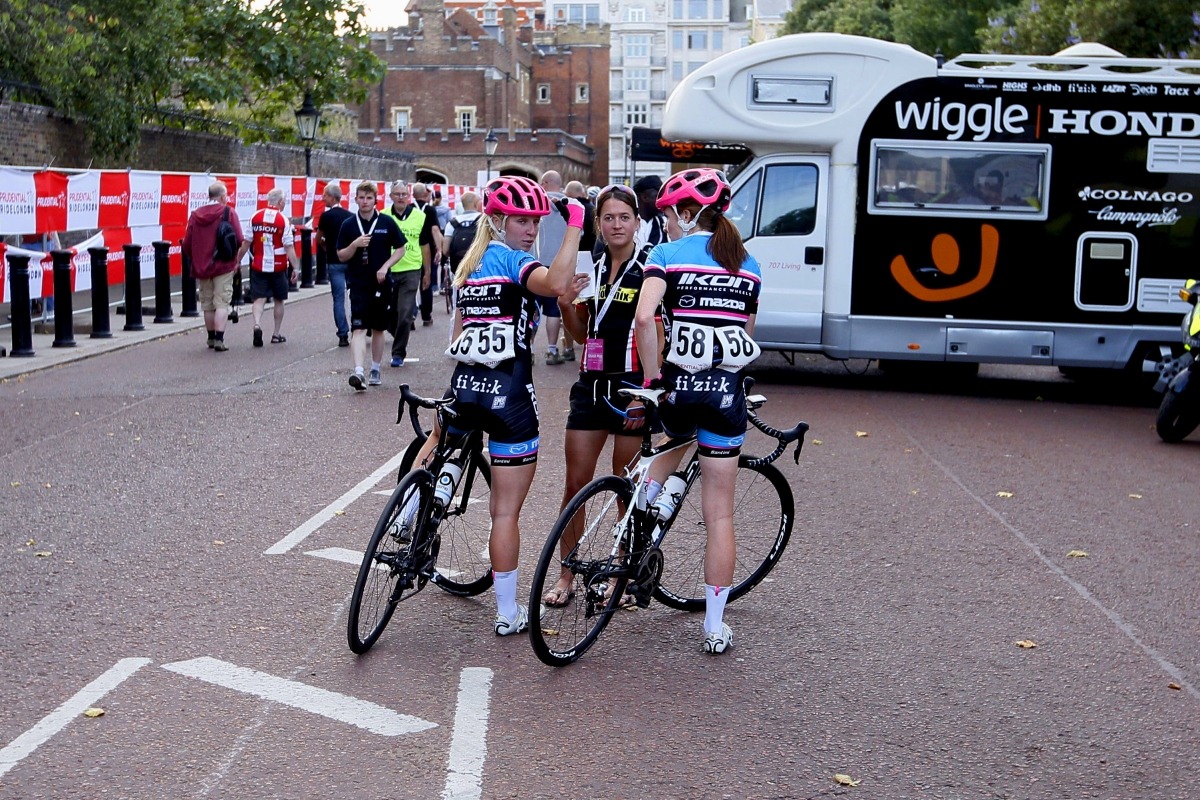
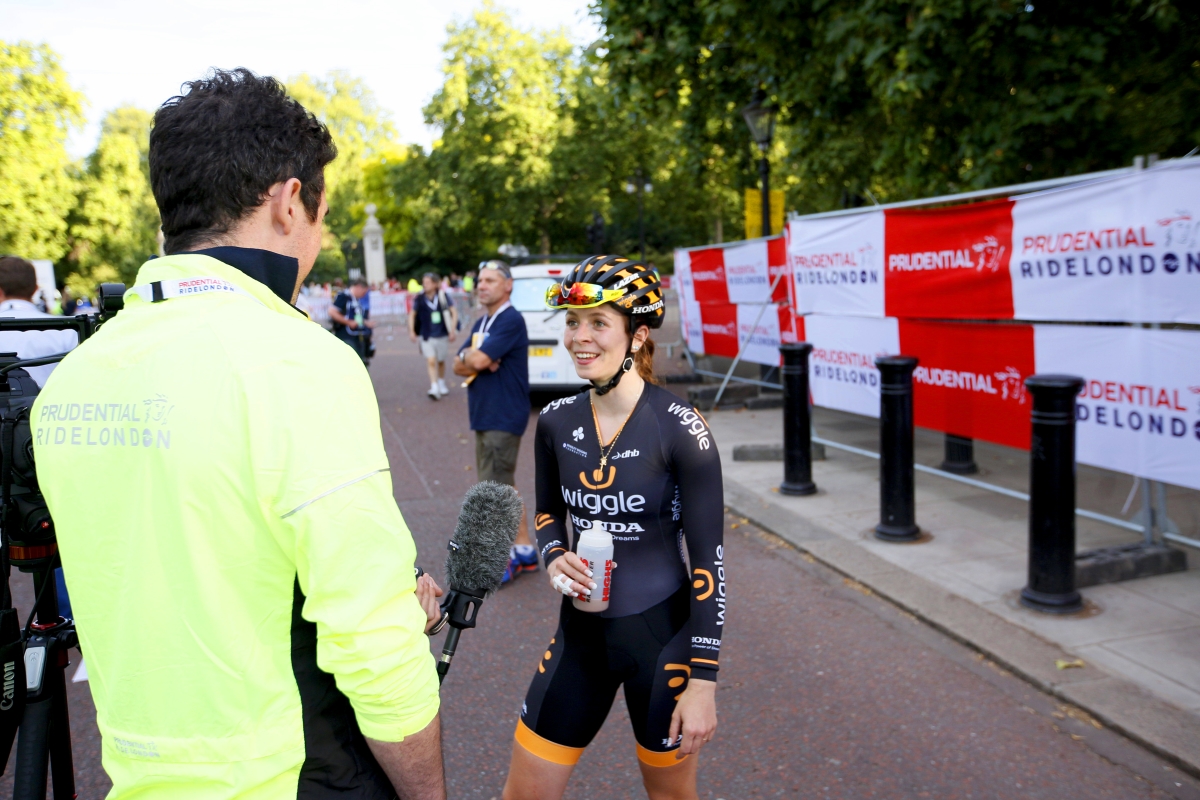
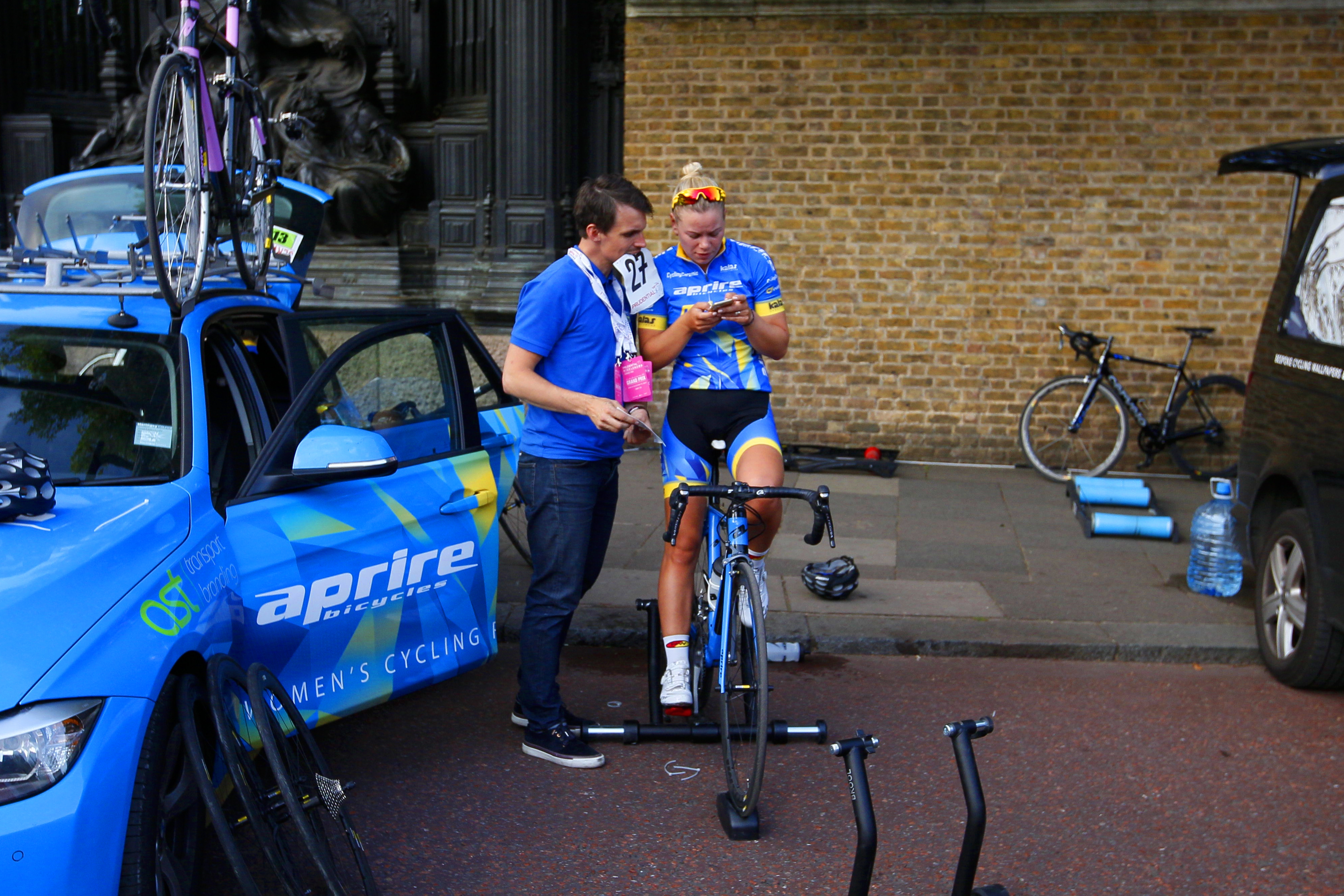
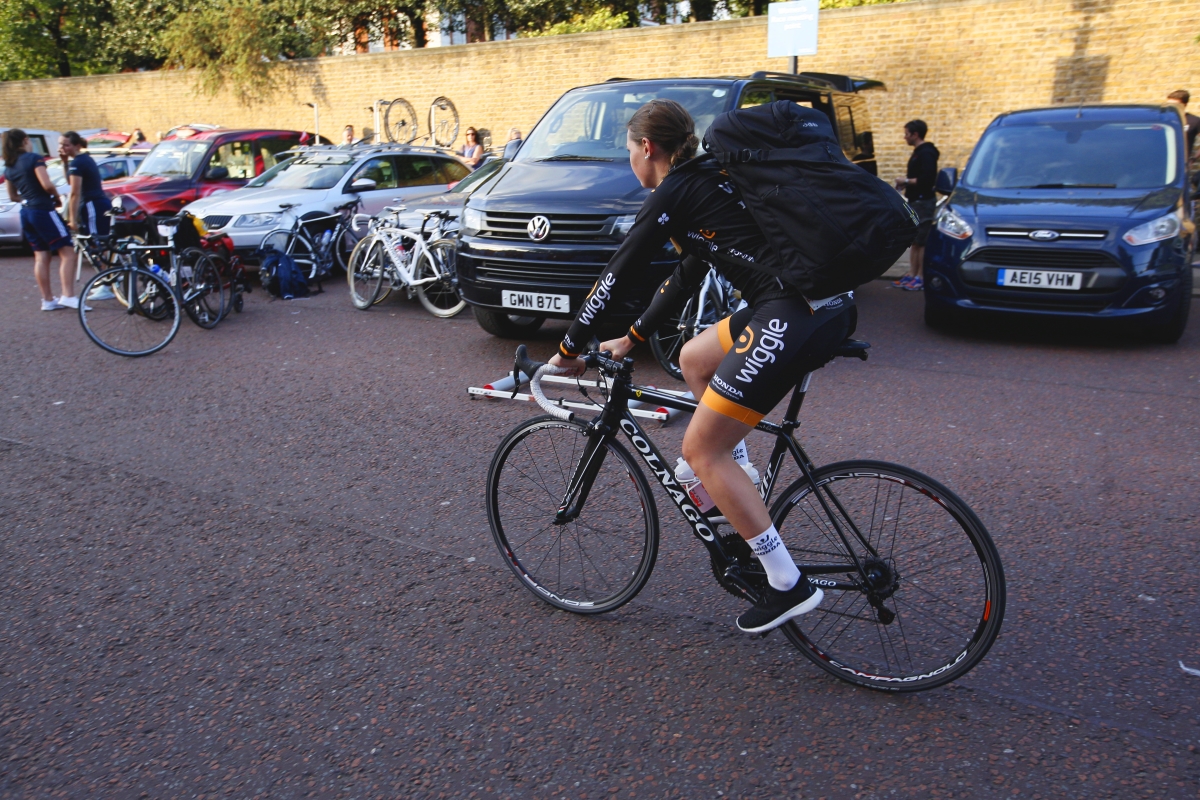
Emma Johansson (Orica-AIS)Emilia Fahlin (Wiggle-Honda)
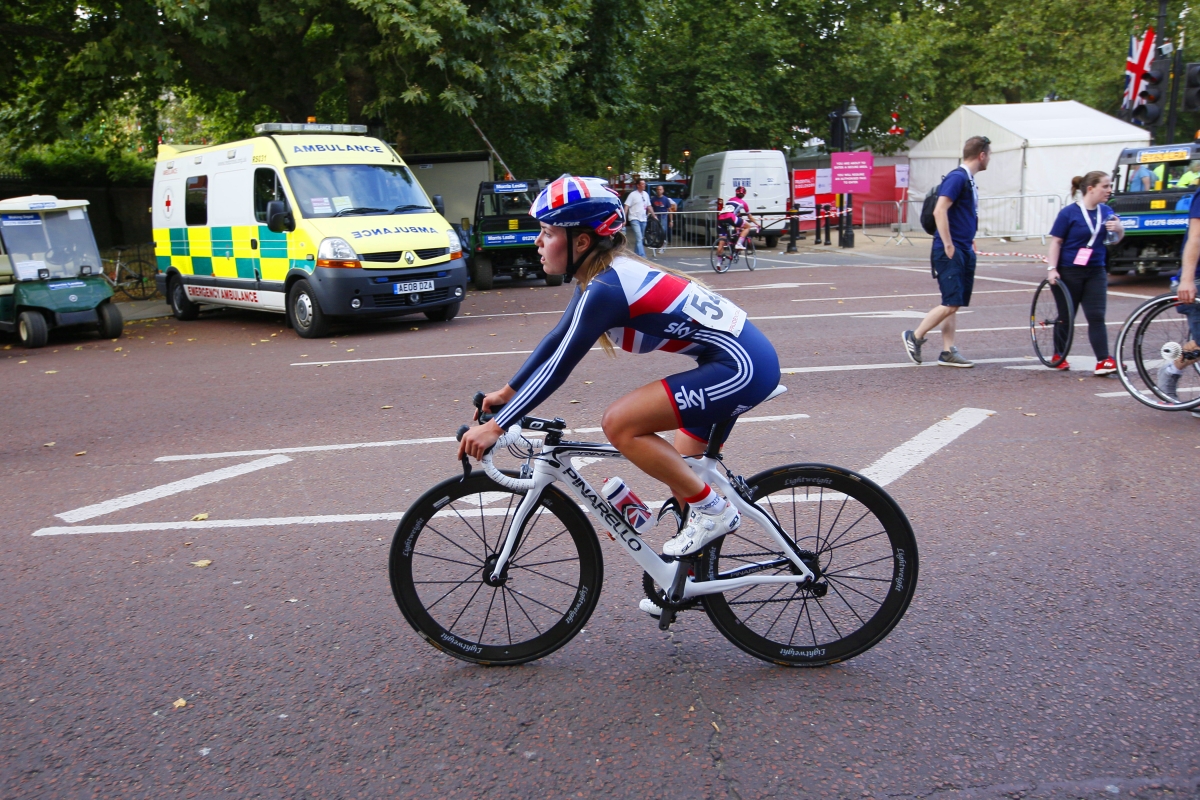
Molly Weaver (Liv-Plantur)
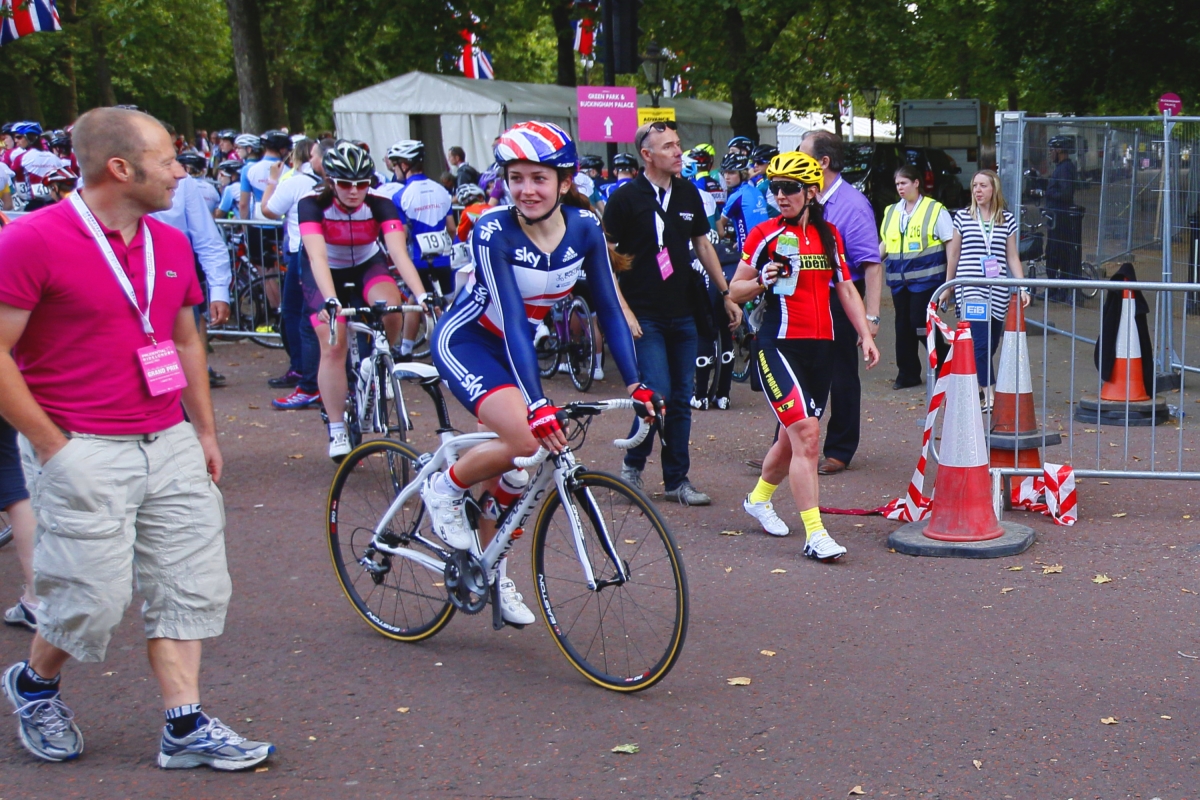
Danielle King & Annette Edmondson (Wiggle-Honda)
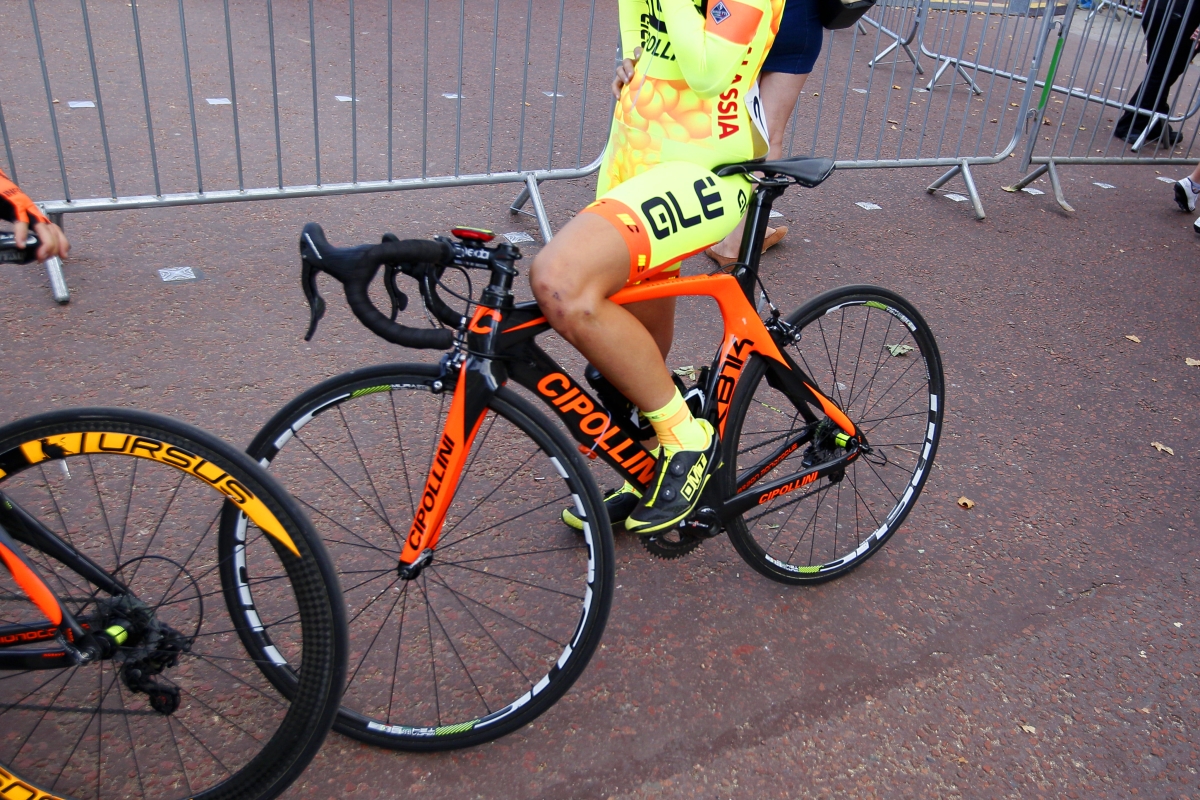
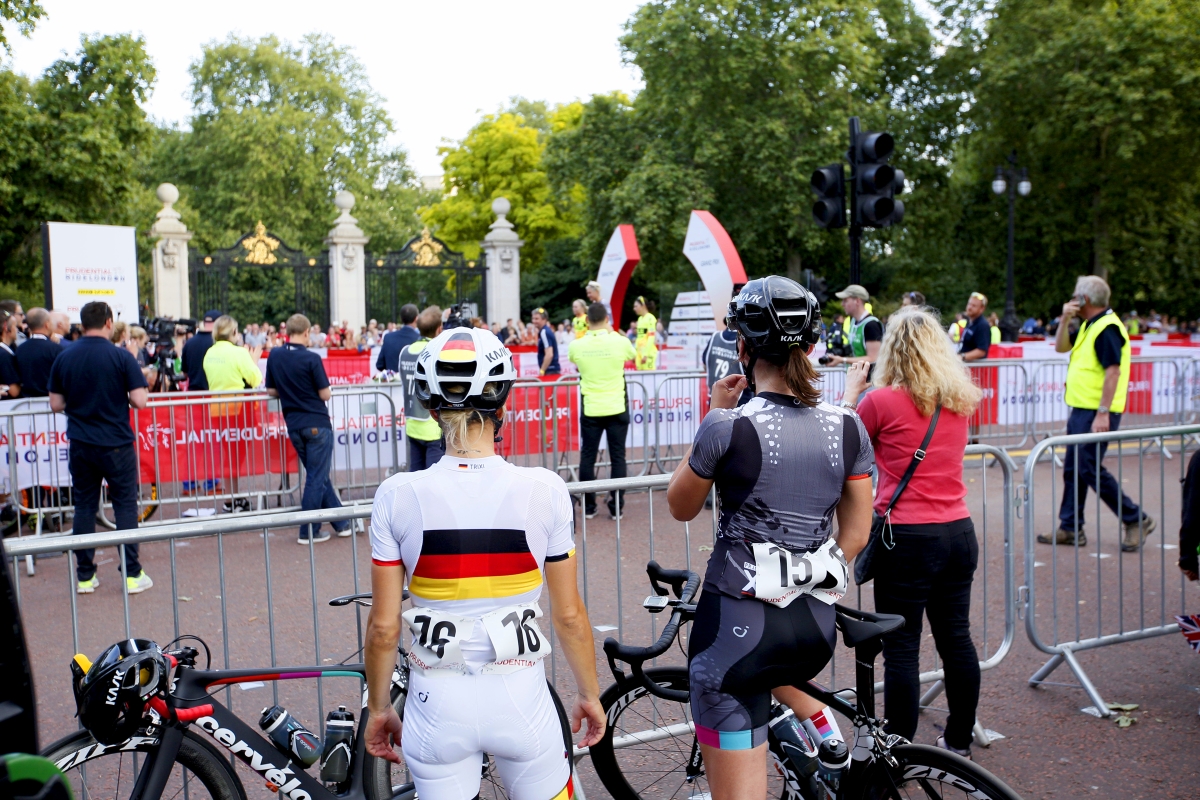
Maria Confalonieri (Alé-Cipollini)German champion Trixi Worrack and Lisa Brennauer (Velocio-Sram) watch the podium ceremonyMaria Confalonieri (Alé-Cipollini)Anna Christian (Wiggle-Honda)
Laura Trott (Matrix Fitness)Adele Martin (Velocio-Sram)
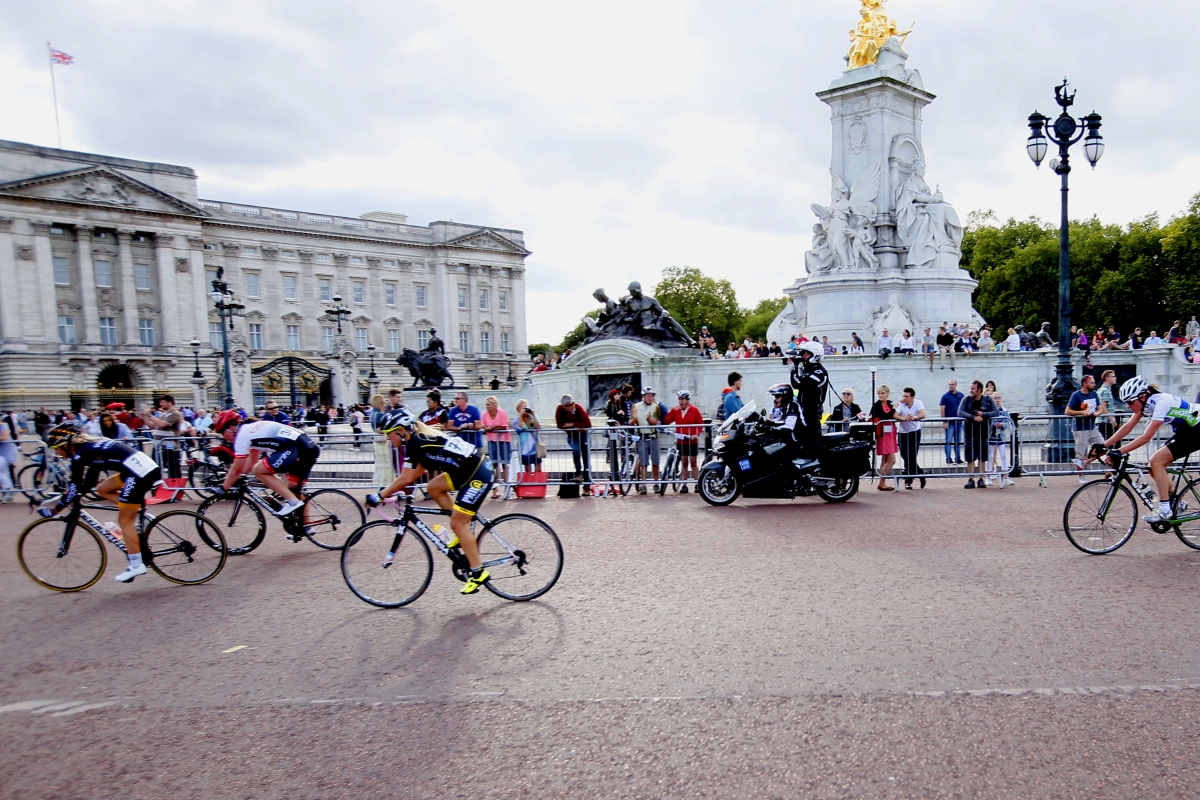
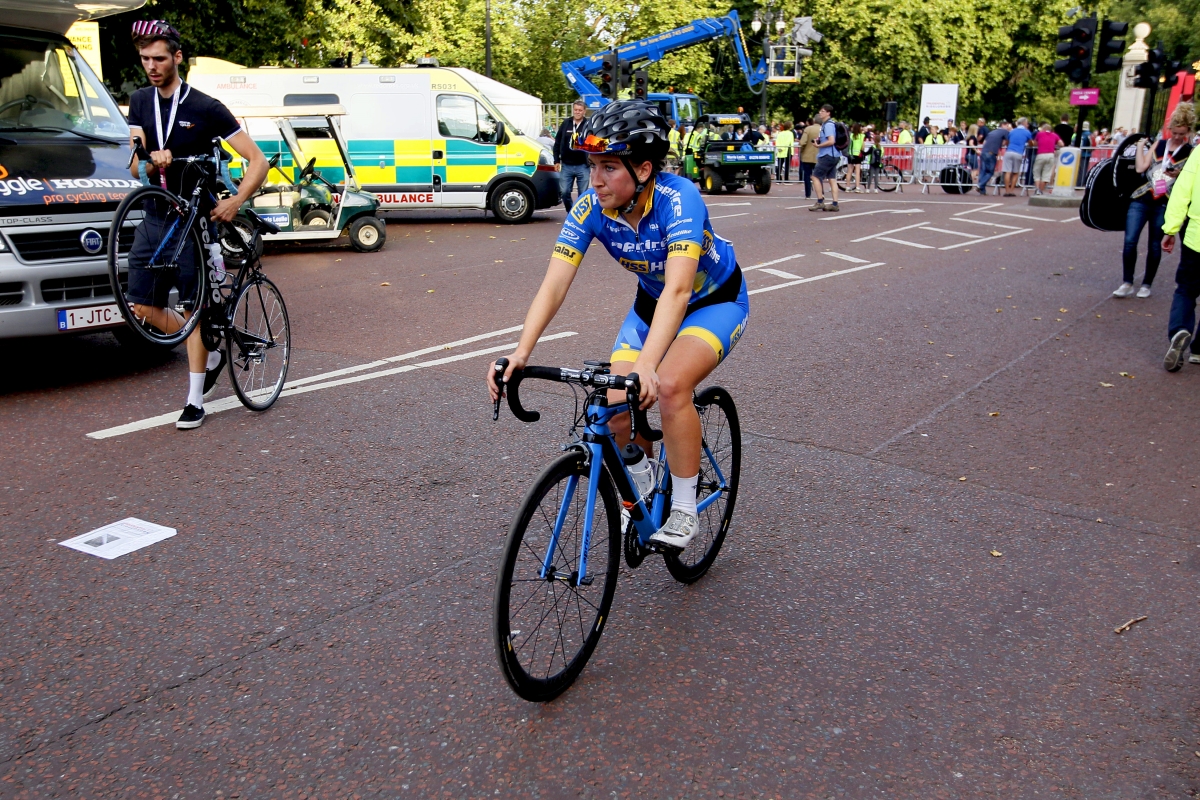
The winner, Barbara Guarischi (Velocio-Sram)And her bikeAnnalisa Cucinotta & Shelley Olds (Alé-Cipollini) filled out the podiumEileen Roe (Wiggle-Honda
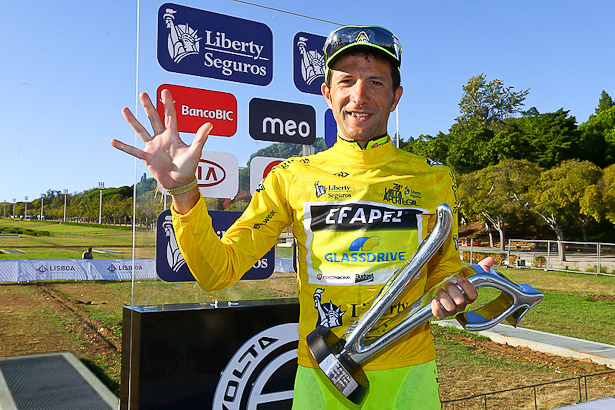
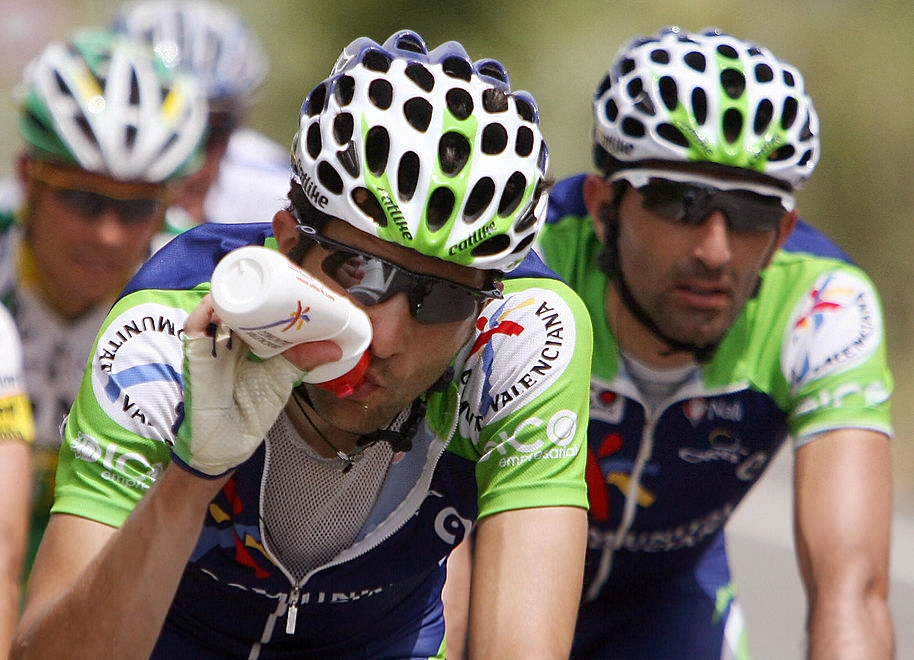
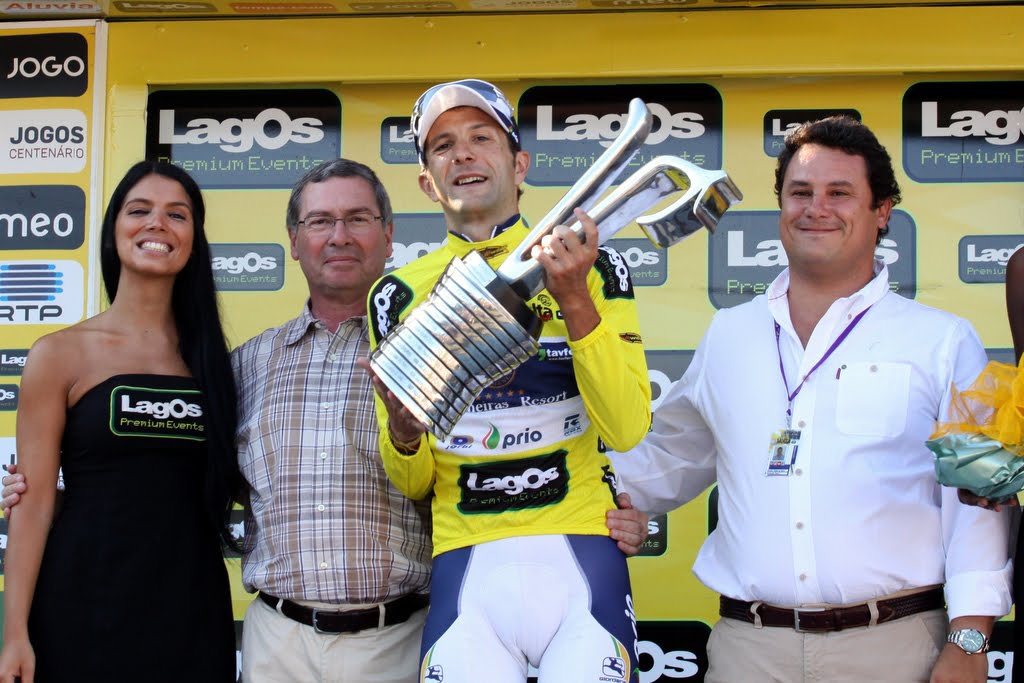
Blanco with trophy number five at the 2012 race (Volta a Portugal)
An interview with the man who knows Portugal’s big race as well as anyone
“I cry every time I see one of my wins.” So says David Blanco, a Spaniard, and five-time winner of the Volta a Portugal. “It’s hard to explain but even at the Vuelta, my home race, I never had the same motivation as I did when I raced the Volta.”
“It was a strange symbiosis, but perhaps the sum of many things – the weather, the mountains, the people,” he trails off.
Blanco has won the race more than anybody else since it was first run in 1927. In a twelve-year career, he missed just one edition. And yet the Volta is barely heard of outside of Portugal. Ask your average cycling fan for a podium prediction and it’s likely that you’ll be met with a blank stare.
The level at which Portuguese cycling is run is the primary reason. There are six teams in the country, all of which race at Continental level, the third tier of cycling, and rarely venture outside of Iberia to compete.
There are financial reasons for that, but this insularity is the main cause of Portuguese cycling’s solitary confinement. Names like Rui Costa, Tiago Machado and Sergio Paulinho are familiar to our ears, but what exactly is Paredes Rota dos Movéis?
“I started as a professional there in 2000,” says Blanco. “They invited me to ride the Volta a Portugal Futuro the previous year, and I finished third so they signed me.”
The team, now known as LA Aluminios-Antarte, boasted another familiar name at the time, Ezequiel Mosquera. “I chose them because Ezequiel (a fellow Galician) was there,” he says. “In Spain the level of talent was very high so it was tough to turn pro. Because of that, Spanish riders were cheap, which meant that there were around sixty riders in Portugal then.”
Blanco was twenty-five when he turned professional, late thanks to his time at university, studying business in Santiago de Compostela. Born in Berne, Switzerland to Spanish parents, Blanco’s family relocated there when he was five years old. Soon after his love affair with the bike began, inspired by 1988 Tour de France winner Pedro Delgado.
The Galician city, which Blanco still calls home today, is the end point for one of the largest religious pilgrimages in the world, The Way of St. James. Hundreds of thousands of people set out on foot, by bicycle or on horseback, in a nod to their medieval counterparts, to visit the shrine of the apostle.
Blanco, a Catholic himself, sees a similarity in the Volta. “It’s like a party for everybody. The word I use is romería (a Catholic day of celebration and pilgrimage),” he says. “It doesn’t feel like any other race. People, even those who don’t care about cycling, visit as they would a party.”
At the Volta a Catalunya in 2006 (AFP)
That the race is held in August, a time when much of the public are on holiday from work, is both a help and a hindrance.
“The race’s place in the calendar is its biggest problem. Before the ProTour (now known as the WorldTour), plenty of big teams visited but now the Tour de Pologne and the Vuelta are too close. It will never be moved from August though.”
It’s something of a conundrum then. Whereas once upon a time the race could boast startlists featuring Lampre, Festina, QuickStep and more, Spanish ProContinental squad Caja Rural are the cream of the crop in 2015, while a smattering of foreign Continental-level teams will also take part.
In the mid-2000s the race enjoyed 2.HC status (it’s now 2.1), and there was a push towards the ProTour, but such a move would have been at the detriment of the local teams.
“Thank God they didn’t upgrade. Portuguese teams would’ve disappeared because they’re too small, too poor to move up,” says Blanco. “Just look at what happened in Spain. We have no races, no teams, no future.”
WorldTour teams do visit the country, but only for February’s Volta ao Algarve, a training race, closer to their home bases in northern and central Europe than the likes of Oman and Qatar. The race is a rare success story for Portuguese cycling in the wake of the global financial crisis, which hit both Iberian countries hard.
From a combined twenty-three teams (nine Portuguese) in 2006, the countries now share just ten, while numerous races have also disappeared from the calendar.
“Of course there’s less money in Portugal. Since the ProTour was introduced, it has been good for the elite teams but misery for the rest,” Blanco says. Disdain for the elite of cycling is a recurring theme in our conversation, with Blanco referring to the UCI’s top tier pejoratively several times.
“All my life I dreamed of becoming a professional cyclist. I achieved it, but when I saw what was behind the curtain it felt like a nightmare.”
“Portuguese teams have budgets of €300k or so. In my final year the salary was a complete joke,” he says. “I can thank God I earned good money before so that wasn’t a problem for me but there are many riders there earning €1k a month or less, sometimes not even that.”
Just as in wider society, a growing economic disparity is a problem in cycling, with the idea of a budget cap being mooted by figures such as Oleg Tinkov in recent times. One would assume though, that Tinkov had his own roubles in mind, rather than the financial security of riders.
At the 2011 Vuelta a España with Geox-TMC (Cor Vos)
Financial security was at the forefront of Blanco’s mind when he chose to join Spanish team Geox-TMC in 2011, his penultimate year as a professional. Yet despite the team winning an exciting edition of the Vuelta a España with Juan José Cobo, Blanco had bitter memories of the season, calling it nothing short of a disaster.
“I could never find good condition on the bike. Later I learned that I had a bacterial problem with my stomach that affected me all season,” he says. “The salary, along with my Volta wins, meant that I put too much pressure on myself, and tried to race far more than I was used to.”
“It was nice to win the Vuelta, even though in the end it helped nothing. To this day I still don’t understand why Geox left – perhaps Formula One is more chic than cycling.” Geox now sponsors the sports Red Bull team.
While undoubtedly a miserable time for Blanco, his experience with Geox was hardly the only dark point of his career. May 2006 saw the eruption of Operation Puerto, the biggest doping scandal to hit the sport since the Festina affair of 1998. At the time, Blanco was riding for one of Spain’s premier squads and the team at the centre of the investigation, Kelme.
He had finished tenth at the 2004 Vuelta whilst working for team leader Alejandro Valverde, who ended up fourth, while another teammate, Carlos Garcia Quesada was fifth. An opportunity to move to the powerhouse Banesto team followed, but Blanco remained at Kelme, a decision he calls, “the biggest mistake of my life.”
“Anyway, after Puerto I was destroyed emotionally. My teammates had stopped training but I decided that I had to do something special if I wanted to continue in the sport.”
“To tell the truth I never thought I could win the Volta, but I knew Portugal well and knew there were teams with good money who could offer me a future,” he says. “I was disappointed with what happened in 2006 and how the ‘elite’ reacted to me so I lost the motivation to race in the ProTour again.”
The rest was, as they say, history, with Blanco winning two stages on the way to opening his Volta account. Portuguese teams chased his signature, but Blanco instead chose to join a newly-founded team, run jointly by Russian footballer Valery Karpin and the local government.
As it happened, he never turned a pedal in anger for Karpin-Galicia. A meeting with Duja-Tavira, the Algarve-based team which has existed in some form since 1976, saw him rescind his contract and return to Portugal.
Trophy number four in 2010 (Volta a Portugal)
The late Xavi Tondo won that year’s Volta, with Blanco finishing fifth. He only had to wait a year to take victory number two though, beating future teammate Cobo, as well as a young Dan Martin.
Blanco’s third victory came in 2009, although he was second originally. Nuno Ribeiro of Liberty Seguros had won the race, but it was later announced that he had tested positive for CERA just before the start, along with teammates Isidro Nozal and Hector Guerra. The scandal saw the Spanish bank leave the sport for a second time in three years.
“I count it as a victory but what happened in 2009 was bad for everyone,” Blanco says. “I never felt the happiness of a win, and I think Portuguese cycling is still suffering from that stigma.”
If there is a stigma surrounding the sport, it’s an unfair one. The Portuguese Anti-Doping Federation (ADOP) runs its own version of both the Biological Passport and the ADAMS Whereabouts system, the only country in Europe with such a program in place for Continental-level teams.
With Ribeiro’s disqualification, Blanco not only won his third Volta, but he was also elevated to first place on stage ten, which finished atop the famous climb of the Alto da Torre.
Far from a single-lane goat path climb you might see in the Vuelta, the road to the top of the second-highest peak in the country is smooth and wide. The gradient constantly changes though, and at 27km long, it takes well over an hour to race up from the town of Seia.
“It’s a very special climb. You need to know it to be able to win. I suffered in the early steep sections,” he says. “The rest of the climb is for powerful riders – my favourite part.”
“I never understood why riders waited for those to attack, rather than the sections where I would suffer more. The only time they did that was when Tondo won in 2008,” Blanco says, smiling.
After 2009’s retroactive victory, he was first to the top again the following year, also taking the win at the other summit finish of the race at Senhora da Graca. Fellow countrymen David Bernabéu and Sergio Pardilla would join him on the final podium.
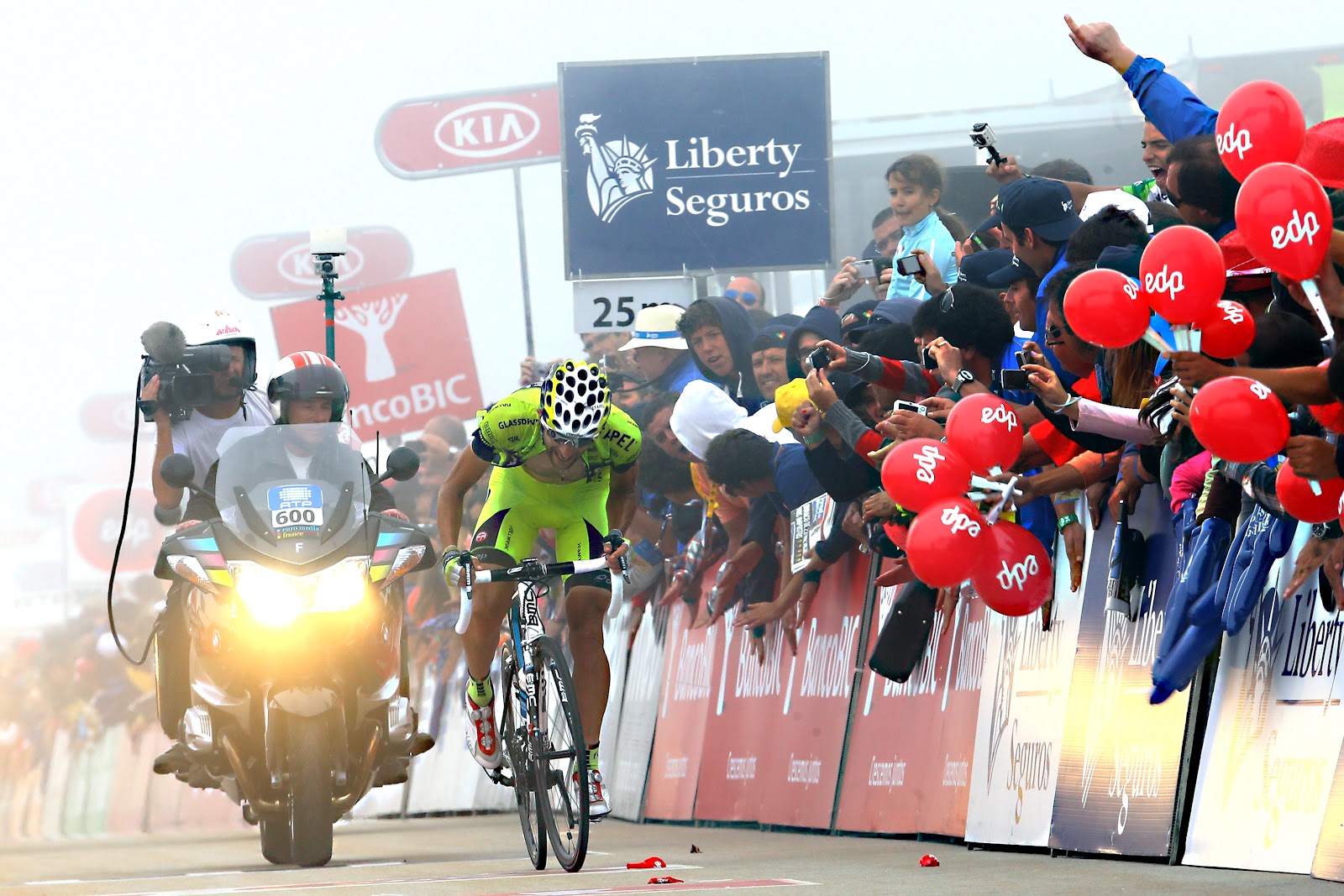
Blanco climbing to victory on Torre in 2012 (Volta a Portugal)
It was win number four, taking him ahead of Portuguese cycling legend Joaquim Agostinho, and level with Marco Chagas, who now commentates on the race for Portuguese television. His fifth would have to wait though, with the move to Geox meaning that Blanco would miss the race for the first time.
“After Geox I was just thinking about my happiness. I was about to retire after that fiasco, but I wanted to do another year, just to erase 2011 from my mind,” he says. “In January I decided that I would try and be the first to win five Voltas, so I started the search for a new team.”
Efapel-Glassdrive was the destination for his final season as a professional. Once again, he was victorious on the Alto da Torre, climbing into the lead on his favourite mountain.
“The last Volta win is my favourite. That year I enjoyed every race as if it was my last,” he says. “I cry just thinking about how happy I was. It really was a dream come true.”
Riding into Lisbon in the yellow jersey was his last act as a professional cyclist, and then Blanco was off. To Africa, specifically. He moved with his wife to Equatorial Guinea, where she worked. Blanco admits to “doing almost nothing” during those three years – a well-earned rest.
Now back in Santiago de Compostela, Blanco has grand plans in an altogether different sport, moving from one type of climbing to another.
“I’m currently working to open a climbing wall centre, with help from ex-World Champion Ramón Julián,” he says. “I started climbing thanks to my brother-in-law, and I loved it. Together we had the idea to start this project.”
Blanco will take some time out from working on his new project to visit the Volta once again this week. It will be a while before he sees anyone come close to his record-breaking five victories, but perhaps he’ll witness the beginning of a challenge.
Rebellin in the leader’s jersey, days before his unlucky exit from the 2015 Tour of Turkey (Cor Vos)
He’s riding his 23rd year as a pro but the controversial Italian isn’t slowing down yet
Everything changed on May 3rd, the last day of the Tour of Turkey and the now-customary Istanbul circuit race that saw the peloton cross the Bosphorus, hopping between the continents. Davide Rebellin, the 43-year-old Italian riding for Polish squad CCC Polsat Polkowice, was primed for a podium spot few would have expected at the week’s start.
But then, just thirty kilometres from the end of the race, it happened. In the crowd there was a moment of inattention, a dog running free from the lead, unwittingly causing chaos in the massed ranks of the peloton.
Rebellin’s teammate, the equally divisive Stefan Schumacher was the first to go down. Rebellin followed, hitting the road hard. His shoulder was dislocated, his race over, a victory gone.
Three weeks later he was back. Seventh overall at the Tour of Norway was followed up with a fifth place at the Italian National Championships in June. But Rebellin was still dwelling on Turkey and an opportunity missed.
“I’m still recovering from the disappointment,” he says. “The shoulder doesn’t hurt when I ride though, but I will have an operation at the end of the season.”
“Last week it popped out as I turned over in bed. I’ll have to be careful to avoid falls too.”
Earlier in the race there was a surprise win on the tough summit finish of Elmalı, beating eventual winner Kristijan Durasek and moving into the leader’s jersey. The remainder of the peloton was spread over forty minutes, with only one other man within a minute of a thrilled Rebellin.
Davide Rebellin, now in his 23rd year as a professional (Cor Vos, also header image)
Despite this mountain-top success, among others, Rebellin has been more renowned for his ability in the classics, rather than stage races. Maybe his drift towards success in the latter is a product of aging – when there is less explosivity in the legs for the short, sharp classics-style hills.
“Compared to previous years I feel that I’ve improved in the long climbs but have lost a bit in the sprint,” says Rebellin. “Something that has changed is that nowadays I have to do more races to find a good condition.”
One stage race that Rebellin was forced to miss out on was his home Grand Tour, the Giro d’Italia. There were suggestions that race organisers RCS Sport had barred him and Schumacher from riding, with race director Mauro Vegni commenting in January, “I’d like to have a Giro start without riders who stir controversy.”
It’s a stance that has opened Vegni up to accusations of hypocrisy, with numerous other riders who had served doping-related bans allowed to ride. At the Giro this year were Ivan Basso, Franco Pellizotti, Ilnur Zakarin, Alberto Contador, Diego Ulissi, Giovanni Visconti and Tom Danielson.
When asked about it, Rebellin had a different view. “I would’ve wanted to do it but the choice not to take me was down to the team,” he says. “I have the right to participate in races, just like others who have served doping bans. It wasn’t the case that there was discrimination against me, even if others have been in that situation.”
Whatever went on, it eventually turned out that he wouldn’t have been able to participate anyway, thanks to his shoulder injury.
On the way to a now-rescinded silver medal at the 2008 Olympics (Cor Vos)
The controversy Vegni talks about, and something that many still hold against Rebellin, is his ban after testing positive for CERA during the 2008 Olympics in Beijing. The Veronesi took silver in the road race, a result that was later rescinded as he was banned for two years.
“There are people who believe in my innocence. I’m clear that some justice has been done though, even I’ll never have what they took from me – the medal, the races I was forced to miss, and then there have been the moral an economic damages,” Rebellin says. “The judge’s ruling earlier this year has declared my innocence of doping with a full acquittal.”
That’s not quite the whole story – a court in Padova found he had no criminal case to answer after the Italian Olympic Committee (CONI) had sought €500,000 damages and a year’s imprisonment for his positive test. The sporting sanctions remain, however.
Enough about the past though, what does the future hold for Rebellin?
“I started racing when I was ten years old, with my father’s team. At the moment I don’t know when I will stop,” he says. “I’ll decide during the course of the season whether to do another year.”
“I still want to race, train, I still have the determination. What keeps me in this condition is the life I live. My diet, rest and recuperation are all better than they were ten years ago. That’s where my results come from.”
A three-time winner at Flèche Wallonne, he last won in 2009 with Androni Giocattoli (Cor Vos)
After twenty-three years involvement with the sport, there are no plans to forget about cycling once he retires as a professional. “Training young cyclists is an option – both amateurs and professionals,” says Rebellin.
“I’ve already decided to arrange training camps with amateurs, and ride with them on the French Riviera. I can give them advice, share my experiences and just be among those who love cycling.”
Rebellin has been based in France for over a decade now, living in Monaco with his wife of just over a year, Françoise, and their pet cats. It’s clear that his whole outlook on life has changed in those years spent in France. “I thought I was only able to pedal before Françoise,” he says. “I was like half a man. Now I’m less insecure, more focused on doing things I love.”
Expat life hasn’t all been plain sailing though, with the Italian authorities accusing him of using his Monaco property to avoid €6.5million in taxes while supposedly still living in Italy. Rebellin was eventually cleared this year, with the case thrown out alongside the CONI charges.
There are, of course, many obvious positives of living on France’s south coast for a cyclist – the weather, the roads, easy travel to races and, last but not least, the company.
“There are many professionals based here. Sometimes I train with Niccolò Bonifazio, Oscar Gatto or my new teammate Sylvester Szmyd,” he says. “My favourite climbs are the Col de la Madone and the Col de Turini.”
For Rebellin there was another, rather more unexpected advantages – a stroke of luck that led him to join CCC in 2013.
“A Polish friend of mine, who works in Monte Carlo put me in touch with Piotr Wadecki (team DS), so he’s the man I have to thank,” he says. “We talked, found an agreement and now here I am.”
Moving to the Polish ProContinental squad was a bold move, but one that has paid off, as the team grows in stature with every passing season. “We’re improving every year, with better riders and better organisation, as well as invited to bigger races,” says Rebellin. “I think we are growing to become one of the best in the world.”
The CCC-Sprandi train in Turkey (Cor Vos)
CCC is the ninth team of Rebellin’s career, and having spent three years in the distinctive orange kit, it’s also his second-longest stint at a team. German-based squad Gerolsteiner was his home from 2002 to 2008, the prime years of his career, during which time he became the first ever rider to complete the fabled Ardennes Triple in 2004, as well as winning Paris-Nice four years later.
Despite his many successes, Rebellin still laments one race he missed out on. “Being a classics-style rider, my failure to win the World Championships is my biggest regret,” he says. “My favourite victory was Liège, but the Worlds is the race I miss most from my palmarès.”
His best result at the Worlds remains his fourth place in 2008, as teammate Alessandro Ballan took victory. It’s a result he will never improve upon, due to the Italian Federation’s policy of not selecting riders who have served doping bans.
At the moment he’s leading CCC at the Tour de Pologne, his third time racing there with the home team. “I will be seeking a stage victory,” he says. “As for the general classification – I will take it day by day.”
While Rebellin may not be universally popular, it’s hard not to admire his ability to keep going. Comfortably the oldest rider in the professional peloton, he still competes for wins regularly.
There’ll be a rest period after Pologne and then he’s on the hunt again, heading back to Italy for the Autumn Classics, with the Giro di Lombardia the major goal. Look out for the man in orange, still hungry to make his mark, and with perhaps only a few more chances to do so.
He was fourth at this year’s Giro, but who is Andrey Amador? (Cor Vos)
The revelation of the Giro in profile
If you were paying attention to the crowds lining the road in Milan today, you would’ve noticed a Costa Rican flag on the finishing straight. It’s a long way to come to show your support, but these have been a historic few weeks, with the country’s only professional riding to a surprising fourth in the General Classification.
Amador is his name, Andrey Amador Bikkazakova to be precise. It’s a strange one, thanks to his uncommon lineage. His mother, Raisa, is Russian, while father Rodolfo is of Galician heritage.
The youngest of three sons, Andrey turned to cycling in his teenage years. He followed in the footsteps of middle brother Ivan, who he would later ride with in three editions of the Vuelta a Costa Rica.
Amador started off racing both on the road and on mountain bikes, and was successful almost immediately, winning nine gold medals at the National Games. Junior National road race and time trial Championships followed, before joining Ivan at one of the top teams in the country, BCR-Pizza Hut.
He quickly overshadowed his older brother. As an eighteen-year-old he finished on the podium at the Vuelta a Costa Rica, as well as coming second in Panama’s Vuelta a Chiriquí later in the year.
With his mind set on turning professional he was advised that moving to Spain would give him the best chance of doing so, and midway through 2006 he did just that. Continental team Viña Magna-Cropu was his destination, where he linked up with future Movistar teammates Sergio Pardilla and Jose Herrada for the first time.
Amador at Lizarte in 2007 (top row, third from left) (equipolizarte.com)
His results there, including a string of podium places at the Vuelta a Costa Rica, saw him noticed by top Spanish amateur team Lizarte. Costa Rica’s first professional, José Adrián Bonilla, helped Amador make the transition, introducing him to team boss Manolo Azcona, whom Amador would later describe as a second father.
Based in Pamplona in the Basque Country, the heartland of Spanish cycling, Lizarte have been a steady provider of cyclists to the pro ranks for twenty-three years.
Joseba Beloki is the biggest name to have raced for the team before turning pro, while other notable names include Claus Michael Møller, Isidro Nozal and Benjamín Noval. More recently Movistar riders Marc Soler, Enrique Sanz and Nairo Quintana’s brother Dayer have made the jump.
Amador won an impressive nineteen races with the team, including the Vuelta a Bidasoa and Vuelta al Goierri stage races as well as numerous classics and stage wins at the Vuelta Navarra and Vuelta al Palencia.
One of many victories at Lizarte (equipolizarte.com)
His finest result as an amateur was still yet to come though, going to September’s Tour de l’Avenir as part of an international selection alongside current pros Jarlison Pantano, Mitch Docker and Jacques Janse Van Renseburg.
Having already penned a pro contract with Spanish squad Caisse d’Epargne in August, Amador could ride without pressure. He won the opening 7.5km prologue by seven seconds, something of a yawning chasm considering the distance.
He was rarely out of the top ten for the rest of the race, riding a strong time trial and finishing ahead of future Tour de France contender Tejay Van Garderen on the summit finish at Guzet-Neige. He would end up fifth overall, with future teammate Rui Costa a few places above him.
His first pro season didn’t start off too well, with a broken collarbone in March impeding his progress. Before long though, he would settle into his assigned role at the team – that of a dependable role player, helping Luis León Sánchez to win Paris-Nice.
The next season saw him turn history maker, becoming the first Costa Rican to ride a Grand Tour, something Bonilla had never managed during his three seasons with Kelme. The 2010 Giro d’Italia was one of the more exciting GTs in living memory, with Amador’s teammate David Arroyo coming close to taking the overall win thanks to a mid-race breakaway.
Amador riding for Caisse d’Epargne in 2010 (Cor Vos)
Amador ended up forty-first in that race, with Arroyo hanging on for second. The Costa Rican had proven worthy of a new contract, but an incident in the New Year saw both his life and career hang in the balance.
While out training in his home country, Amador was mugged for his bike by a gang. He was left for dead, lying in a riverbed unconscious for six hours before he was found. Cuts and bruises were the initial diagnosis, but it was later found that one of his kidneys had shut down due to the severity of the beating.
Miraculously, he was back on his bike the following month, going on to finish fourth at the GP Llodio and Vuelta La Rioja in April before disaster struck again. This time it was another broken collarbone, putting him out of the Giro squad. Another landmark came later in the season as he became the first Costa Rican to ride the Tour de France.
After the annus horribilis of 2011, the following season, for the newly-sponsored Movistar team, was his best yet. Ninth in January’s Tour de San Luís was the strongest stage race result of his pro career, but it was nothing compared to what happened in May.
The fourteenth stage of the Giro was the first summit finish. Amador was in the breakaway for the second time in three days, having finished third into Sestri Levante on stage twelve.
Celebrating victory at the 2012 Giro (Cor Vos)
On the road to Breuil-Cervinia he was not to be denied though, beating Jan Bárta and Alessandro De Marchi to the win, the first of his career. A solid twenty-ninth on GC showed a glimpse of his future potential.
A strong start to the following season, including an eighth overall at Tirreno-Adriatico, was cut short in April. Another broken collarbone (his fifth), caused by a crash in Liège-Bastogne-Liège, meant it looked like it might be another year to forget.
He returned to racing after a month out and was showed enough form to make the Tour squad, helping Nairo Quintana to second overall. Later on bad luck struck again, as a bout of mononucleosis interrupted the second half of his season.
He was back at the Giro last year, part of Quintana’s triumphant campaign, while a team time trial victory at the Vuelta a España was another high point. This year’s edition has seen him break out as a big-time rider in his own right though.
A strong fifth-place finish in the team time trial was followed up by hanging with the big names on the early summit finishes at Abetone and Campitello Matese.
The windswept mid-race time trial around the Prosecco-producing Province of Treviso saw him finish fifteenth, catapulting him into the podium places. The next few days featured more mountain-top finishes, with Amador limiting his losses admirably on the stages to Madonna di Campiglio and Aprica.
Racing to Verbania this May (Cor Vos)
For all his efforts, Astana’s Mikel Landa managed to wrest third place from him, but Amador managed to hold off a resurgent Ryder Hesjedal in the final trio of mountain stages to hold on to his fourth place.
Even Amador has been surprised at what he has achieved this month. He put his improvement down to weight loss, claiming that he’s five kilograms lighter than he was at Cervinia three years ago. But while he may be getting slimmer, his pay cheque won’t be – his contract is up for renewal at the end of the season.
Something else to note is the absence of team leaders Quintana and Alejandro Valverde. With the duo both focused on the Tour, it’s the first opportunity Amador has had to race a Grand Tour for himself.
According to journalists in the small Central American country, one of whom made the trip to Milan for the final stage, Amador has risen to the status of national hero back home. His is a star on the rise, and for a man who has so many firsts under his belt already, you have to wonder what his next might be.







































 Dani Ostanek