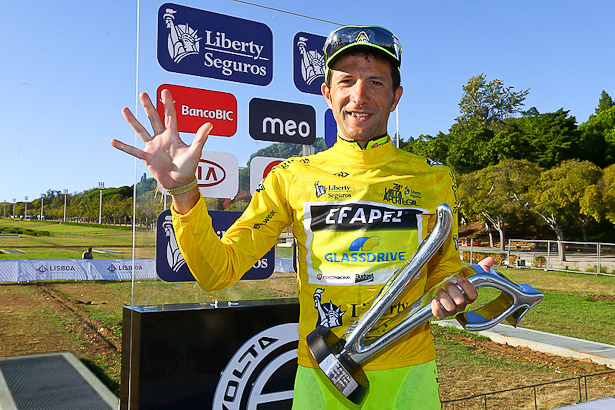
David Blanco, King of the Volta

David Blanco Volta 2012
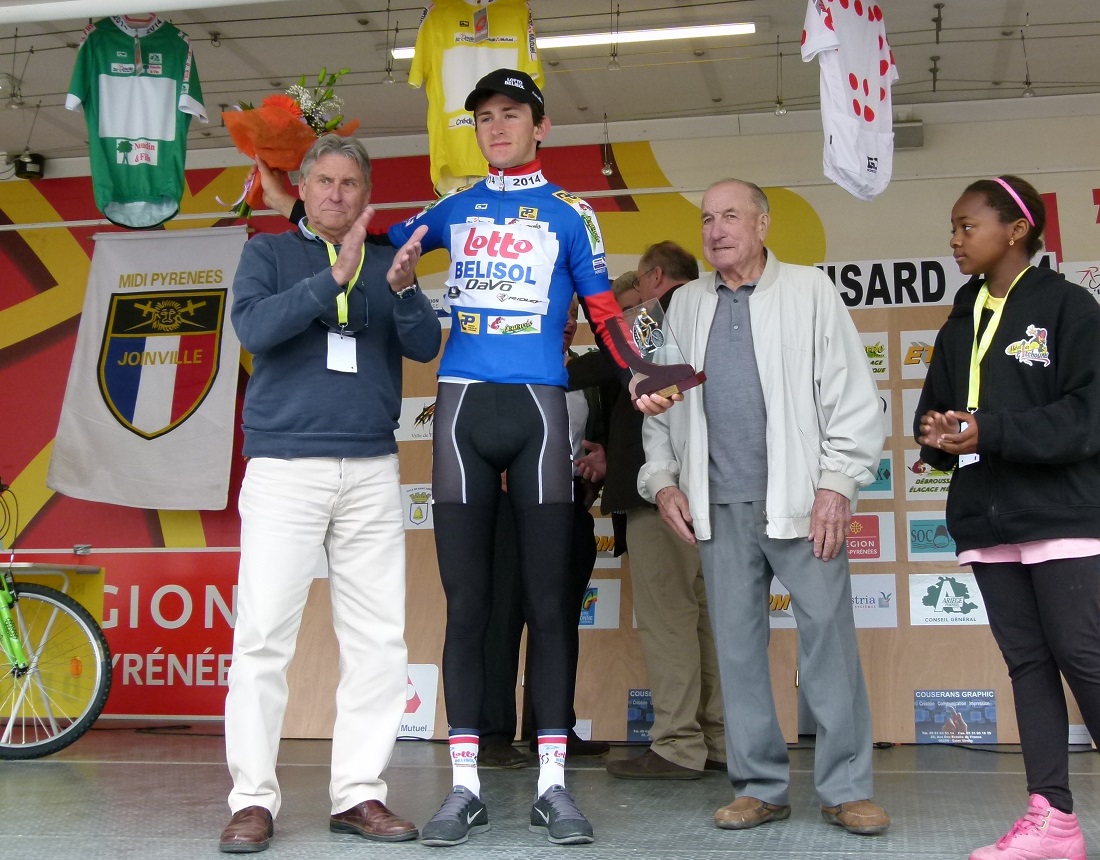
Blanco with trophy number five at the 2012 race (Volta a Portugal)

An interview with the man who knows Portugal’s big race as well as anyone

“I cry every time I see one of my wins.” So says David Blanco, a Spaniard, and five-time winner of the Volta a Portugal. “It’s hard to explain but even at the Vuelta, my home race, I never had the same motivation as I did when I raced the Volta.”

“It was a strange symbiosis, but perhaps the sum of many things – the weather, the mountains, the people,” he trails off.

Blanco has won the race more than anybody else since it was first run in 1927. In a twelve-year career, he missed just one edition. And yet the Volta is barely heard of outside of Portugal. Ask your average cycling fan for a podium prediction and it’s likely that you’ll be met with a blank stare.

The level at which Portuguese cycling is run is the primary reason. There are six teams in the country, all of which race at Continental level, the third tier of cycling, and rarely venture outside of Iberia to compete.

There are financial reasons for that, but this insularity is the main cause of Portuguese cycling’s solitary confinement. Names like Rui Costa, Tiago Machado and Sergio Paulinho are familiar to our ears, but what exactly is Paredes Rota dos Movéis?

“I started as a professional there in 2000,” says Blanco. “They invited me to ride the Volta a Portugal Futuro the previous year, and I finished third so they signed me.”

The team, now known as LA Aluminios-Antarte, boasted another familiar name at the time, Ezequiel Mosquera. “I chose them because Ezequiel (a fellow Galician) was there,” he says. “In Spain the level of talent was very high so it was tough to turn pro. Because of that, Spanish riders were cheap, which meant that there were around sixty riders in Portugal then.”

Blanco was twenty-five when he turned professional, late thanks to his time at university, studying business in Santiago de Compostela. Born in Berne, Switzerland to Spanish parents, Blanco’s family relocated there when he was five years old. Soon after his love affair with the bike began, inspired by 1988 Tour de France winner Pedro Delgado.

The Galician city, which Blanco still calls home today, is the end point for one of the largest religious pilgrimages in the world, The Way of St. James. Hundreds of thousands of people set out on foot, by bicycle or on horseback, in a nod to their medieval counterparts, to visit the shrine of the apostle.

Blanco, a Catholic himself, sees a similarity in the Volta. “It’s like a party for everybody. The word I use is romería (a Catholic day of celebration and pilgrimage),” he says. “It doesn’t feel like any other race. People, even those who don’t care about cycling, visit as they would a party.”
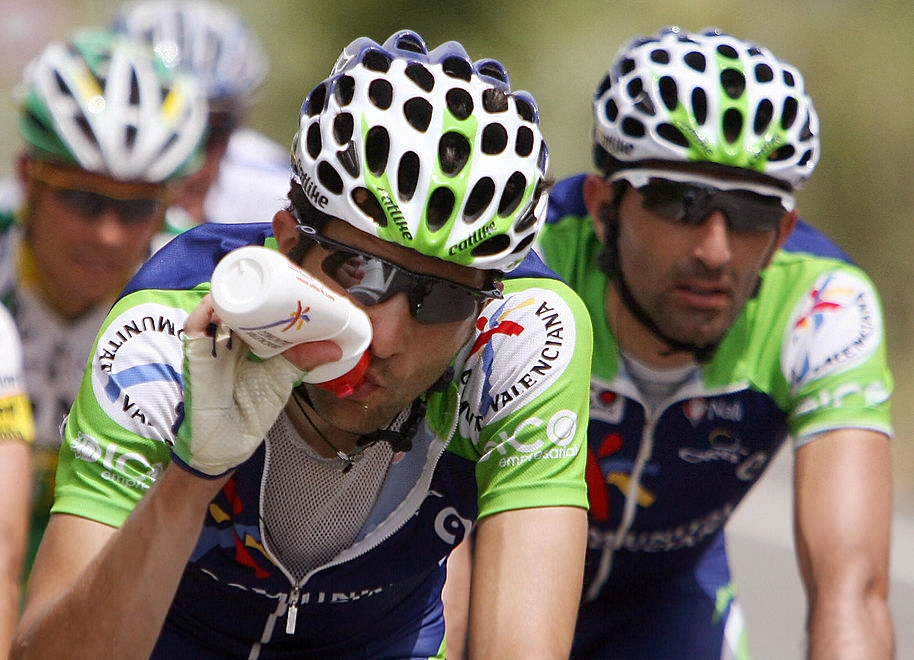
At the Volta a Catalunya in 2006 (AFP)

That the race is held in August, a time when much of the public are on holiday from work, is both a help and a hindrance.

“The race’s place in the calendar is its biggest problem. Before the ProTour (now known as the WorldTour), plenty of big teams visited but now the Tour de Pologne and the Vuelta are too close. It will never be moved from August though.”

It’s something of a conundrum then. Whereas once upon a time the race could boast startlists featuring Lampre, Festina, QuickStep and more, Spanish ProContinental squad Caja Rural are the cream of the crop in 2015, while a smattering of foreign Continental-level teams will also take part.

In the mid-2000s the race enjoyed 2.HC status (it’s now 2.1), and there was a push towards the ProTour, but such a move would have been at the detriment of the local teams.

“Thank God they didn’t upgrade. Portuguese teams would’ve disappeared because they’re too small, too poor to move up,” says Blanco. “Just look at what happened in Spain. We have no races, no teams, no future.”

WorldTour teams do visit the country, but only for February’s Volta ao Algarve, a training race, closer to their home bases in northern and central Europe than the likes of Oman and Qatar. The race is a rare success story for Portuguese cycling in the wake of the global financial crisis, which hit both Iberian countries hard.

From a combined twenty-three teams (nine Portuguese) in 2006, the countries now share just ten, while numerous races have also disappeared from the calendar.

“Of course there’s less money in Portugal. Since the ProTour was introduced, it has been good for the elite teams but misery for the rest,” Blanco says. Disdain for the elite of cycling is a recurring theme in our conversation, with Blanco referring to the UCI’s top tier pejoratively several times.

“All my life I dreamed of becoming a professional cyclist. I achieved it, but when I saw what was behind the curtain it felt like a nightmare.”

“Portuguese teams have budgets of €300k or so. In my final year the salary was a complete joke,” he says. “I can thank God I earned good money before so that wasn’t a problem for me but there are many riders there earning €1k a month or less, sometimes not even that.”

Just as in wider society, a growing economic disparity is a problem in cycling, with the idea of a budget cap being mooted by figures such as Oleg Tinkov in recent times. One would assume though, that Tinkov had his own roubles in mind, rather than the financial security of riders.

Riding for Geox-TMC at the 2011 Vuelta a España (Cor Vos)
At the 2011 Vuelta a España with Geox-TMC (Cor Vos)

Financial security was at the forefront of Blanco’s mind when he chose to join Spanish team Geox-TMC in 2011, his penultimate year as a professional. Yet despite the team winning an exciting edition of the Vuelta a España with Juan José Cobo, Blanco had bitter memories of the season, calling it nothing short of a disaster.

“I could never find good condition on the bike. Later I learned that I had a bacterial problem with my stomach that affected me all season,” he says. “The salary, along with my Volta wins, meant that I put too much pressure on myself, and tried to race far more than I was used to.”

“It was nice to win the Vuelta, even though in the end it helped nothing. To this day I still don’t understand why Geox left – perhaps Formula One is more chic than cycling.” Geox now sponsors the sports Red Bull team.

While undoubtedly a miserable time for Blanco, his experience with Geox was hardly the only dark point of his career. May 2006 saw the eruption of Operation Puerto, the biggest doping scandal to hit the sport since the Festina affair of 1998. At the time, Blanco was riding for one of Spain’s premier squads and the team at the centre of the investigation, Kelme.

He had finished tenth at the 2004 Vuelta whilst working for team leader Alejandro Valverde, who ended up fourth, while another teammate, Carlos Garcia Quesada was fifth. An opportunity to move to the powerhouse Banesto team followed, but Blanco remained at Kelme, a decision he calls, “the biggest mistake of my life.”

“Anyway, after Puerto I was destroyed emotionally. My teammates had stopped training but I decided that I had to do something special if I wanted to continue in the sport.”

“To tell the truth I never thought I could win the Volta, but I knew Portugal well and knew there were teams with good money who could offer me a future,” he says. “I was disappointed with what happened in 2006 and how the ‘elite’ reacted to me so I lost the motivation to race in the ProTour again.”

The rest was, as they say, history, with Blanco winning two stages on the way to opening his Volta account. Portuguese teams chased his signature, but Blanco instead chose to join a newly-founded team, run jointly by Russian footballer Valery Karpin and the local government.

As it happened, he never turned a pedal in anger for Karpin-Galicia. A meeting with Duja-Tavira, the Algarve-based team which has existed in some form since 1976, saw him rescind his contract and return to Portugal.
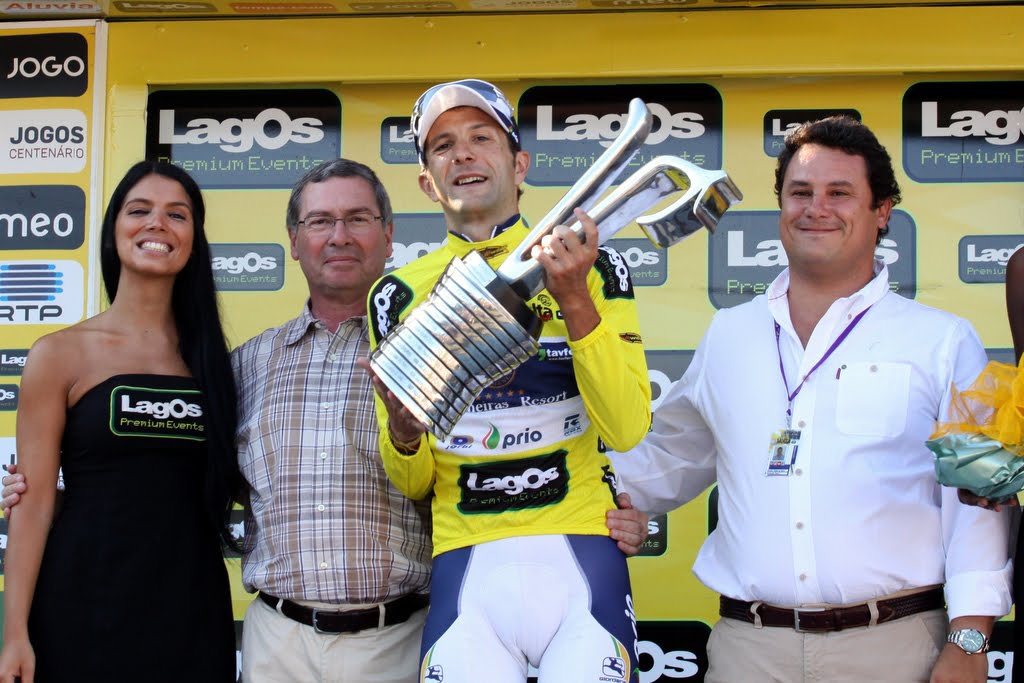
Trophy number four in 2010
Trophy number four in 2010 (Volta a Portugal)

The late Xavi Tondo won that year’s Volta, with Blanco finishing fifth. He only had to wait a year to take victory number two though, beating future teammate Cobo, as well as a young Dan Martin.

Blanco’s third victory came in 2009, although he was second originally. Nuno Ribeiro of Liberty Seguros had won the race, but it was later announced that he had tested positive for CERA just before the start, along with teammates Isidro Nozal and Hector Guerra. The scandal saw the Spanish bank leave the sport for a second time in three years.

“I count it as a victory but what happened in 2009 was bad for everyone,” Blanco says. “I never felt the happiness of a win, and I think Portuguese cycling is still suffering from that stigma.”

If there is a stigma surrounding the sport, it’s an unfair one. The Portuguese Anti-Doping Federation (ADOP) runs its own version of both the Biological Passport and the ADAMS Whereabouts system, the only country in Europe with such a program in place for Continental-level teams.

With Ribeiro’s disqualification, Blanco not only won his third Volta, but he was also elevated to first place on stage ten, which finished atop the famous climb of the Alto da Torre.

Far from a single-lane goat path climb you might see in the Vuelta, the road to the top of the second-highest peak in the country is smooth and wide. The gradient constantly changes though, and at 27km long, it takes well over an hour to race up from the town of Seia.

“It’s a very special climb. You need to know it to be able to win. I suffered in the early steep sections,” he says. “The rest of the climb is for powerful riders – my favourite part.”

“I never understood why riders waited for those to attack, rather than the sections where I would suffer more. The only time they did that was when Tondo won in 2008,” Blanco says, smiling.

After 2009’s retroactive victory, he was first to the top again the following year, also taking the win at the other summit finish of the race at Senhora da Graca. Fellow countrymen David Bernabéu and Sergio Pardilla would join him on the final podium.
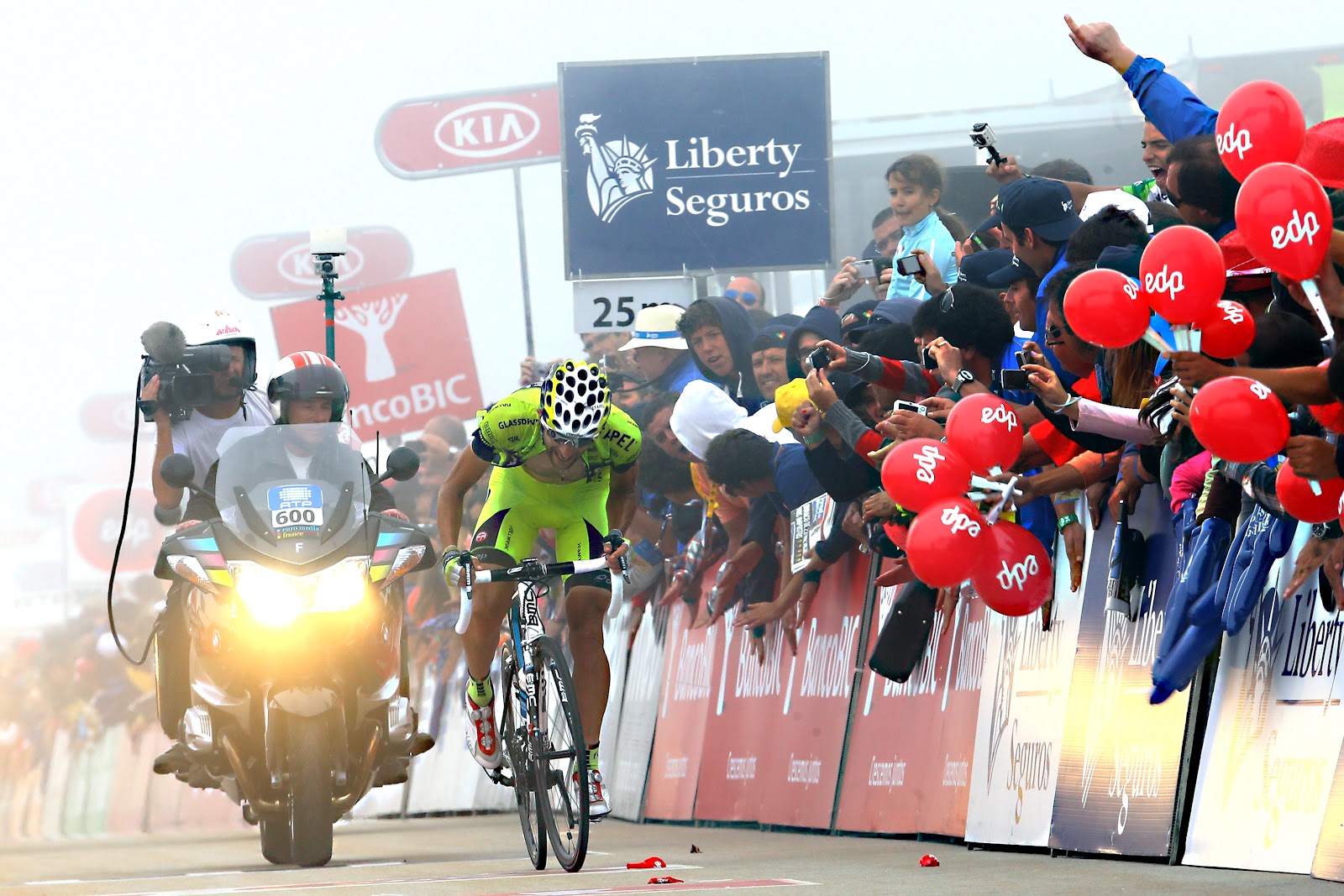
Blanco climbing to victory on Torre in 2012
Blanco climbing to victory on Torre in 2012 (Volta a Portugal)

It was win number four, taking him ahead of Portuguese cycling legend Joaquim Agostinho, and level with Marco Chagas, who now commentates on the race for Portuguese television. His fifth would have to wait though, with the move to Geox meaning that Blanco would miss the race for the first time.

“After Geox I was just thinking about my happiness. I was about to retire after that fiasco, but I wanted to do another year, just to erase 2011 from my mind,” he says. “In January I decided that I would try and be the first to win five Voltas, so I started the search for a new team.”

Efapel-Glassdrive was the destination for his final season as a professional. Once again, he was victorious on the Alto da Torre, climbing into the lead on his favourite mountain.

“The last Volta win is my favourite. That year I enjoyed every race as if it was my last,” he says. “I cry just thinking about how happy I was. It really was a dream come true.”

Riding into Lisbon in the yellow jersey was his last act as a professional cyclist, and then Blanco was off. To Africa, specifically. He moved with his wife to Equatorial Guinea, where she worked. Blanco admits to “doing almost nothing” during those three years – a well-earned rest.

Now back in Santiago de Compostela, Blanco has grand plans in an altogether different sport, moving from one type of climbing to another.

“I’m currently working to open a climbing wall centre, with help from ex-World Champion Ramón Julián,” he says. “I started climbing thanks to my brother-in-law, and I loved it. Together we had the idea to start this project.”

Blanco will take some time out from working on his new project to visit the Volta once again this week. It will be a while before he sees anyone come close to his record-breaking five victories, but perhaps he’ll witness the beginning of a challenge.

The 77th Volta a Portugal runs from July 29 – August 9. Indoorwall in Santiago de Compostela opens September 4.

Rebel with a cause: Davide Rebellin

Rebellin in the leader's jersey, days before his unlucky exit from the 2015 Tour of Turkey (Cor Vos)
Rebellin in the leader’s jersey, days before his unlucky exit from the 2015 Tour of Turkey (Cor Vos)

He’s riding his 23rd year as a pro but the controversial Italian isn’t slowing down yet

Everything changed on May 3rd, the last day of the Tour of Turkey and the now-customary Istanbul circuit race that saw the peloton cross the Bosphorus, hopping between the continents. Davide Rebellin, the 43-year-old Italian riding for Polish squad CCC Polsat Polkowice, was primed for a podium spot few would have expected at the week’s start.

But then, just thirty kilometres from the end of the race, it happened. In the crowd there was a moment of inattention, a dog running free from the lead, unwittingly causing chaos in the massed ranks of the peloton.

Rebellin’s teammate, the equally divisive Stefan Schumacher was the first to go down. Rebellin followed, hitting the road hard. His shoulder was dislocated, his race over, a victory gone.

Three weeks later he was back. Seventh overall at the Tour of Norway was followed up with a fifth place at the Italian National Championships in June. But Rebellin was still dwelling on Turkey and an opportunity missed.

“I’m still recovering from the disappointment,” he says. “The shoulder doesn’t hurt when I ride though, but I will have an operation at the end of the season.”

“Last week it popped out as I turned over in bed. I’ll have to be careful to avoid falls too.”

Earlier in the race there was a surprise win on the tough summit finish of Elmalı, beating eventual winner Kristijan Durasek and moving into the leader’s jersey. The remainder of the peloton was spread over forty minutes, with only one other man within a minute of a thrilled Rebellin.

rebellin face cor vos
Davide Rebellin, now in his 23rd year as a professional (Cor Vos, also header image)

Despite this mountain-top success, among others, Rebellin has been more renowned for his ability in the classics, rather than stage races. Maybe his drift towards success in the latter is a product of aging – when there is less explosivity in the legs for the short, sharp classics-style hills.

“Compared to previous years I feel that I’ve improved in the long climbs but have lost a bit in the sprint,” says Rebellin. “Something that has changed is that nowadays I have to do more races to find a good condition.”

One stage race that Rebellin was forced to miss out on was his home Grand Tour, the Giro d’Italia. There were suggestions that race organisers RCS Sport had barred him and Schumacher from riding, with race director Mauro Vegni commenting in January, “I’d like to have a Giro start without riders who stir controversy.”

It’s a stance that has opened Vegni up to accusations of hypocrisy, with numerous other riders who had served doping-related bans allowed to ride. At the Giro this year were Ivan Basso, Franco Pellizotti, Ilnur Zakarin, Alberto Contador, Diego Ulissi, Giovanni Visconti and Tom Danielson.

When asked about it, Rebellin had a different view. “I would’ve wanted to do it but the choice not to take me was down to the team,” he says. “I have the right to participate in races, just like others who have served doping bans. It wasn’t the case that there was discrimination against me, even if others have been in that situation.”

Whatever went on, it eventually turned out that he wouldn’t have been able to participate anyway, thanks to his shoulder injury.

On the way to a now-rescinded silver medal at the 2008 Olympics (Cor Vos)

The controversy Vegni talks about, and something that many still hold against Rebellin, is his ban after testing positive for CERA during the 2008 Olympics in Beijing. The Veronesi took silver in the road race, a result that was later rescinded as he was banned for two years.

“There are people who believe in my innocence. I’m clear that some justice has been done though, even I’ll never have what they took from me – the medal, the races I was forced to miss, and then there have been the moral an economic damages,” Rebellin says. “The judge’s ruling earlier this year has declared my innocence of doping with a full acquittal.”

That’s not quite the whole story – a court in Padova found he had no criminal case to answer after the Italian Olympic Committee (CONI) had sought €500,000 damages and a year’s imprisonment for his positive test. The sporting sanctions remain, however.

Enough about the past though, what does the future hold for Rebellin?

“I started racing when I was ten years old, with my father’s team. At the moment I don’t know when I will stop,” he says. “I’ll decide during the course of the season whether to do another year.”

“I still want to race, train, I still have the determination. What keeps me in this condition is the life I live. My diet, rest and recuperation are all better than they were ten years ago. That’s where my results come from.”

A three-time winner at Flèche Wallonne, he last won in 2009 with Androni Giocattoli (Cor Vos)

After twenty-three years involvement with the sport, there are no plans to forget about cycling once he retires as a professional. “Training young cyclists is an option – both amateurs and professionals,” says Rebellin.

“I’ve already decided to arrange training camps with amateurs, and ride with them on the French Riviera. I can give them advice, share my experiences and just be among those who love cycling.”

Rebellin has been based in France for over a decade now, living in Monaco with his wife of just over a year, Françoise, and their pet cats. It’s clear that his whole outlook on life has changed in those years spent in France. “I thought I was only able to pedal before Françoise,” he says. “I was like half a man. Now I’m less insecure, more focused on doing things I love.”

Expat life hasn’t all been plain sailing though, with the Italian authorities accusing him of using his Monaco property to avoid €6.5million in taxes while supposedly still living in Italy. Rebellin was eventually cleared this year, with the case thrown out alongside the CONI charges.

There are, of course, many obvious positives of living on France’s south coast for a cyclist – the weather, the roads, easy travel to races and, last but not least, the company.

“There are many professionals based here. Sometimes I train with Niccolò Bonifazio, Oscar Gatto or my new teammate Sylvester Szmyd,” he says. “My favourite climbs are the Col de la Madone and the Col de Turini.”

For Rebellin there was another, rather more unexpected advantages – a stroke of luck that led him to join CCC in 2013.

“A Polish friend of mine, who works in Monte Carlo put me in touch with Piotr Wadecki (team DS), so he’s the man I have to thank,” he says. “We talked, found an agreement and now here I am.”

Moving to the Polish ProContinental squad was a bold move, but one that has paid off, as the team grows in stature with every passing season. “We’re improving every year, with better riders and better organisation, as well as invited to bigger races,” says Rebellin. “I think we are growing to become one of the best in the world.”

The CCC-Sprandi train in Turkey (Cor Vos)

CCC is the ninth team of Rebellin’s career, and having spent three years in the distinctive orange kit, it’s also his second-longest stint at a team. German-based squad Gerolsteiner was his home from 2002 to 2008, the prime years of his career, during which time he became the first ever rider to complete the fabled Ardennes Triple in 2004, as well as winning Paris-Nice four years later.

Despite his many successes, Rebellin still laments one race he missed out on. “Being a classics-style rider, my failure to win the World Championships is my biggest regret,” he says. “My favourite victory was Liège, but the Worlds is the race I miss most from my palmarès.”

His best result at the Worlds remains his fourth place in 2008, as teammate Alessandro Ballan took victory. It’s a result he will never improve upon, due to the Italian Federation’s policy of not selecting riders who have served doping bans.

At the moment he’s leading CCC at the Tour de Pologne, his third time racing there with the home team. “I will be seeking a stage victory,” he says. “As for the general classification – I will take it day by day.”

While Rebellin may not be universally popular, it’s hard not to admire his ability to keep going. Comfortably the oldest rider in the professional peloton, he still competes for wins regularly.

There’ll be a rest period after Pologne and then he’s on the hunt again, heading back to Italy for the Autumn Classics, with the Giro di Lombardia the major goal. Look out for the man in orange, still hungry to make his mark, and with perhaps only a few more chances to do so.


Who is Andrey Amador?

Giro d'Italia 2012 stage 14
He was fourth at this year’s Giro, but who is Andrey Amador? (Cor Vos)

The revelation of the Giro in profile

If you were paying attention to the crowds lining the road in Milan today, you would’ve noticed a Costa Rican flag on the finishing straight. It’s a long way to come to show your support, but these have been a historic few weeks, with the country’s only professional riding to a surprising fourth in the General Classification.

Amador is his name, Andrey Amador Bikkazakova to be precise. It’s a strange one, thanks to his uncommon lineage. His mother, Raisa, is Russian, while father Rodolfo is of Galician heritage.

The youngest of three sons, Andrey turned to cycling in his teenage years. He followed in the footsteps of middle brother Ivan, who he would later ride with in three editions of the Vuelta a Costa Rica.

Amador started off racing both on the road and on mountain bikes, and was successful almost immediately, winning nine gold medals at the National Games. Junior National road race and time trial Championships followed, before joining Ivan at one of the top teams in the country, BCR-Pizza Hut.

He quickly overshadowed his older brother. As an eighteen-year-old he finished on the podium at the Vuelta a Costa Rica, as well as coming second in Panama’s Vuelta a Chiriquí later in the year.

With his mind set on turning professional he was advised that moving to Spain would give him the best chance of doing so, and midway through 2006 he did just that. Continental team Viña Magna-Cropu was his destination, where he linked up with future Movistar teammates Sergio Pardilla and Jose Herrada for the first time.

Amador at Lizarte in 2007 (top row, third from left) (equipolizarte.com)

His results there, including a string of podium places at the Vuelta a Costa Rica, saw him noticed by top Spanish amateur team Lizarte. Costa Rica’s first professional, José Adrián Bonilla, helped Amador make the transition, introducing him to team boss Manolo Azcona, whom Amador would later describe as a second father.

Based in Pamplona in the Basque Country, the heartland of Spanish cycling, Lizarte have been a steady provider of cyclists to the pro ranks for twenty-three years.

Joseba Beloki is the biggest name to have raced for the team before turning pro, while other notable names include Claus Michael Møller, Isidro Nozal and Benjamín Noval. More recently Movistar riders Marc Soler, Enrique Sanz and Nairo Quintana’s brother Dayer have made the jump.

Amador won an impressive nineteen races with the team, including the Vuelta a Bidasoa and Vuelta al Goierri stage races as well as numerous classics and stage wins at the Vuelta Navarra and Vuelta al Palencia.

Amador June 2007 (equipolizarte.com)
One of many victories at Lizarte (equipolizarte.com)

His finest result as an amateur was still yet to come though, going to September’s Tour de l’Avenir as part of an international selection alongside current pros Jarlison Pantano, Mitch Docker and Jacques Janse Van Renseburg.

Having already penned a pro contract with Spanish squad Caisse d’Epargne in August, Amador could ride without pressure. He won the opening 7.5km prologue by seven seconds, something of a yawning chasm considering the distance.

He was rarely out of the top ten for the rest of the race, riding a strong time trial and finishing ahead of future Tour de France contender Tejay Van Garderen on the summit finish at Guzet-Neige. He would end up fifth overall, with future teammate Rui Costa a few places above him.

His first pro season didn’t start off too well, with a broken collarbone in March impeding his progress. Before long though, he would settle into his assigned role at the team – that of a dependable role player, helping Luis León Sánchez to win Paris-Nice.

The next season saw him turn history maker, becoming the first Costa Rican to ride a Grand Tour, something Bonilla had never managed during his three seasons with Kelme. The 2010 Giro d’Italia was one of the more exciting GTs in living memory, with Amador’s teammate David Arroyo coming close to taking the overall win thanks to a mid-race breakaway.

Steenwijk - wielrennen - cycling - radsport - cyclisme - ENECO Tour - proloog - tijdrijden - tijdrit - zeitfahren - contre le montre - Andrey Amador Bikkazakova (Caisse D'epargne) - foto Carla Vos/Cor Vos ©2010
Amador riding for Caisse d’Epargne in 2010 (Cor Vos)

Amador ended up forty-first in that race, with Arroyo hanging on for second. The Costa Rican had proven worthy of a new contract, but an incident in the New Year saw both his life and career hang in the balance.

While out training in his home country, Amador was mugged for his bike by a gang. He was left for dead, lying in a riverbed unconscious for six hours before he was found. Cuts and bruises were the initial diagnosis, but it was later found that one of his kidneys had shut down due to the severity of the beating.

Miraculously, he was back on his bike the following month, going on to finish fourth at the GP Llodio and Vuelta La Rioja in April before disaster struck again. This time it was another broken collarbone, putting him out of the Giro squad. Another landmark came later in the season as he became the first Costa Rican to ride the Tour de France.

After the annus horribilis of 2011, the following season, for the newly-sponsored Movistar team, was his best yet. Ninth in January’s Tour de San Luís was the strongest stage race result of his pro career, but it was nothing compared to what happened in May.

The fourteenth stage of the Giro was the first summit finish. Amador was in the breakaway for the second time in three days, having finished third into Sestri Levante on stage twelve.

Cervinia - Italia - wielrennen - cycling - radsport - cyclisme - Andrey Amador (Movistar) celebrating his victory on the podium pictured during stage 14 of the Giro d'Italia 2012 - from Cherasco to Cervinia - foto Cor Vos ©2012
Celebrating victory at the 2012 Giro (Cor Vos)

On the road to Breuil-Cervinia he was not to be denied though, beating Jan Bárta and Alessandro De Marchi to the win, the first of his career. A solid twenty-ninth on GC showed a glimpse of his future potential.

A strong start to the following season, including an eighth overall at Tirreno-Adriatico, was cut short in April. Another broken collarbone (his fifth), caused by a crash in Liège-Bastogne-Liège, meant it looked like it might be another year to forget.

He returned to racing after a month out and was showed enough form to make the Tour squad, helping Nairo Quintana to second overall. Later on bad luck struck again, as a bout of mononucleosis interrupted the second half of his season.

He was back at the Giro last year, part of Quintana’s triumphant campaign, while a team time trial victory at the Vuelta a España was another high point. This year’s edition has seen him break out as a big-time rider in his own right though.

A strong fifth-place finish in the team time trial was followed up by hanging with the big names on the early summit finishes at Abetone and Campitello Matese.

The windswept mid-race time trial around the Prosecco-producing Province of Treviso saw him finish fifteenth, catapulting him into the podium places. The next few days featured more mountain-top finishes, with Amador limiting his losses admirably on the stages to Madonna di Campiglio and Aprica.

Verbania - Italy - wielrennen - cycling - radsport - cyclisme - Jurgen Van Den Broeck (Team Lotto Soudal) - Andrey Amador (Movistar) - Fabio Aru (Astana) pictured during Giro d'Italia 2015 - stage-18 - from Melide to Verbania - photo IB/LB/RB/Cor Vos © 2015
Racing to Verbania this May (Cor Vos)

For all his efforts, Astana’s Mikel Landa managed to wrest third place from him, but Amador managed to hold off a resurgent Ryder Hesjedal in the final trio of mountain stages to hold on to his fourth place.

Even Amador has been surprised at what he has achieved this month. He put his improvement down to weight loss, claiming that he’s five kilograms lighter than he was at Cervinia three years ago. But while he may be getting slimmer, his pay cheque won’t be – his contract is up for renewal at the end of the season.

Something else to note is the absence of team leaders Quintana and Alejandro Valverde. With the duo both focused on the Tour, it’s the first opportunity Amador has had to race a Grand Tour for himself.

According to journalists in the small Central American country, one of whom made the trip to Milan for the final stage, Amador has risen to the status of national hero back home. His is a star on the rise, and for a man who has so many firsts under his belt already, you have to wonder what his next might be.

Passo dell Stelvio - Italia - wielrennen - cycling - radsport - cyclisme - Andrey Amador (Movistar) pictured during stage 20 of the Giro d'Italia 2012 - from Val di Sole to Passo dell Stelvio - foto Cor Vos ©2012
Climbing the Stelvio in 2012 (Cor Vos)

Interview: Giro Gregarios

Paolo Tiralongo with team leader Fabio Aru in 2014 (Cor Vos)

Before the Giro I spoke to three men – three riders who have all won stages at the race but are more well-known as workers, or gregarios, for others.

Astana veteran Paolo Tiralongo helped Vincenzo Nibali win the Giro in 2013, as well as working for Alberto Contador during his now-nullified 2010 victory. He has also experienced personal triumph at the race, winning stages in 2011 and 2012.

Australian Adam Hansen is riding his fourth Giro in a row for Lotto-Soudal, his sixth overall. A key part of André Greipel’s sprint train, Hansen won a Giro stage back in 2013.

Cannondale-Garmin rider Ramunas Navardauskas was part of the squad that assisted Ryder Hesjedal’s unlikely Giro win in 2012. The Lithuanian wore the pink jersey for two stages that year, and went on to take a stage win of his own a year later.

Here’s what the trio had to say about La Corsa Rosa and their experiences with the race.


Memories of the Giro from before you became professional?

Tiralongo: This will be my thirteenth Giro. Cycling has changed a lot since I was young, before there was more room for personal initiative – now everything is focused on the team and the leader.

Hansen: Actually I didn’t follow the Giro, or any professional cycling, before I moved to Europe [In 2003 Hansen swapped mountain biking in Australia for racing at Continental level in Austria.]

Navardauskas:  I remember Cipollini. I always heard about big names like that but when you’re a kid you never think that one day you’ll be there too.

Tiralongo after his 2013 win at Rocca di Cambio (Cor Vos)
Tiralongo after his 2013 win at Rocca di Cambio (Cor Vos, also header image)
Where does the Giro rank for you?

Tiralongo: For me, and every Italian rider, it’s the most important race of the season. It’s our home country and we are more visible, more popular than at any other race.

I think that everyone who can finish this race is a hero. Even if you don’t win, the climbs are equally long for all. Cold is cold, rain is rain – it’s the same for everybody.

Hansen: It’s definitely one of my favourite races. I’ve been a few times and every day you’re racing, every day you have a chance. It’ll be my eleventh Grand Tour in a row, and I think the plan is just to keep going.

Navardauskas: It’s been a lucky race for me and I have good memories of it. Sadly I’m not at the race this year but as always work is work – the Giro, Tour, Vuelta, wherever you go it’s always a big responsibility for the team.

Working for others vs winning for yourself?

Tiralongo: A real gregario is happy when a teammate or leader wins. You’re happy because you know you have contributed to the result. The team has to come first to achieve certain results – it’s the only way.

The victory at Macugnaga [in 2011] was my first. I arrived at the finish with my friend, Alberto Contador, who was my teammate at Astana the year before – we helped each other. The next year I desired the win at Rocca di Cambio [beating Michele Scarponi], and fought for it. They were special moments.

Hansen: For instance when Greipel wins it’s very special because the whole team is working, protecting him from the wind and so on. And you do feel proud of it, and I think that’s one of the good things about being a domestique.

As for my stage win, it was just all the years of riding, all the years of being a domestique – everything paid off in that moment. It felt like the small token or present you get for finally making it. The win was the greatest moment of my cycling career.

The day when I won – it was the kind of day where you want to be in the break because the weather is so bad. In the last ten kilometres I was thinking “the peloton will come or I’ll crash or flat any moment now.” It was an unexpected win.

Navardauskas: When your leader has a chance to win, it’s always bigger. A leader that wins the General Classification has made his career – in the future you can tell your friends, your kids that I was there, I helped that.

Anything is possible – when we started the Giro, Ryder was more of an outsider and then we started getting better as a team, every day more motivated. That win is like a personal win.

Pescara - Italy - wielrennen - cycling - radsport - cyclisme - Adam Hansen (Lotto Belisol) pictured during the Giro D'Italia 2013 - Stage 7 from San Salvo to Pescara - 177 km - photo RB/Cor Vos © 2013
Hansen won a rain-soaked stage to Pescara in 2013 (Cor Vos)
Giro vs other Grand Tours?

Tiralongo: The Giro is the hardest. Its climbs are long and steep, real climbs. Additionally, the weather is more uncertain and it can be really cold. On the other hand the Tour is hotter but the race is more controlled in comparison. The Vuelta is, of course, the hottest and the fastest.

Hansen: The Tour is where results count, where you have more sponsor pressure. At the Vuelta, they bring in young guys and it’s a good chance to build for the Worlds. It gives you more opportunities to have a go too, but it’s also more relaxed – you wake up later and start racing later.

As for the Giro, I think it’s the most traditional Grand Tour. They’re real cycling fans, whereas at the Tour there are more tourists – it’s a big circus. The Giro is more pure in that way.

In terms of racing, I think the Giro is the hardest but the Tour is the hardest to win at. It’s harder to finish the Giro than it is to finish the Tour. The ultimate goal is to complete the set and win a Tour stage too.

Navardauskas: I’ve never done the Vuelta but I think that some years the Giro is much harder than the Tour. The mountains are harder and it has difficult stages. Sometimes there’s really bad weather makes it even harder.

The Tour has a bigger name than the Giro but it’s very hard to do well in either. When you’re in the race you don’t think about comparisons though.

Best and worst Giro memories?

Tiralongo: My two victories are the best. The ugliest memory I have is the 2013 edition. Despite Vincenzo Nibali’s victory it was three weeks of agony for me because I was ill. I didn’t give up though.

Hansen: 2007 was pretty bad – I broke my hand. It was my first Grand Tour and I didn’t know what to expect.

I think the stage last year, going up the Gavia – that was pretty bad. It was a nightmare – we didn’t really know what was going on. There wasn’t really a race going on because you couldn’t see anybody.

Navardauskas: Obviously I had my first stage victory at a Grand Tour there, and I have worn the pink jersey. They are very, very happy memories. From the Grand Tours I have done I can say that every rider has his own very bad day.

I think the worst for me was in 2012, when I rode the Giro a month and a half after I broke my collarbone. On the third stage I crashed – it didn’t break again but for several days after every stage was really hard and exhausting.

The stage finish suits all-rounder Ramunas Navardauskas (Cor Vos)
Navardauskas wore the pink jersey in 2012 (Cor Vos)
The hardest Giro stage?

Tiralongo: I can’t say one stage but the 2011 edition, won by Contador. I have never seen so many tired riders. There was a lot of climbing despite the alteration of the Zoncolan stage [there was 409km of climbing on the original route].

Hansen: Definitely the Gavia stage. It’s one thing to be cold while you’re racing because you can get heat from that, but it was the descents. When you have fifteen-twenty kilometre descents, you’re just freewheeling and getting colder and colder.

Navardauskas: In 2012, when Hesjedal was our leader and he was in second place. It was the king stage – huge, huge mountains – and I remember it was very hard from the beginning with huge steep climbs. Yeah (laughs) it was just very hard.

Goals for 2015?

Tiralongo: In the Giro I will work for Fabio Aru – I have a lot of experience so that will help. We have a strong team and the aim is to win the Giro. I don’t know if it will be my last participation – it will be up to me to decide when I retire [Tiralongo’s contract runs out this season].

Hansen: It’s very new for the team because we have both Greipel for the sprints and Van Den Broeck as our GC guy. It’s going to be exciting. And, looking at the parcours, maybe there will be chances for me to go on the attack too.

Navardauskas: I was a reserve for the Giro so I had to be ready to race but seeing as I am not going to Italy this is my time to rest after Romandie. Next I will go to Germany [to the Bayern Rundfahrt] and then we will see from there. I just try to get good results and work for the team everywhere I go.

Tour de Yorkshire, day three

Tour de Yorkshire stage three (ASO/Gautier Demouveaux)

Another five or so hours of precious sleep and I woke up to pouring rain. My phone told me it would be like this all day. Stupid phone.

The start, in Wakefield, was an hour later than the two previous days, which was useful. And the rain mostly stopped as we drove there, also useful. It was the most organised we had been all weekend, plenty of time to get a coffee, walk around the buses, see the sign-on and the start before shooting off.

The morning

WP_20150503_013

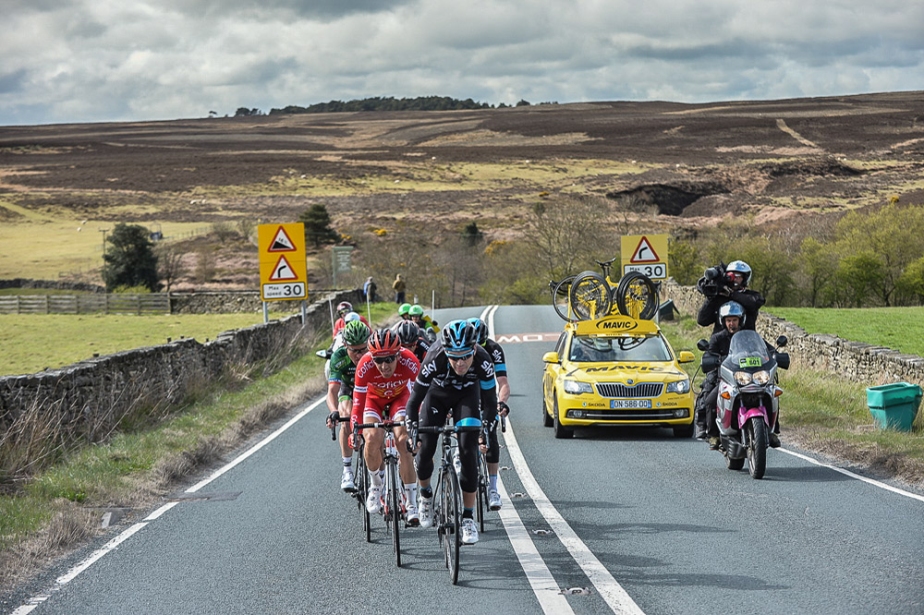
Of course getting away from the town was a living hell. Every road heading out to where we wanted to go was closed, even though the race was taking a different route. For ten minutes we negotiated with a group of marshals, who had cordoned off a 50m piece of road for whatever reason.

Eventually they relented, and we realised that the situation could’ve been solved by just asking straight up for the cones to be moved. Anyway, off we sped, re-joining the route before the first climb of the day at Holmfirth.

There were more marshals there, mostly helpful, some not so much. Raoul got an ice cream, on scoop, vanilla. It wasn’t very good apparently. Some lady shouted “idiots” as we drove off after failing to park on the Côte de Holmfirth. Off to the Côte de Scapegoat Hill then.

At the top there were lots of dogs (see below), and the climb was packed. That’s about all I remember about Scapegoat Hill. It was cloudy too, and a couple of Europcar soigneurs waited at the top. They didn’t manage to hand over any bottles.

Dogs of the Tour de Yorkshire

Escaping from Scapegoat – Raoul directed traffic, Daniel banged the car door, I tried to charge my phone – this thing isn’t great in a moving vehicle. The radio played this awful song. Everyone hated the radio.

The ride to the Côte de Goose Eye was another fast one, on the single-lane roads and through the small villages that we had become used to seeing. “This is some James Bond shit!” exclaimed Daniel as we crested a hill, airborne again. It’s probably as close to a WRC ride-along as you could find, with Raoul dictating directions like a co-driver, a Timo Rautiainen to Daniel’s Marcus Grönholm.

Question of the day, from Daniel

“Where are Wallace and Gromit from? Here?”
I was unsure myself, but apparently they live in Wigan (in Lancashire), some sixty miles from Wakefield.

Once again we made a mess of getting to the climb. The shortcut to the route saw a marshal open the road in the wrong direction. Thankfully a police outrider arrived soon after, pointing out the mistake. Spectators watched on as we executed another three-point turn on a tiny village street.

A couple of unclassified climbs later (“If this isn’t a côte then maybe it’s a vest”) and we arrived at Goose Eye.

It was steep at the bottom and the village was full of people. A million people came out to see the race apparently, so that’s cool. The top of the climb was less steep and there were far fewer people. We parked midway up the 2.2km climb – another awkward reversing manoeuvre into a crowd of people unwilling to budge. I walked up, Daniel headed back down.

ON GOOSE EYE

The sun came out, and it was properly warm for the first time all weekend. This random hill in the middle of nowhere also let my phone pick up 3G for the first time, which was nice.

Turns out Nicolas Edet and Lawson Craddock were the Cofidis and Giant-Alpecin men leading the remnants of the breakaway, while the Sky-led peloton was in pieces behind.

I faced a kilometre run downhill to the car but thankfully our way out was to follow the race rather than push through the crowds in the other direction. Running down the grass verge, just about avoiding the cars passing in the other direction, I spotted our grey Corsa and jumped in. Destination, Leeds.

Parking Spots of the Tour de yorkshire

As the race continued north and then east to Leeds, we headed to Bradford ring road and the interminable red traffic lights on the way to the finish. Again, with no real idea of when the riders would actually get to the finish (somewhere between 16:30 and 17:00 according to the roadbook), it looked a real possibility that we’d miss out.

Luckily for us, suburban Bradford seemed to melt into suburban Leeds. We seemed to have made it without really knowing how close we were at any point. Despite our worry, we got onto the course with five kilometres to go, with the convoy nowhere in sight.

After parking there was another marshal confrontation as we were shouted at to get off the road to the car park as if we had no idea the race was coming.

AT THE FINISH

A rush to the finish in Roundhay Park and BMC’s Ben Hermans was the solo winner. There was disappointment for those who had hoped for more GC action on the toughest stage of the race, with the main favourites rolling in together.

After the finish, riders milled about, providing more photo opportunities. And then that was it. The end of the first Tour de Yorkshire. It was pretty fun.

Leeds postcard (leodis.net)


Tour de Yorkshire, day two

Tour de Yorkshire, stage two (ASO / GAUTIER DEMOUVEAUX)

“We’re winning the race. Nobody’s catching this breakaway.” We had missed the press diversion and were now on our second lap of the closing circuit. Daniel was anxious and we had yet to realise that the riders were to complete three laps, not two.

It wasn’t the first mistake of the day. We missed the start altogether after the closed roads somehow caught us by surprise. Well, we didn’t miss it – we got to the press car park, but didn’t come close to where the action was.

Before that I got a jacket. I forgot to take a photo. Here it is. It’s startlingly adequate.

So yeah, we left Selby early, getting on the route way ahead of the race. Stop for coffee, stop for fish and chips, go to the Côte de North Newbald… Hey, where did the race signs stop? Where are all the fans? I guess we drove past the climb? Yep.

Waiting for the race

We got there in the end but needed to park. People everywhere, obviously, and nowhere to stop. So we should head back down the climb to that spot Raoul suggested then? Yeah let’s try that.

As with any race, the convoy – support vehicles, police and so on – is long. The police outriders come through some twenty minutes before the riders, to close side roads and keep regular traffic at bay. They arrived just as we started to head back down – cue reverse gear, high speed, back to where we just were. A parking spot will have to be improvised.

People are oblivious to the car. It’s a ton of metal on wheels manoeuvring onto a grass verge inches away from them and still they refuse to budge. This was a recurring theme.

Puccio!
Hey Puccio

Raoul stays in the car as the race passes, Daniel runs further up the hill, shooting the riders, the fans, god knows. I lie in the grass, taking totally pro low-angle shots with my phone. As ever, once the voiture balai (broom wagon) has passed there’s the mad rush to the car, beat the crowds away from the hill, beat the race to the Côte de Fimber, the only other climb of the day.

More thin ribbons of road, hills, troughs, pheasants to dodge, cars to pass. The car was definitely airborne at one point. We get back on the route at Wetwang, arriving at the hill with plenty of time to walk up. The climbs are more straightforward than yesterday’s – lesser gradients, wider roads, not massively interesting.

This guy
This guy
This guy too
This guy too

With a six minute advantage, the break had doubled their lead since North Newbald. Of course we had no idea who was in it, our three phones combined couldn’t muster a wi-fi connection between them, and we had no race radio.

The drive to the finish was less pressing, a straight road to York, meaning we’d be waiting for the race at the finish with enough time to see them pass three times. We should have realised that the press diversion would be at the press centre in York Racecourse (a kilometre out), but we drove past, not realising our mistake until after we had the finish line.

So we did another lap, another tour of York. There was much discussion in the car, arguments even, as we sped through the biggest crowds of the race. Daniel jumped out with two kilometres to go. We’d meet again at the finish, if he could fight through the masses.

Some things that happened at the finish

He made it, just. He saw the riders twice, but I missed them pass on the penultimate lap – a coffee run in the press room. At the finish there were no interview either – the team hotels were close, so there were no buses to hang around.

Instead we watched the podium, a chance to drink in the ceremony, or rather just leave early because it’s not that interesting. David Millar hung out of the commentary box for a chat about his dinner with Daniel and his upcoming clothing line. Then we hitched a ride to the press room in the broom wagon.

Later we took some time to do some non-race stuff – eating Italian food (spaghetti vongole for me), looking at York cathedral, general mirth, before an evening photoshoot with MTN-Qhubeka back at the hotel. Oh, and I showed Daniel my Milwaukee Bucks t-shirt. He knows they’re real now.

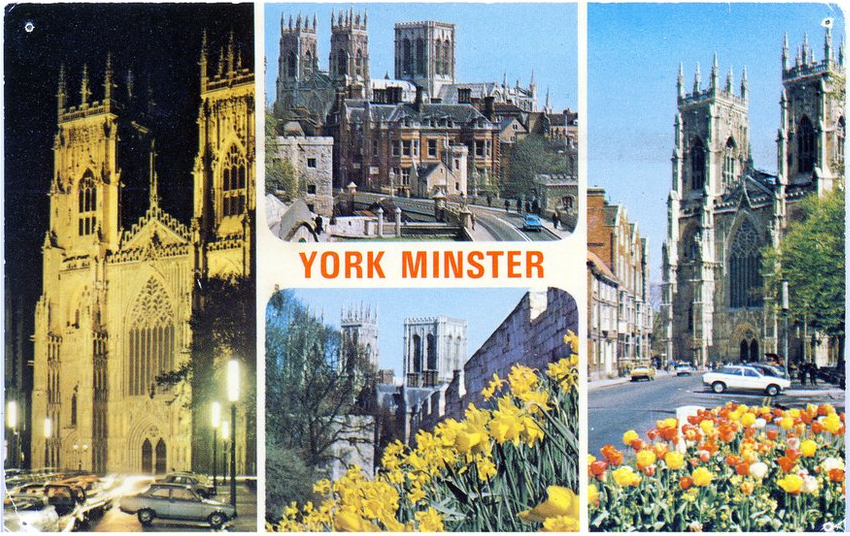
York Postcard (bbc.co.uk)
York was actually a bit like this. Less flowers though (bbc.co.uk)

Tour de Yorkshire, day one

I went to the first edition of the Tour de Yorkshire with Manual For Speed. Stuff happened.

“What really went on there? We only have this excerpt”

Tour de Yorkshire stage one (ASO / Gautier Demouveaux)

Hey, I lost my jacket. It’s April in the north of England and I lost my jacket. It’s April in the north of England and I lost my jacket and I’m at a bike race. Bike races are outside. This is going to be… not good.

Friday morning was ok though. Of course I ate a Full English Breakfast at 8am. That’s the only option at the bed and breakfast. That and coffee, the first of many.

It’s the first edition of the race, the ASO’s Tour de France legacy. I’m hanging out with Manual For Speed. One of them anyway, this guy who wears a shemagh scarf and a Baltimore Orioles cap – “repping my home city.”

His name is Daniel too, and we ‘met’ via email. IRL we meet on Thursday at the seemingly still-under-construction York Racecourse – the press centre. It’s cold, and Bernard Hinault walks past. I stare at him. Later on, I forget to buy a jacket.

Country roads, sans spectators
Country road, sans spectators

Back to Friday, post-breakfast, and an hour’s drive to the coast with this near-complete stranger. We pass Stamford Bridge, a place called Wetwang, while some American woman tells us about roundabouts and left-turns via app.

I got five hours sleep after watching the Milwaukee Bucks crash out the NBA Playoffs with a 54-point loss to the Chicago Bulls. “Milwaukee have a team?” Daniel asks, laughing.

Bridlington is easy, we roll up around half an hour before the start and park the rented Vauxhall Corsa in the place where the press park. It’s eleven in the morning, and cold. There are kids everywhere, a lifeboat on the street, seagulls. Yeah, it’s the coast.

A delusion I know, but there’s always some excitement to wave our passes around and walk where the public can’t. The riders rolling through to sign on, public getting in the way, Merhawi Kudus arriving from Amsterdam twenty minutes before the race is due to start. Standard stuff.

Visa Problems held up the MTN-Qhubeka man, while a delayed flight made things worse. Bad luck for him but better for MFS’s Raoul. He spotted a guy in Castelli-branded uniform at Schipol airport – a soigneur or mechanic or something? No, it was our man Kudus. Cue a long-lasting friendship, despite the minor complication of having no shared language. Cue also, a lift to the race for Raoul.

Daniel & Raoul's portraits on http://manualforspeed.com/ I can attest to their accuracy
Daniel & Raoul’s portraits on manualforspeed.com. I can attest to their accuracy

Once I learned that interviewing Kudus would be something of a challenge, I set off for Europcar’s bus and Namibian champion Dan Craven.

So… are these guys mechanics? Soigneurs? Where is Europcar’s press officer? Who is Europcar’s press officer? It doesn’t matter – I have a plan. I’ll just combine the words ‘press’, ‘Dan Craven’ and ‘interview’ until something happens.

The beard descends from the bus to save me (Can that be his nickname? Maybe it already is.) A quick chat while his embrocation is applied, and the interview is set up – tomorrow evening at the Mercor/Mercury/Mircure (hmm) Hotel.

Back to the car, it’s time to get ahead of the race. The peloton departs, and riders presumably squabble over the breakaway, but we don’t see any of it. Thanks to the incompatibility of the British countryside and wireless internet, it’ll be another hour before we have any idea about what’s actually happening in the race we’re covering.

Did I mention the crowds? They’re big, perhaps unsurprising given the turnout at the Tour de France last summer. Still, everybody waves. Everybody waves at the police too. It’s kinda weird.

Lots of fluo / Lots of pain

The first coffee stop comes after nine kilometres, at the Richard Burton Art Gallery (not that Richard Burton.) We’re going too fast to really think about drinking it though, trading places with the police outriders as the opening climb of the Côte de Dalby Forest looms.

After a few false alarms, a handful of steep hills that don’t show up on the profile, we’re there. Daniel does his thing, photos of the people, a guy stood in a tree and so forth. I talk to Raoul about Diesel jeans and the bomb at the Rund um den Finanzplatz Eschborn-Frankfurt.

Then come the riders. The breakaway. NFTO’s Eddie Dunbar is there – on the attack again in the first race after my interview with him. Two minutes later, maybe five minutes later (who knows when you forget to pay attention?) and the peloton arrives. Marcel Kittel, out with a virus for three months, is already dropping back.

north york moors
The North York Moors (solitary ice cream truck parked miles from anywhere not pictured)

Dodging the team cars and fluorescent-clad fans, there was another uphill sprint to the car. The Côte de Grosmont – four-hundred metres at seventeen percent – is next on the menu, but not before a trip across the North York Moors. We knew they were there, but we didn’t expect them to look like this, so we stopped to take photos. And pee on them.

A Daniel Pasley clutch-punishing parking manoeuvreTM puts us in place for the hill, where we soon find another coffee source – a mobile joint near the top. Thankfully, the speed of our arrival allowed us ample time to stand on the hill. In the cold.

NFTO boss John Wood tells us more about the breakaway. Only there was no breakaway group left on the climb – there was a crash apparently? And they were caught at some point. Dunbar went to hospital in any case. Breton Perrig Quemeneur leads the way up the hill.

Another lung-busting sprint to the car and now it’s the tough part. Can we beat the peloton to Scarborough? Beating car-sickness is a cause closer to my heart – the food, the coffee, the map reading and the roller-coaster driving look to be conspiring against me.

Yeah I saw all the Europcars

As for reaching the finish first? That was close too – there was much discussion about taking this ambitious route beforehand. Thankfully, the lack of countryside speed cameras only help our cause.

In any case, we made it – but the riders were still some twenty kilometres out as we parked. I was fine too.

Before the finish, the press room beckons – it’d probably help to actually find out what happened today. Oh look, there’s a new breakaway group. Oh look, there are fifty bottles of free beer on the table. I guess I’ll have to come back later.

There’s more running before that though, this time to the finish on the seafront. Nordhaug wins! Kudus is thirteenth! Dunbar is… Where’s Dunbar? Oh.

Finishes are always half-fun, half-stress, but if you have no specific plan of action (today I don’t) then they’re fine. Time to chat to a few people before grabbing a few beers and then heading back to York, soundtracked by some terrible radio (the highlight being a phone-in competition that sees everybody fail to recognise Foo Fighters lyrics). I hope Gap is still open.

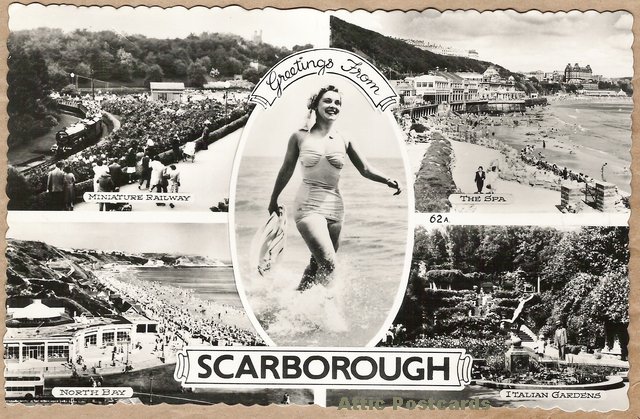
Scarborough postcard (atticpostcards.com)
Scarborough was exactly like this (atticpostcards.com)

Future Stars: Tiesj Benoot

Tiesj Benoot at Dwars door Vlaanderen (Cor Vos)

It’s the second installment of Future Stars this week, and another Belgian, this time it’s Lotto-Soudal’s neo-pro Tiesj Benoot. The 21 year-old has put in a series of impressive performances already this spring, and starts the Ronde van Vlaanderen for the first time this Sunday.

Benoot has been on Lotto-sponsored teams for the majority of his career, with Immo Dejaegher-Lotto his junior team. He was a consistent performer at that level – 2010 saw him regularly take top ten places around Belgium at races in Lierde, Ichtegem, Steenhuize and at Kattekoers. At the Danish stage race the Tour de Himmelfart he fought for the podium almost every day, finishing up 7th overall.

At Immo Dejaeher - Lotto in 2010 (Roland Desmet)
(Centre) At Immo Dejaeher – Lotto in 2010 (Roland Desmet)

2011 saw him compete in more international competitions, racing in France and Switzerland and scoring numerous top ten placings. A second place in the Oost Vlaanderen provincial TT championship was a highlight. The next season saw him move to the Avia-Fuji team.

He had a good start to 2012, finishing 12th in the Kuurne-Brussel-Kuurne juniors, but April’s Le Trophée Centre Morbihan saw him in the top six every day and third overall at the end of the stage race. More solid racing at the Czech race Course de la Paix and the GP Général Patton in Luxembourg followed before he went to the Oberösterreich-Rundfahrt in July.

There, after finishing second in a team 1-2 on the first day, he beat Matiej Mohoric to the win on a tough mountainous stage. He eventually took second overall behind the Slovene. More consistent results followed, including third at the Junior Belgian TT Championships and a stage win at Keizer des Juniores.

(Right) On the podium at the 2012 Le Trophée Centre Morbihan (Regis Gamier)
Benoot (right) On the podium at the 2012 Le Trophée Centre Morbihan (Regis Gamier)

These strong season-wide performances saw Tiesj selected to the national squad for the Worlds in Valkenburg. On a tough course, he ended up in a creditable 12th place as Mohoric won and teammate Kevin Deltombe took 6th.

Benoot was brought into the Lotto-Belisol setup in 2013, joining their U23 team at the age of 18. He made an immediate impact with a great performance at the Circuit des Ardennes. It’s a 2.2 ranked race, with development teams race against senior Continental teams.

The youngest rider on the team, he was the top performer, finishing in the top five on every day of the hilly four-stage race. He ended up finishing 4th overall and taking the youth and points classifications as he mixed it up with pros Riccardo Zoidl, Markus Eibegger and Andre Steensen.

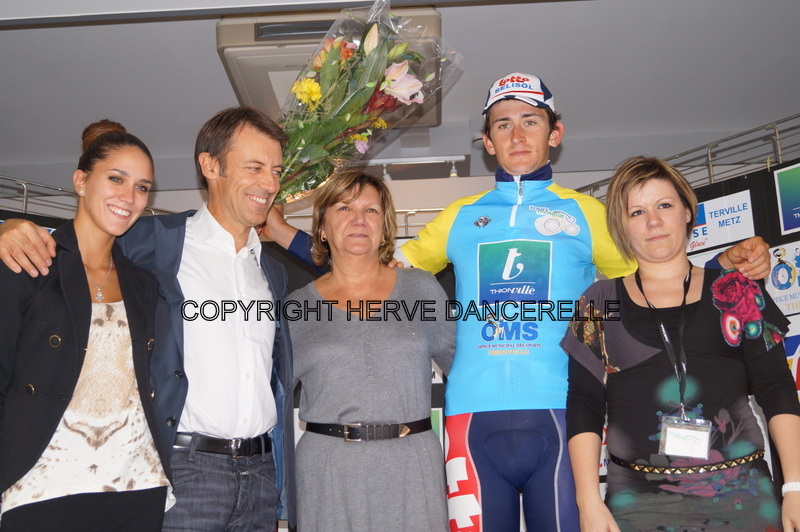
Winning the Tour de Moselle (Herve Dancerelle)
Winning the 2013 Tour de Moselle (Herve Dancerelle)

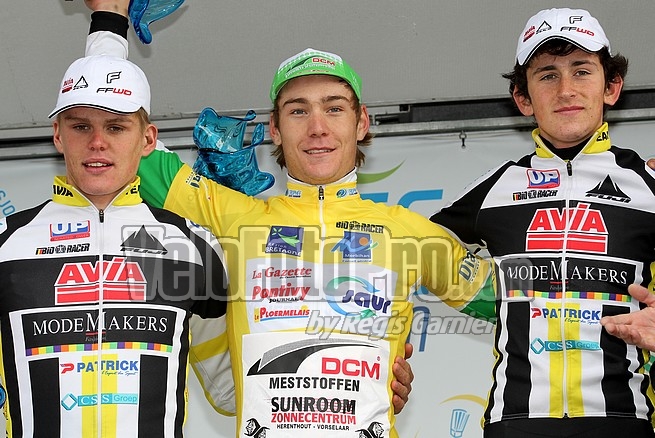
An 8th place finish at the U23 Liège-Bastogne-Liège and a stage win at the Vuelta a Madrid U23 followed, before he took overall victory at the Tour de Moselle in September. Current Etixx-QuickStep rider Julian Alaphilippe was the man he beat into second place, while two teammates filled out the rest of the top four. Tiesj rounded out the year with a 12th place in Paris-Tours espoirs.

Consistency was once again the name of the game in 2014, his last season at U23 level. Benoot started off with the points jersey and second overall at Le Triptyque des Monts et Châteaux, with a great third place in the sprint at the Ronde van Vlaanderen beloften coming a week later. Later in April came a 5th place at U23 Liège-Bastogne-Liège – chain trouble prevented him from finishing higher up.

The important stage race of the Ronde de l’Isard came in May. Set in the Pyrenees, the four day race included summit finishes at the ski station of Goulier-Neige and Bagnères-de-Luchon. The final day’s racing went over the Col de Port, Col d’Agnes and the Col de la Cort.

Supporting team leader Louis Vervaeke, the big heroics of the race came on the road to Bagnères-de-Luchon as Benoot took to the front in the final kilometres of the stage, driving onwards with Vervaeke and dropping race leader Alexander Foliforov by over five minutes as every group in the race fell apart under the pressure.

Winning the youth jersey at the 2014 Ronde de l'Isard (Flickr Ronde de l'Isard)
Winning the youth jersey at the 2014 Ronde de l’Isard (Flickr Ronde de l’Isard)

Vervaeke went on to win the race, despite Foliforov’s desperate long-range attack. Meanwhile Tiesj finished 4th overall and took the youth classification too – a great performance all round.

Other highlights of the summer included 15th at the Teunissen-dominated Paris-Roubaix espoirs, 5th at Flèche Ardennaise, and 6th at the U23 European Championships in Switzerland. August saw Benoot join the pro Lotto-Belisol team for a spell as a stagiaire, with impressive results such as third place on a tough stage at Post Danmark Rundt and 4th at the hilly GP Stad Zottegem.

After dropping out of the Tour de l’Avenir due to illness, his 4th place at the U23 Worlds in Ponferrada was a late season highlight. As Sven Erik Bystrøm soloed to the win, Caleb Ewan and Kristoffer Skjerping just edged the Belgian out of the medals. Among his last acts before turning professional were an 8th-placed finish at Memorial Franck Vandenbroucke and helping Jens Debusschere to third at Paris-Tours as he finished 16th himself.

This spring, his first few months as a professional, have seen the man from Gent burst onto the scene. Finshing in 8th place at the second stage of January’s Challenge Mallorca was an early season highlight, but the cobbled races of March are where he’s really moved into the limelight.

At Lotto's early season training camp (Cor Vos)
At Lotto’s early season training camp (Cor Vos)

At the tough Omloop Het Nieuwsblad, his first northern classic as a pro, he was in the front group until the final climbs and finished among the peloton in a creditable 36th place. A few days later he was in the lead group at Le Samyn.

A toughened-up course saw the addition of more cobbles in the finishing circuit saw Etixx-QuickStep with four riders in the eight-man lead group heading into the final kilometres. The powerhouse Belgian squad duly led-out for Gianni Meersman but Benoot helped teammate Kris Boeckmans secure victory, going on to finish 4th himself.

Since then we’ve seen him sprint to third in the Handzame Classic and finish 6th in the horrific conditions at the Ronde van Zeeland. Last week at Dwars door Vlaanderen he put in a huge amount of work for team leader Jens Debusschere. The chasers didn’t catch the Topsport-led lead group but Benoot won the sprint for 6th, an impressive feat considering how much energy he had expended after leading the charge for almost 40km.

Leading the chase at the 2014 Dwars door Vlaanderen (Cor Vos)

He was active again at E3 Harelbeke, attacking midway through the race as the peloton split up and later leading the chase effort up Tiegemberg – bringing down the gap where three BMC riders had failed. He ended up 18th at the finish, and has since been resting ahead of his first participation at the Ronde van Vlaanderen on Sunday.

While he’s had a great start to his pro career, everyone has to remember that Tiesj is still only 21 years-old. With added hills and kilometres, De Ronde will be a totally different animal to the races he has competed in thus far. He’ll be working for Jens Debusschere and Jurgen Roelandts, but it looks like he will be a leader one day.

Benoot balances his racing with studying economics at Gent University. He looks to have a bright future in racing though, describing himself as an all-rounder with similar qualities to Greg Van Avermaet (albeit on a lower level). Going by what we’ve seen so far it doesn’t look like it will take him too long to reach that level.

You can follow Tiesj on Twitter or Strava and keep up with his results at ProCyclingStats.

Finally, if you’re wondering how to pronounce his name, it’s Tee-sch Ben-uut

Future stars: Edward Theuns

Theuns at the Clásica de Almería (Cor Vos)

The cobbled classics are back underway and with the likes of Fabian Cancellara and Tom Boonen coming towards the end of their careers, the focus naturally turns towards youth.

This season we are spoiled for choice with young cobbled talents making their breakthrough. AG2R have Alexis Gougeard, while at LottoNL-Jumbo there’s Tom Van Asbroeck and Mike Teunissen. Meanwhile Etixx-QuickStep can look to Yves Lampaert in the coming years.

We saw two others at Wednesday’s Dwars door Vlaanderen. In the front group there was 23 year-old Edward Theuns, sprinting to second place behind his Topsport Vlaanderen teammate Jelle Wallays to cap a memorable day for the Belgian squad. Just under a minute and a half later came 21 year-old Tiesj Benoot of Lotto-Soudal, winning the sprint for sixth place after leading the chase on behalf of his teammate Jens Debusschere for the best part of 40km.

The two men from Gent will be riding the Ronde van Vlaanderen next week, with Benoot riding today’s E3 Harelbeke and Theuns joint-leader at Sunday’s Gent-Wevelgem. Here’s a look at what Theuns has done in the past, and what is possible for the future. A piece about Benoot will follow later.

During his time at KSV Deerlijk-Gaverzicht

Theuns started out at local club Koninklijke Gent Velosport, combining cycling with playing football for KFC Merelbeke. After some strong results he moved to junior team KSV Deerlijk-Gaverzicht for 2009.

The most notable alumni of the team is the legendary Briek Schotte, winner of two World Championships, two Paris-Roubaix and two editions of the Ronde van Vlaanderen. Others that have passed through the ranks include Marcel Kint, Johan Bruyneel, Patrick Lefevere, Nico Eeckhout and current Etixx-QuickStep rider Julien Vermote.

Back to Theuns and he won his first race (the junior version of the Beverbeek Classic), taking seven other wins before changing team in 2010. The destination was VL Technics Abutriek, which would be his home for the next four seasons.

Combining racing with university studies, Theuns was successful straight away, winning a bunch sprint in the Triptyque des Monts et Châteaux stage race. Among the men he beat were now-familiar names like John Degenkolb, Taylor Phinney and Jetse Bol, all of whom were riding for much bigger development squads.

On the podium at the Triptyque des Monts er Châteaux
On the podium at the 2010 Triptyque des Monts er Châteaux

His second season was tougher, the only win coming in a smaller race at the end of the season. 2012 saw him participate in the Ronde van Vlaanderen espoirs for the first time as well as becoming the time trial champion of East Flanders. Later in the year he finished in the top ten of Paris-Tours espoirs.

The final year before turning professional was his best yet with consistent performances throughout the year. Spring saw him win the time trial at Triptyque des Monts et Châteaux before finishing sixth at Liège – Bastogne – Liège espoirs and then taking the mountains jersey at the prestigious stage race the Giro della Regione Friuli-Venezia Giulia.

A podium spot in the Belgian U23 TT Championships followed, before finshing eighth at the road race. His reputation as a strong time trialist was further enhanced by a win in the prologue of the Ronde van de Provincie Ost-Vlaanderen. Theuns rounded out his time as an amateur with a call-up to Belgium’s Worlds team and another eighth place Paris-Tours espoirs.

ProContinental team Topsport Vlaanderen came calling, and last year Theuns turned professional. He had a solid start at his new team, taking 21st at Omloop Het Nieuwsblad, sprinting to third in the Handzame Classic and finishing Paris-Roubaix.

His maiden pro victory (gpzottegem.be)

August was the best month of his first year as a professional though – he outsprinted Marcel Kittel to take third on stage two at the Arctic Race of Norway. Days later his first professional win came at the GP Stad Zottegem, as his team played the finale to perfection for Theuns to win a two-man sprint against Wanty’s Tim De Troyer.

2015 has seen him step up a gear, and three months into the season Theuns leads the UCI Europe Tour by 89 points. He started the season in France, taking seventh at the hilly GP la Marseilaise before consistent riding at the Etoile de Bessèges saw him take the points jersey fter four top ten finishes. Fifth in the sprint at the Clásica de Almería followed, and then a tough time in the mountains at the Vuelta a Andalucía (along with two top ten finishes) set him up for the start of the Belgian season.

Finishing 14th at both Omloop Het Nieuwsblad and Kuurne-Brussel-Kuurne were decent results, especially given how tough the former was. It wouldn’t be much longer until better results came though, winning the sprint from a five man lead group at the Ronde van Drenthe after riding on the front for most of the final kilometre.

The next day he was fourth at the Dwars door Drenthe, before taking fifth place at the weather-affected Ronde van Zeeland Seaports – a race which saw just twenty riders finish. We all know what came next, but we don’t yet know what is to come. Sunday sees the chance to measure himself against some of the best sprinters in the world as Kristoff, Sagan, Cavendish, Degenkolb and Greipel fight it out at Gent-Wevelgem. Beyond that, the big challenges of the Ronde van Vlaanderen and Paris-Roubaix..

Taking the win at the Ronde van Drenthe (Cor Vos)
Taking the win at the 2015 Ronde van Drenthe (Cor Vos)

Theuns has come to wider prominence on the cobbles, and that looks to be where his future targets lie. Theuns is a great all-rounder though – he is a strong sprinter, can time trial well and can get over hills too. In terms of style, Greg Van Avermaet seems a good comparison to make.

As is usually the case with talented Topsport Vlaanderen riders, a move to the WorldTour beckons. We have seen Kris Boeckmans, Sep Vanmarcke, Yves Lampaert and Tom Van Asbroeck all make the move in recent year, and with Theuns’ contract up at the end of the year it looks like he will follow.

You can follow Edward on Twitter here, and view his palmares here.

CIRC and the state of cycling in 2015

Finally, the time has come and the report we have all been waiting for has been released. At 228 pages in length it’s a bit of a slog, and with a great deal of emphasis on the past.

There’s talk of all the familiar faces – the tales of Hein, Lance and Pat are covered at length. We hear about the 1990s and the ‘period of containment’ that focused on limiting the health risks of doping rather than a policy focused on catching every wrongdoer.

Many pages are dedicated to failures in governance that occurred a decade or more ago, and there’s even a section walking us through the history of doping. We all knew how bad the past was – and now we have an official document to prove it. Almost as soon as it was released we saw a number of all-encompassing summaries of the report, including articles by the always great inrng, and Peloton magazine.

Rather than focus on the past though, I want to look at what it the report has to say about the current state of cycling, and what it could mean for the future. Here’s a look.


A turning point in anti-doping

With the cesspool of the 1990s behind us, and the Armstrong years already covered ad nauseum lets fast forward to 2006. The period from that year to 2008 is highlighted by CIRC as a turning point in the fight against doping. “Steady improvements and a growing willingness to combat doping at its roots” are cited.

It was indeed a period of change. At the UCI’s anti-doping unit with Lon Schattenberg (a man who shared the same ‘avoid scandals’ mindset as Verbruggen and McQuaid, notably writing letters to teams informing them of drug detection windows) left to be replaced by the Australian Anne Gripper. Other changes in personnel included the dismissal of a large number of doping control officers, described as receiving little training, prone to leaking information and often being close with teams.

Saunier Duval wielerteam 2008
Riccò & Piepoli both spoke to CIRC (Cor Vos, header image by Reuters)

With Gripper came a raft of changes. Targeted testing was brought in, while more and more out-of-competition tests were carried out. The Cycling Anti-Doping Foundation (CADF) was also introduced during her time at the UCI and funding for anti-doping was increased. An often unnoticed part of the fight – the introduction of post-race chaperones is also noted.

“UCI started to systematically use chaperones in 2008. However, it took some time for the chaperones to serve their purpose. Part of the reason for this, was due to sport-specific logistical obstacles (difficulty of spotting riders, packed finish area). By 2010 it was acknowledged that the chaperone-system was, in principle, working well.”


The biological passport

The biological passport (ABP) was brought in under Gripper’s watch in 2008 and has been hailed as a big advance in anti-doping. We have seen in the past that it isn’t a foolproof tool though, and the report tells us that there are deficiencies for riders to take advantage of – much like the 50% rule, it limits how much riders can dope, rather than eliminating doping altogether.

“In interviews with riders and athlete support personnel it appeared that the basic problem was that athletes would go to the limit of what is detectable and this has not changed. Furthermore, the incentive to try out substances that might give a performance enhancing effect, but are not on the prohibited list is still very present in the peloton.”

Meanwhile there are other problems. The report has found that riders are able to fine-tune doping programmes using ADAMS software – an unintended consequence but a disturbing finding. It is noted that riders can use the software to “assess and monitor their blood values and make sure that they stay within pre-defined parameters through fine-tuning.”

Further criticisms of the passport include the lengthy procedures involved in sanctioning riders (the Menchov and Kreuziger cases are cited), and the “conservative approach” of some of the ABP experts in wanting to pursue ‘doping scenarios’ thanks to the difficulty of analysing nuances in data. While we have seen dopers hide behind excuses like training at altitude or dehydration before, but they can be legitimate reasons for odd blood values. It’s a fact that only makes the job harder for the experts.


So how clean is cycling today?

There were varying responses in the report, and it seems that riders know about as much as we do. According to the CIRC, a common response when asked about how teams was “probably 3 or 4 were clean, 3 or 4 were doping, and the rest were a “don’t know”.”

One rider was asked about cleanliness levels in the peloton and put the figure at 90% but said he thought that “there was little orchestrated team doping” anymore. Another rider felt that 20% were doping, while many stated they just didn’t know who was clean and who was not. Of course, we don’t know who these riders are, so we have little idea of which figure is closer to the mark. And that’s before we get to the question of what riders view as ‘doping’.

Vinokourov was another contributor (Cor Vos)
Astana boss Alexandre Vinokourov was another contributor (Cor Vos)

Meanwhile new methods of doping such as ozone therapy and AICAR are brought up, while CIRC also includes a staggeringly long list of substances that riders are currently using, or have been during the past few years. There’s even a small section dedicated to the possibility of mechanical doping, something that has been raised several times in the past.

These answers aren’t surprising, but they aren’t heartening either. None of us can safely say which number is more accurate, but we do know that the days of massive gains from doping are gone. The report echoes this, saying that “10-15% gains have become a thing of the past.” Instead, performances are enhanced perhaps 3-5% by new techniques such as microdosing.

So the playing field still isn’t a level one, but going by these figures it’s more level than it used to be.


Loopholes

Despite the heartening numbers, more work still needs to be done, as CIRC notes a number of ways in which riders are still gaining an advantage. The problems with the ABP have been outlined above, but there are further loopholes for riders to take advantage of.

The no-testing window between 11pm and 6am is one. CIRC states that, “riders are confident that they can take a micro-dose of EPO in the evening because it will not show up by the time the doping control officers could arrive to test at 6am.” This is a difficult problem to solve though, with the human rights of riders factoring into the equation.

Chris Froome was another who spoke to CIRC (Reuters)
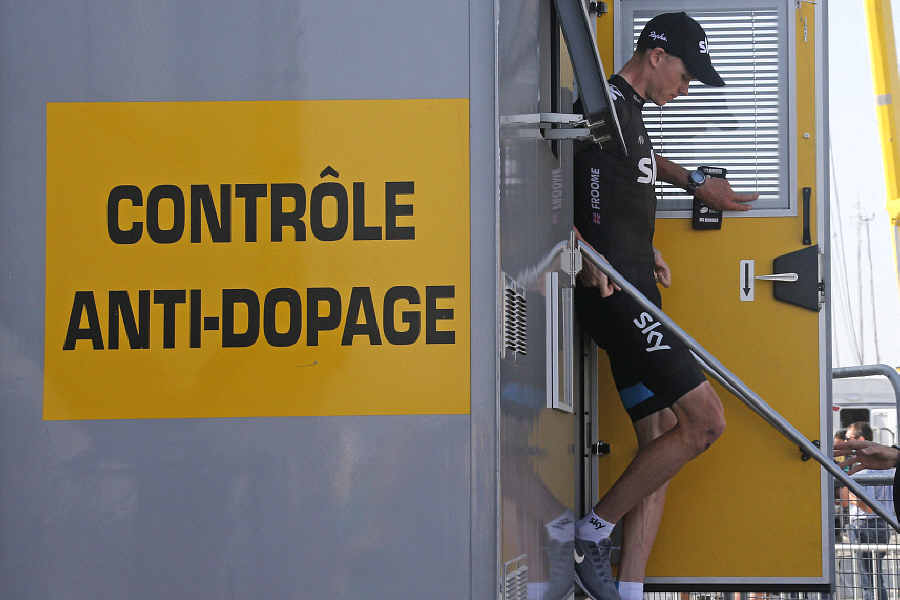
Chris Froome was the only named current rider who spoke to CIRC (Reuters)

Often a controversial topic, TUEs are another problem, with interviewees reporting that they are “systematically exploited by some teams and even used as part of performance enhancement programmes.” The abuse of corticoids and insulin in particular raise concern, while there was also a feeling that obtaining a TUE is too easy. One anonymous doctor told CIRC that corticoids were often used for weight loss as opposed to their stated function of pain relief.

Finally, concerns are raised regarding the use and abuse of substances not on WADA’s banned list. One rider talked of a ‘pill system’ he used, which involved him taking up to 30 pills a day, while also reporting the use of tranquilisers and anti-depressants on his team.

The report lists a various array of nutritional and homeopathic substances along with painkillers, caffeine tablets, Viagra and Cialis, with CIRC having been told that all were taken with the sole purpose of substance enhancement in mind. Just think back to the Kovalev brothers to get a glimpse of what this looks like.

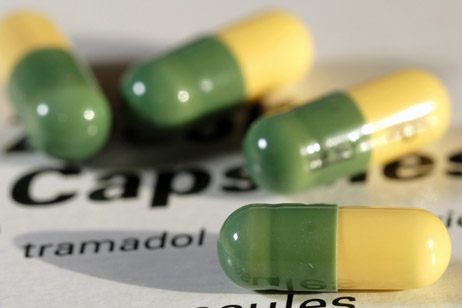
Tramadol use has also been in the news in the recent past. It cropped up again here, with interviewees of the opinion that if a rider needed to take it then they shouldn’t be racing. Similar sentiments were recorded regarding corticoids.

Tramadol (chm.bris.ac.uk)
Problem drug Tramadol (chm.bris.ac.uk)

Conclusion

So no revelations then, but a lot of information about what is going on in the peloton today. Or at least what is presumed to be going on – the lack of evidence and a reliance on hearsay is a problem. Proof is hard to come by though, and in this case we have to make the best of what we’ve been given.

There are some disappointments – look at the list of names and you only see 16 riders with Chris Froome the only non-retiree. Ten others have declined to be named, but Francesco Reda and Mauro Santambrogio are dead certs. 26 is still a very low number though, and the question of credibility comes up.

In any case, it’s less important to dwell on the individual stories than it is to think about what can be done in response to the report. While everything we have read might not be totally reliable, the raft of ideas that have been proposed seem, on the face of it, to be very useful.

The old face of the UCI (Cor Vos)

At this stage they are somewhat vague but each idea is something the UCI needs to take notice of. There’s talk of intelligence sharing with governments as well as more intelligence gathering within CADF. On the testing side we read about re-testing samples and testing riders at night. Also mooted are sound ideas like a whistleblower desk, a review of the TUE process and improvements to the ABP.

If the UCI has changed – and both the commissioning of this report and the contents within point towards that being the case – then we can cross our fingers and hope that changes like these will be implemented. There’s still a long way to go, but things can get better.