Future stars: Davide Villella

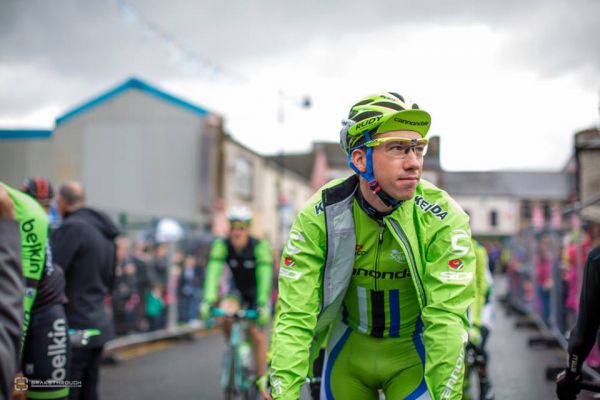
At the 2014 Giro d'Italia
At the 2014 Giro d’Italia

For the fourth installment in the series we move away from the Low Countries and into Italy. Hailing from the town of Magenta, west of Milan, Davide Villella is at the beginning his second professional season with the newly-merged Cannondale-Garmin team. With races in Australia already behind him, here’s a look at what got him where he is today and what he could achieve in the future.

The locally-based GC Almenno San Bortolomeo was where he started out – Astana rider Alessandro Vanotti was once a member, so too were Diego Caccia and Sergio Ghisalberti. Villella provided consistent results for the club, with his strongest results coming in 2009, where he achieved 6 podiums. A win at the 51st edition of the Trofeo Comune di Arcore was a highlight, coming in one of his last races before a move up to the U23 level.
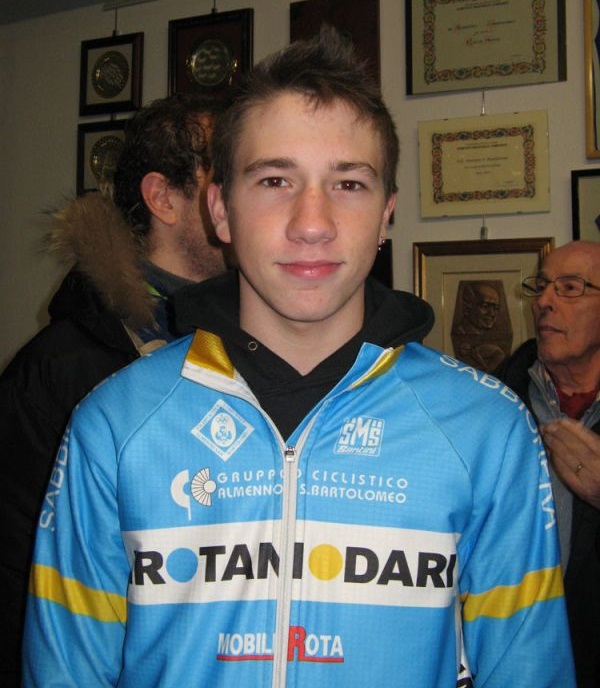
In GS Almenno San Bortolomeo colours (2009)
In GC Almenno San Bortolomeo colours

UC Bergamasca 1902 was Davide’s destination for 2010. While names like Aru, Moser, Nizzolo and Guardini grabbed all the headlines in in his first two years at U23 level, Villella was still only 19 and would have to wait for his chances. Highlights of 2010 included a fourth place at the Trofeo Monte Bondone (a race as tough as it sounds), and second-place in a UC Bergamasca one-two at the GP Rota Nodari in Almenno San Bortolomeo.

Colpack came calling in 2011. The strong Bergamo-based team has existed in its current form since 2010 and has seen riders like Edoardo Zardini and Gianfranco Zilioli pass through before moving to the professional ranks. If you strain your memory, you might recall Colpack as co-sponsor of the De Nardi team Charly Wegelius turned professional with back in 2003.

Winning the Memorial Angelo Ripamonti
Winning the Memorial Angelo Ripamonti (F.Rodella)

With the move came wins – the the first of which came in March at the Coppa del Grano U21 in Tuscany. Two months later he was back in Almenno San Bortolomeo, this time beating Moreno Moser to the win at the Memorial Angelo Ripamonti. Villella was on the podium three other times in May, and later finished in the top ten of the U23 Italian Championships, but 2012 would see him step up a gear.

It was a year that saw him on the top step of the podium no less than eleven times, and May was once again Davide’s best month. At the important Giro della Regione Friuli-Venezia Giulia, Colpack were one of five teams to have bikes and equipment stolen overnight. Davide made up for the loss by winning stages four and five on his spare bike as well as taking the points classification.

A few weeks later he led future Bardiani rider Edoardo Zardini in a Colpack one-two up the steep final slopes of the GP Comune Botticino. At the end of the month came more wins – two out of four stage in the hills around Faenza at the GP Pesca e Nettarina in Emilia-Romagna.

Winning stage three at the 2012 GP Pesca e Nettarina
Winning stage three at the GP Pesca e Nettarina (Isola)

It was great preparation for what would turn out to be the last edition of the Baby Giro (Girobio) in June. Villella missed out on victory in stage three by centimetres in the sprint finish in Sora. The pink jersey was his for a day though, and teammate Zardini finished sixth overall.

By July Davide was back to winning ways, with four victories including the prestigious Ciriè – Pian della Mussa and a night-time finish at the Trofeo Città di Brescia  A summit victory and fourth overall in the mountainous Giro della Valli Cuneesi (Zardini won) were great results in the run-up to the Tour de l’Avenir, where he came close to a stage win once again, losing out to Silvan Dillier in a three-man sprint.

Later in the season he was selected for the U23 World Championships in Valkenburg, finishing 74th. Villella’s brilliant season ended with a second place at the Piccolo Giro di Lombardia, and he ended up top of the Italian U23 ranking, with more wins than anybody in the country.

2013 was to be his last season in the U23 ranks. Villella had less wins, but the ones he got were big, and once again he ended up as the number one amateur in Italy, beating teammate (another now at Bardiani) Nicola Ruffoni into second in the rankings. Strong Spring results, including four podium spots in April, culminated in victory in the Medaglia d’Oro Domenico e Anita Colleoni in May.

Zalf’s Andrea Zordan outsprinted him to victory at the U23 National Championship. It would soon be forgotten though, as the famed Giro della Valle d’Aosta was summer’s main goal. Davide was in top form and third place on stage one was followed up by wins on stages two and four. This all added up to an overall victory and the points jersey – the biggest result of his career to date. Future teammate Davide Formolo was the man he beat into second place.

Overall victory at the 2013 Giro della Valle d'Aosta
Overall victory at the 2013 Giro della Valle d’Aosta (girovalledaosta.it)

WorldTour team Cannondale called him up for a spell as a staigiare in August, giving him experience of racing with the pros at the USA Pro Cycling Challenge and the Brussels Cycling Classic. Sixth at the U23 World Championships in Florence was a strong result, but more was to come in October.

He returned to the Piccolo Giro di Lombardia, this time taking the win by half a minute. Then it was back to Cannondale for the final few races of the season – he exceeded expectations by taking third place finishes at the Coppa Sabatini and Giro dell’Emilia.

Last season was his first as a professional. Sixth in the Trofeo Laigueglia was an early highlight, while he won the mountain classification in the Vuelta al Pais Vasco, leading the competition from stage one.

Fighting at the 2013 Giro dell'Emilia
Fighting at the 2013 Giro dell’Emilia

The Giro d’Italia was next on the menu, somewhat surprisingly. Unfortunately Davide’s race ended on stage six to Montecassino – he was caught up in the pileup before the climb and abandoned with a fractured elbow.

He was back racing in June before heading to the Arctic Tour of Norway. Second place on the lumpy opening stage led to fourth overall and the young riders jersey at the end of the race. Later on in the season he rode the Giro di Lombardia for the first time, taking a creditable sixteenth place before following that up with sixth at the Coppa Sabatini.

Davide is part of the merged Cannondale-Garmin squad in 2015, and he has a firm idea of what he wants from the season. Tirreno-Adriatico, the Ardennes and the Giro d’Italia are all on his calendar, while there is no doubt that his home race in Lombardia will be a big target, both now and in the future.

Recovering from his Giro crash (Cannondale Instagram)
Recovering from his Giro crash (instagram.com/cannondalepro)

I think that the Race of the Falling Leaves is a very realistic target – he is strong in the hills and has a good sprint to go with it. It’s a versatile skillset that can make success in a wide variety of races possible. Hilly one-day races, and there are lots of them on the calendar, seem a perfect fit.

Sadly, we haven’t yet seen how well Davide can climb in the professional peloton. Thanks to his Giro crash, the only true mountain stage under his belt is the Kitzbüheler Horn stage of the Tour of Austria, his first race back from injury. It will be interesting to see how a healthy Villella copes in the high mountains this May.

One thing we can be sure about is how lucky Cannondale-Garmin team boss Jonathan Vaughters has been to find himself in the situation of being able to bring in Villella. Along with Moreno Moser and Davide Formolo, the team look like they have a good chunk of the future of Italian cycling on board.

Follow Davide on Twitter.
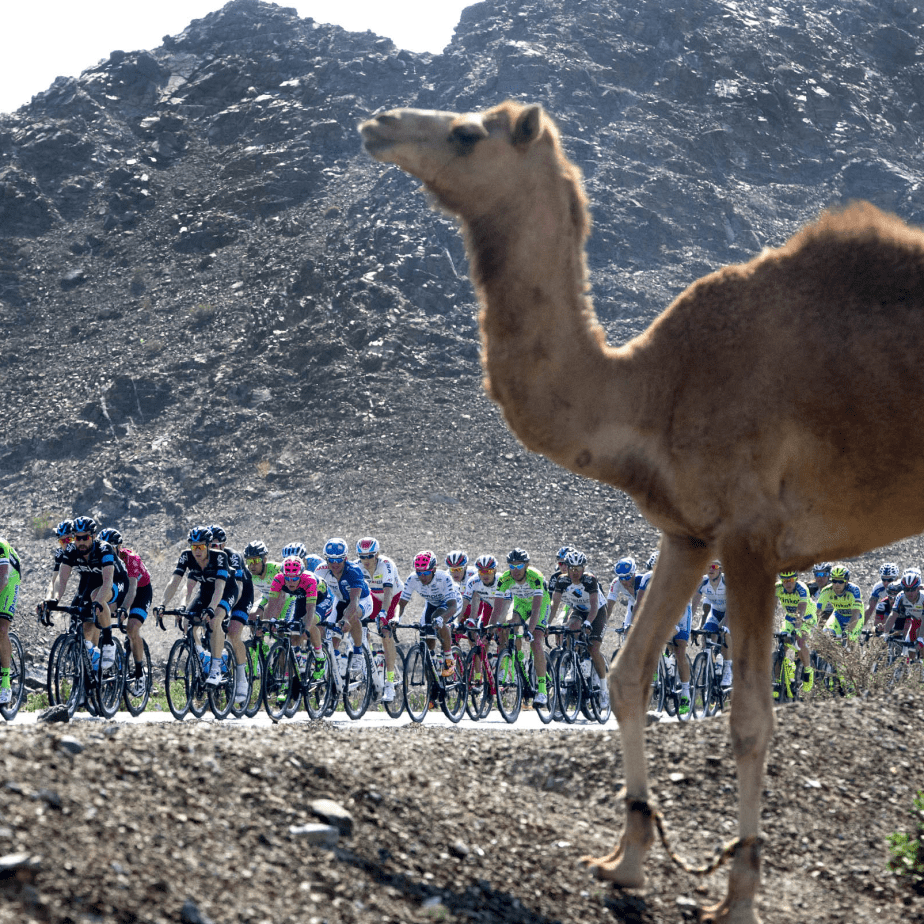
Racing in the Gulf States

A camel watches on at the 2015 Dubai Tour (RCS)

With the Dubai Tour having just finished and the Tour of Qatar in full flow, what better time to take a look at the races in the UAE, Qatar and Oman. While cycling through the desert to a sprint finish may not be everyone’s idea of an exciting bike race, these races in oil and gas-rich Eastern Arabia are increasing in profile and importance every year.

Another race is on its way too – the Abu Dhabi Tour will be run for the first time in mid-October. It will join the Dubai Tour in Giro d’Italia organiser RCS’s portfolio, while the ASO run the Tours of Qatar and Oman. So what are these races giving to the cycling world, and what do the countries gain from staging them?

Money & the European alternatives

Obviously this is the first thing that comes to mind. The vast oil and gas reserves that give Qatar the highest GDP per capita in the world and the UAE the second-largest economy in the Arab world mean that there’s more than enough to stage a top class bike race.

These races are polar opposites to the independently-run and locally-sponsored races that we have seen fold thanks to economic hardship in Italy and Spain. While some European races struggle with basic costs such as policing there are no such problems on the Arabian peninsula.

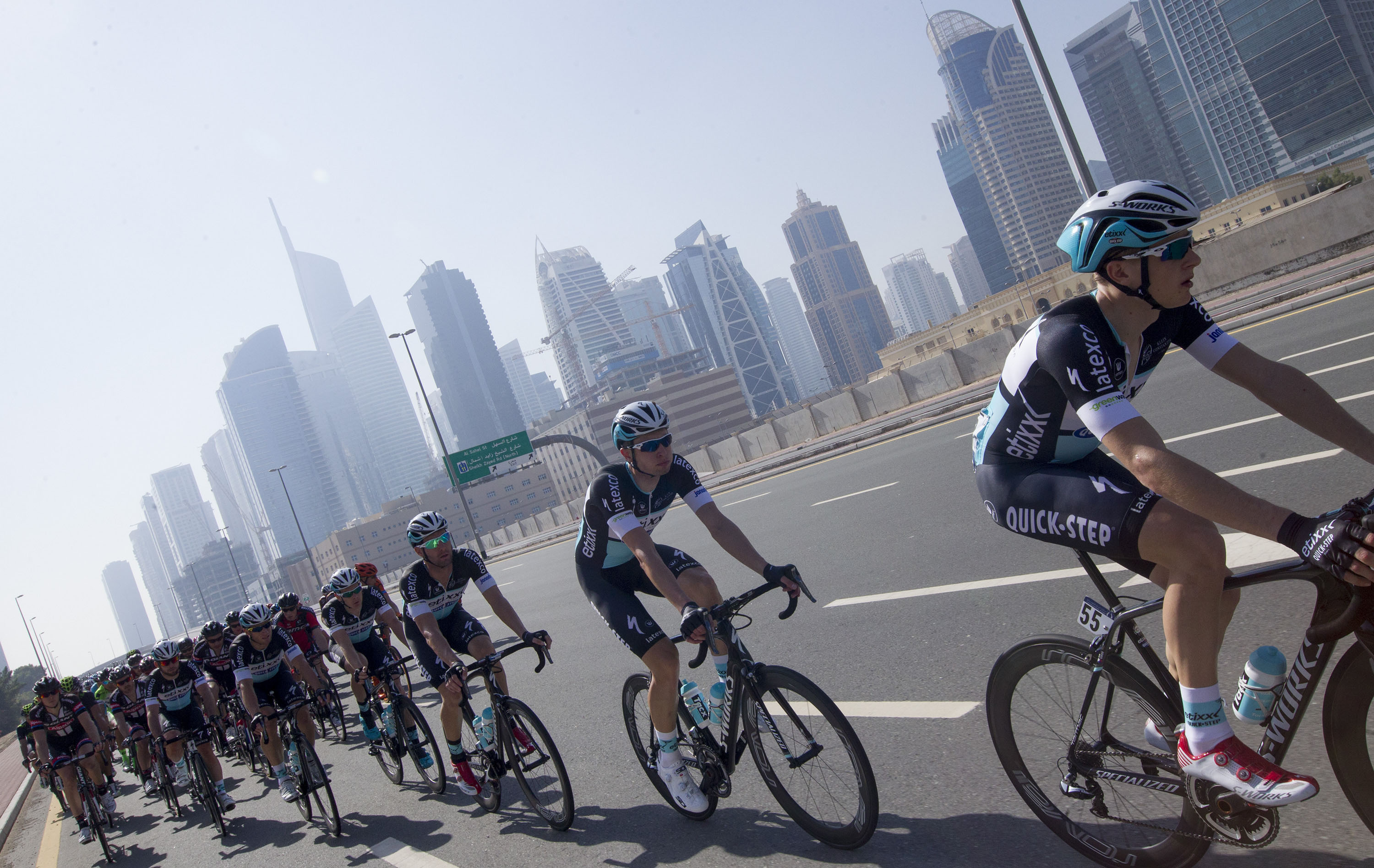
The peloton passes Dubai (RCS)

Large appearance fees can be paid, while five-star hotels for teams and media are a stark contrast to European chain motels. Likewise, wide newly-built roads offer a comparatively pleasant and safer experience for riders more used to dodging potholes and street furniture.

For example, a team like Cofidis can try out it’s new sprint train in competition without having to worry about late corners or fighting over narrow roads. The desert crosswinds also offer a handy training opportunity for the Spring Classics.

Another reason to head east is the weather. Sure, Andalucia and the Algarve are better destinations than northern Europe at this time of the year, but Qatar and the UAE are a totally different story. These races give the peloton a last chance of racing in sunny climes before the damp, cold European spring.

That’s not to say that these races have everything going for them though, as a week of flat stages isn’t for everyone. Alberto Contador, Chris Froome and Nairo Quintana have stayed in Europe, with the trio facing off for the first time at the hilly Vuelta a Andalucia.

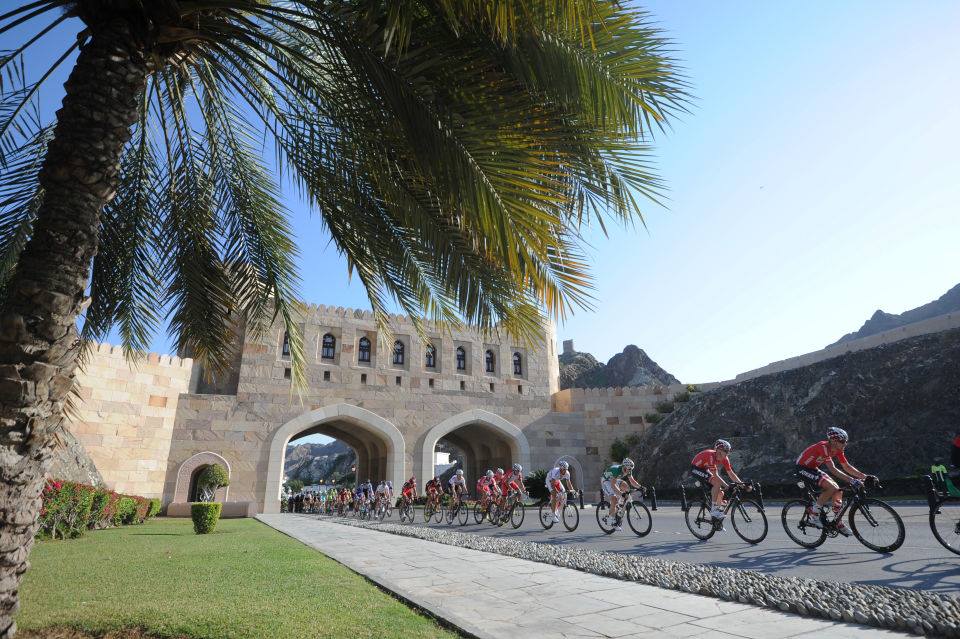
The peloton at the 2014 Tour of Oman (ASO)

On the other hand, Vincenzo Nibali, Thibaut Pinot and Alejandro Valverde will be at the Tour of Oman, with its decisive Green Mountain stage finish. Nibali and Valverde have already raced the Dubai Tour, with Italian organiser RCS likely to have persuaded the Tour de France champion.

An additional note – races in far flung destinations such as these give sponsors additional exposure. The expansion of the sport in the region also brings the possibility of new sponsors joining the sport, something which is badly needed.

The racing

The lack of hills is something that a lot of fans voice displeasure about. The Dubai Tour and the Tour of Qatar are almost exclusively flat, with only stage three of the Dubai Tour containing hills of any description. Neither race provides any particularly exciting racing before the final kilometres, with the GC usually decided by bonus seconds and, in the case of the Tour of Qatar, the time trial.

Oman is more blessed geographically. The summit finish of Jebel Akhdar (Green Mountain) has been a fixture of the race since 2011 and usually decides the winner, while other stages also include lumps. The hilly finishing circuit on the stage to the Ministry of Housing is another fixture in the race.

A lack of fans at the roadside is another well-worn complaint, with scarcely a soul by the road in Qatar and Dubai. Once again, the Tour of Oman is better off in this regard, but of course doesn’t compare to equivalent races in Europe and the Americas.

Fans at the roadside during the 2015 Dubai Tour (RCS)
Fans at the roadside in Dubai (RCS)

Why do they want cycling?

Put simply, the races are a chance to show off their countries to the world. Qatar also wants to prove itself to the IOC – the head of the Qatari Cycling Federation Sheikh Khalid Bin Ali Al Thani has said ”We must test every discipline to show it can performed with success in Qatar.”

The Gulf states have also made their presence felt in other sports – football being a prime example with the fortunes of Paris Saint-Germain and Manchester City having been transformed under the ownership of the Qatari state and the Abu Dhabi Royal Family respectively.

Qatar will host the World Cup, after FIFA awarded the event to country under some rather shady circumstances. Another sport majorly involved with the region is Formula 1, which runs races in Bahrain and the UAE and is likely to add a race in Qatar soon.

Such moves have seen some level charges of reputation laundering against these Gulf States, with the organisation Human Rights Watch criticising the UAE’s human rights record. The organisation claimed that the purchase of Man City enabled the state to ”construct a public relations image of a progressive, dynamic Gulf state, which deflects attention from what is really going on in the country.”

Sharia law is administered in Qatar and the UAE with Oman the only country that doesn’t punish lawbreakers with amputations, stoning and flogging. However, all three have been criticised for their human rights records, including the use of forced labour.

Dubai Tour 2015
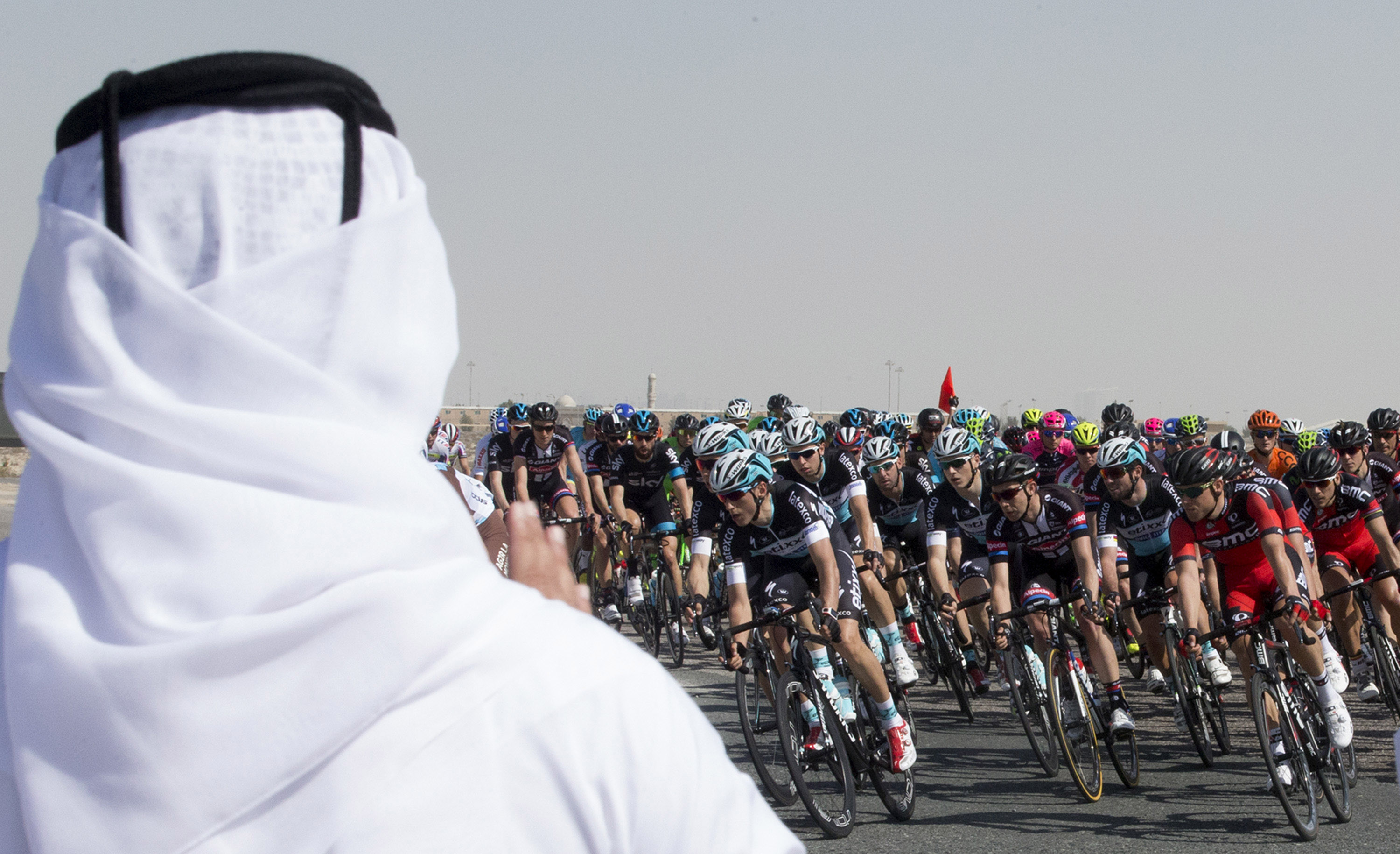
A fan watches the riders pass in Dubai (RCS)

Issues like these have rarely been brought up in the cycling world. Indeed, the main objections to the upcoming 2016 World Championships in Qatar seem to be about the course and how few spectators will turn up. Compare and contrast to the football world’s reaction to the awarding of the World Cup to the country. In any case, with three races established on the calendar and one more coming it seems the time for protest is long gone.

The future

This October will see the first running of the Abu Dhabi Tour. It’ll last for four days and comes at the very end of the season, with the final day coinciding with Paris-Tours. The quality of field we will see is still unknown but going by the other races it is likely that we will see some big names ending their season in the sun.

Whether RCS can persuade riders to forgo the Sprinter’s Classic, a race which has already lost some of the prestige it once had, and race in the UAE is another matter.

Joining the WorldTour is an aim that the organisers of the Dubai Tour are working towards. The chairman of the organising committee, Saeed Hareb, said a few days ago that 2017 is the aim, and also that they would like to expand to up to ten or twelve stages.

A ten-day stage race without any hills doesn’t sound particularly enticing, but moving the 2.HC-rated race up to the WorldTour would be welcome, as that would ensure a filling of the month-long gap between the Tour Down Under and Paris-Nice.

Tour of Qatar co-owner and course designer Eddy Merckx at the 2016 World Championships route unveiling
Tour of Qatar co-owner Eddy Merckx at the 2016 World Championships route unveiling

The big event to look forward to is the 2016 World Championships, which will be held in Qatar. It will be held later than usual (9-16th October), when the weather is somewhat cooler.

The Eddy Merckx-designed route was unveiled last week – it’s flat and will consist of an 80km loop through the desert before ending with circuits in Doha city centre. A kilometre of cobbles feature along the way, before the race ends on a 2km long straight.

Conclusion

Sport is globalising and cycling is no exception. While the Chinese experiment might have been a failure, racing in the Gulf states looks like it’s here to stay. There will always be debate about how interesting the action is, and much-loved European races will inevitably fall by the wayside while races with better organisation and more money prosper.

The addition of new races to the calendar is hard to complain about though, and we can only hope that they attract more attention to the sport and in turn more sponsorship.

The rebuilds

Cofidis 2015 (equipe-cofidis.com)

Rebuild is not a word we hear often in cycling. The system of riders only leaving a team once their contract expires does not lend itself to teams being able to make wholesale changes and revamp their squad, unlike sports such as football. However, this season we will see two teams who have been totally made-over during the winter.

The ProContinental outfits Cofidis and MTN-Qhubeka are the teams in question. Here’s a look at what they’ve done and what we can expect from them in 2015.

Cofidis

The French squad have spent big (around €1.7m) to bring in star sprinter Nacer Bouhanni from FDJ. The ex-boxer publicly fell-out with FDJ team manager Marc Madiot last season when Arnaud Démare was picked for the Tour de France instead of him. He has dropped down a level for 2015 but now has a team built around him and him alone.

A string of capable leadout riders have signed on for the ride, with Dominique Rollin returning to the sport after a fruitless contract search in 2013 saw him sit out last season. Swedish leadout man Jonas Ahlstrand joins from Giant-Shimano while Geoffrey Soupe has followed Bouhanni from FDJ.

The train in training (@TeamCofidis)

The team showed off this train in a series of tweets two days ago – Lemoine-Rollin-Ahlstrand-Petit-Soupe-Bouhanni will be the order. Cofidis may have put all their eggs in one basket, but it is a very good basket with Bouhanni certainly possessing the ability to challenge for Tour stages, as well as racking up wins elsewhere.

Back to the signings and Belgians Michael Van Staeyen and Kenneth Van Bilsen have joined from Topsport – the pair are useful classics men. So too is Steve Chainel who has also joined the team and will be the leader for the cobbled season. The 31 year-old will also be a valuable tutor for promising youngster Florian Senechal.

The list of outgoing names include well-known riders such as Rein Taaramäe, Christophe Le Mével and Jérôme Coppel. Le Mével has retired while the underperforming Taaramäe and Coppel have moved on to Astana and IAM repectively. Dani Navarro looks to be the only GC man remaining, and it wouldn’t be a surprise to see him take a Grand Tour stage win or sneak into the Vuelta top ten once again.

Navarro also tasted success at the Vuelta (Cor Vos)


MTN-Qhubeka

The African squad have also focused on sprinters in the off-season. The team, run since mid-2014 by Brian Smith, have big ambitions and have brought in a number of high profile riders. First up a look at their three pure sprinters – Theo Bos (Belkin), Matt Goss (Orica-GreenEdge) and Tyler Farrar (Garmin-Sharp).

The latter duo haven’t exactly been notable for prolific win rates in recent years – Goss hasn’t stood on the top step of a podium since Tirreno-Adriatico in 2013, while Farrar’s stage at the Tour of Beijing was his first WorldTour level victory since 2011. Bos on the other hand, racked up eight wins last season, including a stage of the Tour de Pologne.

MTN-Qhubeka will be hoping for more of this in 2015 (©Tour de Pologne)

The biggest name to join the project is Edvald Boasson Hagen, from Sky. A hot prospect in his early years as a pro, he has never really fulfilled the potential he showed with his win at Gent-Wevelgen back in 2009. He will be aiming for the cobbles again, with the team invited to the Ronde van Vlaanderen and Paris-Roubaix thanks to his signing.

Steve Cummings, Matt Brammeier and Serge Pauwels are the three other new faces at MTN in 2015. They are all good workers, with Cummings and Brammeier strong in the TT and Pauwels a decent climber. Ex-BMC rider Cummings has already won his first race in his new colours – yesterday’s Trofeo Andratx, part of the Challenge Mallorca.

The team’s strategy has been to invest in a group of riders who are big enough in name to get them invites to the big races. The first part of the gamble has worked with the team able to ride wherever they please (Sanremo, Tirreno, Ronde, Roubaix, Dauphiné and the Tour) without having to pay the UCI for a WorldTour license. Whether they can enact part two and deliver victories at that level is another question entirely.

In Mallorca (teammtnqhubeka.com)


Conclusion

Cofidis and MTN-Qhubeka have invested in fastmen for 2015 but both in very different ways. It is, however, a lot easier to picture the Cofidis train delivering Bouhanni to victory in July as opposed to one of the disparate group of good-but-not-good-enough sprinters MTN have assembled. Put bluntly, Farrar, Bos and Goss simply aren’t fast enough to beat the top sprinters like Cavendish or Kittel. Their recruitment strategy was a big risk and I have my doubt about whether it will pay off.

Lack of a plan b seems to be the main risk involved in Bouhanni’s addition, while another question to ponder is how long will it take the team to perfect the art of the leadout? They have five months before the biggest challenge of their season in the form of the Giant-Alpecin train, and management will be expecting Bouhanni & co to be up to speed.

A final question that has to be raised about MTN’s additions is regarding the team’s policy of promoting African cyclists. You could almost fill up a Tour squad with the new arrivals, and we have to hope that the team doesn’t ignore talents like Merhawi Kudus, Daniel Teklehaimanot and Natnael Berhane in the pursuit of glory with their big-name signings.

Future Stars: Mike Teunissen

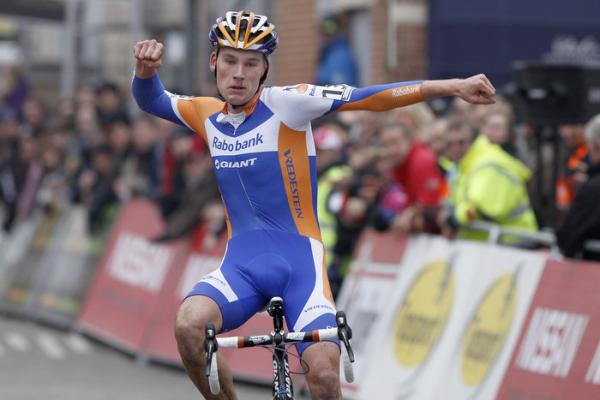
Winning Superprestige Zonhoven 2013-14 in the rainbow jersey (Cor Vos)

The first future star of 2015 is Dutchman Mike Teunissen, a new signing at Team LottoNL – Jumbo. A convert from cyclocross, the 22 year-old is forgoing the cross season for the first time this season as he looks to concentrate purely on the road.

His first team as a junior was the Jagersveld-Merida team (now OrangeBabies). In the 09-10 cross season he was consistent in the Superprestige, racking up three 2nd places as well as a win at Diegem before finishing third in the national championships. Those results, as well as a fourth place in the junior version of Omloop Het Nieuwsblad saw Rabobank-Giant come calling, and the 2010-11 season was his first in the setup that brought him to where he is now.

Winning in Superprestige Hamme-Zogge 2011-12 (ispaphoto)
Winning at Superprestige Hamme-Zogge 2011-12 (ispaphoto)

Second place finishes at the National Championships and the Worlds were the highlights of his second season at junior level. Lars Van Der Haar was the winner on both occasions – he moves up to Giant-Alpecin for 2015. The 2011-12 season saw him narrowly miss out at the European Championships in Lucca, Italy to Van Der Haar, while his compatriot also nabbed the Superprestige title away from him. Despite two wins and three podium places, Teunissen’s twelfth place in the final round at Middelkerke saw him finish as the runner-up in the overall ranking.

The highlight of his time on the road in 2012 was an eighth place in Paris-Roubaix espoirs (the edition which Bob Jungels won), while fifth on GC at the Triptyque Ardennais stage race was another strong result. Teunissen hit the big time in the 2012-13 cross season, as he won the European Championship in Ipswich before taking the big one – the Worlds in Louisville. That season also saw two wins in the Superprestige as well as his first win in the UCI World Cup at Tabor.

U23 World Cyclocross champion in 2012-13 (W.Matthews)
U23 World Cyclocross champion in 20113 (W.Matthews)

While he hit his peak of his cross career, Teunissen’s results on the road were improving too. 2013 saw him finish runner-up to Dylan Van Baarle in the National Championships, while top ten finishes at the Tour des Fjords and Omloop Het Nieuwsblad Espoirs were additional strong performances. His first win in a UCI-classified race came in September at the 1.2 ranked Baronie Breda Classic.

It was back to cyclocross for one last time (so far) last winter. The highpoint of the season was a win at Zonhoven in the World Cup, as young guns Mathieu Van Der Poel and Wout Van Aert made their presence felt (the pair have now stepped up to the senior cyclocross calendar and are winning there too). Teunissen’s intentions would become clear as soon as the road season started though..

Last season was the clearest insight yet into the potential of the Dutchman. Fifth place at the U23 version of the Ronde Van Vlaanderen was followed up in June by a dominating performance at Paris-Roubaix Espoirs. After breaking away from the main field along with teammate Ricardo Van Dongen and BMC Development riders Tyler Williams and Bas Tietema, Teunissen simply rode away on the Carrefour de l’Arbre, riding over the line 1:15 ahead of anyone else.

A week later, he finished in third place at the 2.1 ranked stage race Boucles de Mayenne. Later in the month a strong showing saw him finish second at the U23 TT National Championships – it was a signal of what to expect in the final weeks of the season. He doubled up at the Baronie Breda Classic before ending his U23 career with victory at Paris-Tours Espoirs after he and two teammates attacked over 30km from the line.

Teunissen led Rabobank dominance at Paris-Tours Espoirs 2014 (ASO)

It all points to a bright future for the Limburg native. In an interview last August he said that his sights are set on trying the larger Spring Classics, saying “I would gain experience by working for the leaders.” Not every rider can burst onto the scene like Tom Boonen, and Teunissen is aware of that, though he wants to leave an impression in his first pro season “I don’t want to shout from the rooftops that I will be going for wins, but I will try to show as much as possible.”

His cyclocross career isn’t over though, just put on hold – “I won’t stop permanently. It’s not possible to do a full program and then peak at the end of March for the Spring Classics.” He certainly has every chance to succeed as part of the new guard of riders at LottoNL-Jumbo such as Moreno Hofland, Wilco Kelderman and Sep Vanmarcke. The Belgian, one of the world’s best cobbled riders, will be a valuable teammate for Teunissen as he looks to learn how to compete at the highest stage of all.

Follow Mike on Twitter, look at his personal site, or read this Lotto-Jumbo Q&A with him.

On Zorzoli

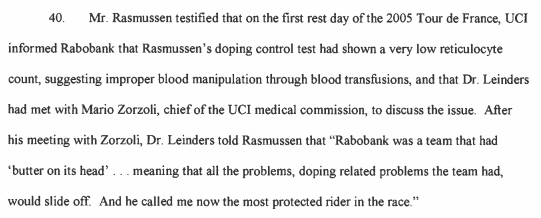
Dr Mario Zorzoli (UCI) After the three-year investigation into him drew to a close on Thursday, ex-Rabobank and Sky doctor has been banned from the sport for life by USADA as well as the Danish and Dutch anti-doping authorities. USADA were obligated to investigate the Belgian after he was named by Levi Leipheimer during testimony for the US Postal investigation back in 2012. Michael Rasmussen was the other big name involved with the investigation. His testimony (you can view the full USADA report here) implicated teammate Michael Boogerd, now a manager at the new Roompot team, as well as bringing back memories of Stefan Matschiner and the Human Plasma Clinic in Freiburg. However, the most interesting name to crop up was that of Dr Mario Zorzoli, the UCI’s Chief Medical Officer for well over a decade. He has been suspended by cycling’s governing body after being mentioned twice by Rasmussen in testimony, as well as that of Steven Teitler, head of legal affairs at the Dutch anti-doping authority. rastest 40 rastest 44 steven teitler test 67 USADA have passed information from this case to the UCI and CIRC (Cycling Independent Reform Commission), with the UCI due to investigate the doctor. The UCI hasn’t been immune to this sort of thing in the past, with former Presidents Hein Verbruggen and Pat McQuaid accused of at best ‘warning’ riders about doping tests and results, and at worst protecting them. However, this is the first time that a senior UCI member is under investigation for such an impropriety. But wait, there’s more. Zorzoli has been in the headlines before, on quite a few occasions actually. Here’s a look back at the storied career of the UCI’s (possibly soon to be ex) Chief Medical Officer.

Sending warning letters to riders

The UCI has been known in the past to send letters of warning to teams and riders should their test results return suspicious values. Rasmussen and Teitler have said as much with regards to Zorzoli, and we all know about incidents such as the 2001 Tour de Suisse. In 2004, Tyler Hamilton received a letter informing him that during the Tour de Romandie he returned abnormal blood values and that the UCI would be monitoring him more closely in future.

The L’Equipe/Armstrong affair

In 2006, Zorzoli was outed as the man who leaked evidence to L’Equipe journalist which helped the newspaper link Lance Armstrong to the 1999 EPO test positives. He apparently believed that there was no way for the documents he provided to be traced back to Armstrong, and that by providing them he would help the journalist write an article “proving that Mr Armstrong never asked for an authorisation to use any drugs after he successfully fought his cancer.”

Zorzoli was suspended pending an investigation before being reinstated less than a month later without comment. Looking back, the leaking had inadvertently turned out to be a positive move, though the ‘independent’ report by Emile Vrijman was a weak attempt to undo that.

Fuentes connection

A 2007 article in Spanish newspaper ABC detailed what infamous doctor Eufemiano Fuentes had in his possession at the time of his arrest. Along with a hotel card with rider nicknames, multiple phones and credit cards and some swiss francs (the UCI is based there) was Mario Zorzoli’s business card. Quite why one of the most notorious doping doctors in the sport would have the phone number of the UCI’s Chief Medical Officer is anybody’s guess, and seems to have been largely forgotten.

Gianetti friendship

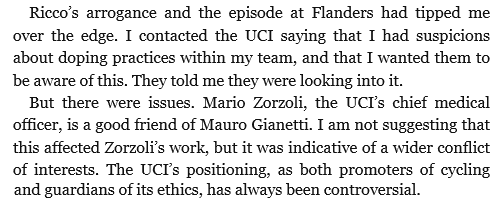
Another questionable relationship was brought up in David Millar’s book Racing Through The Dark. In 2007 Millar returned from his doping ban with the Spanish Saunier Duval squad, managed by ex-rider Mauro Gianetti, he of perfluorocarbon fame. Shortly after leaving Saunier Duval as PR manager, Stéphane Heulot said this ”Doping is so ingrained in certain managers, like Gianetti, that they can’t conceive of cycling any other way” but here’s what Millar had to say about him. gianetti-zorzoli

More favours

Further allegations of cosiness with team staff came from Michele Ferrari in 2012. He writes about an incident in 2010 at a Tenerife training camp in which a team doctor was able to phone Zorzoli to arrange the wiping of test results. The effects of altitude distorting blood values was thought to be too much of an inconvenience to the team, and so it was done.

Froome’s TUE

Finally, we come to 2014 and the previous controversy to befall Dr Mario, in which a TUE for Chris Froome was ‘fast-tracked’ and granted by Zorzoli alone, rather than a three-person TUE committee as demanded by the WADA Code. The UCI refused to confirm whether such a setup was in place, but according to its updated TUE regulations, a committee is now in place.

So, not great then. With the good doctor suspended once again, we should all be hoping that this time it will be made permanent. If the UCI’s plans to centralise anti-doping judgements in 2015, doing away with the inconsistent rulings and favouritism we see from national federations, Zorzoli cannot be there. A relic from the McQuaid era, with a record of favourable treatment and dodgy connections, is not someone we need at the UCI in 2015. MPCC Twitter

Future Stars: Dylan Teuns

Dylan Teuns at the 2014 Tour de Bretagne
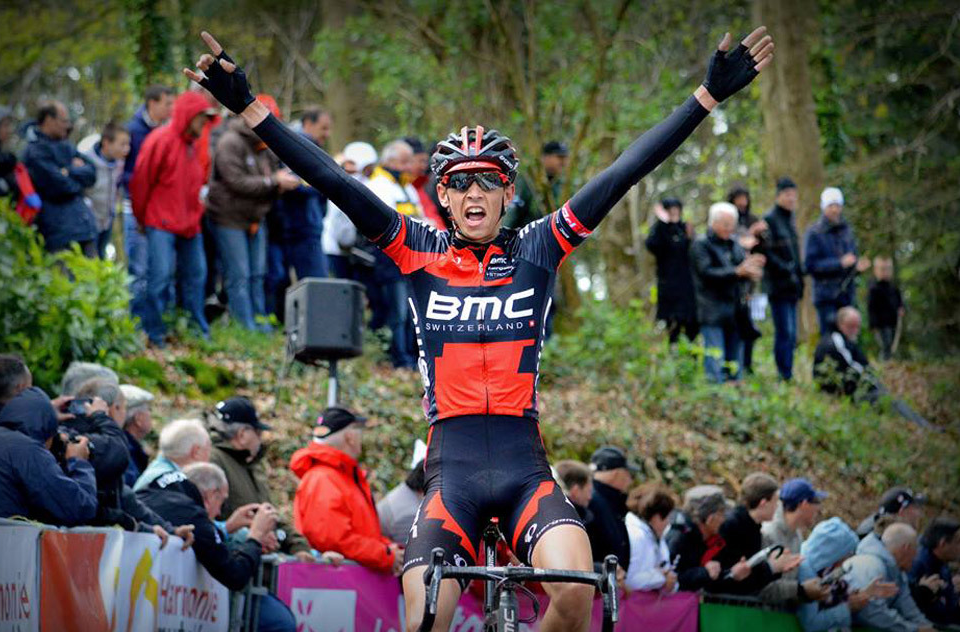
Dylan Teuns wins at the 2014 Tour de Bretagne

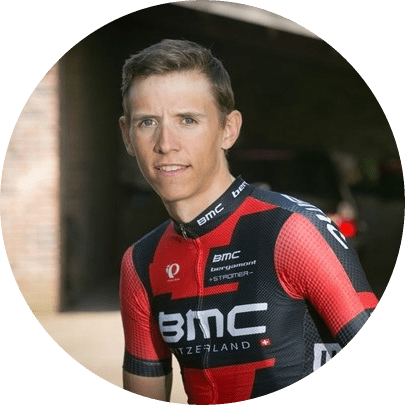
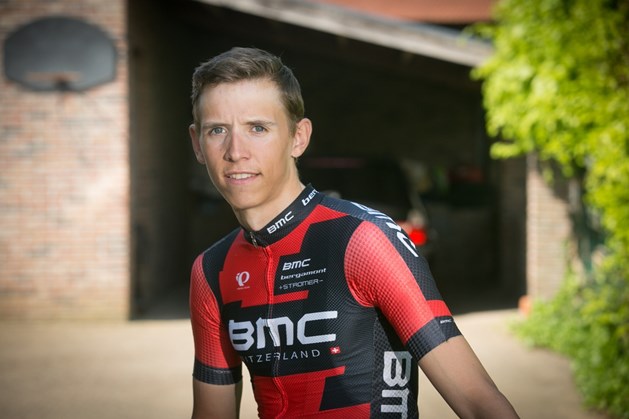
It’s the second in the series and another Belgian – BMC staigiare Dylan Teuns. He has already signed a contract with the team, which will have a more youth-oriented feel next year as Joey Rosskopf, Manuel Senni, Campbell Flakemore and Stefan Küng join the likes of Rick Zabel and Rohan Dennis on the roster.

Teuns will ride for BMC next season (K.Hemerijckx)

22 year-old Teuns hails from Diest in the Flemish Brabant, not too far from the hilly region of Limburg. Indeed the hills have been his favoured terrain thus far in his career, though he has had some strong results on the cobbles too. As a junior he raced for Avia, a team affiliated with Omega Pharma – QuickStep. In his two years there he showed his talent in the northern classics, beating the Yates brothers to take sixth place at the Junior Ronde Van Vlaanderen in 2009 and winning Omloop Het Nieuwsblad Juniors the following year.

2011 saw Teuns move up to the Continental Jong Vlaanderen – Bauknecht team. It was a tough first year, with no racing before April and no major results to speak of. Things improved season-by-season though – the following year he took fourth overall at the Ronde de l’Isard, an important race on the espoirs scene. He also raced the Tour de l’Avenir as well as getting a taste of the action alongside top pros at the Belgian Championships and Paris-Bruxelles.

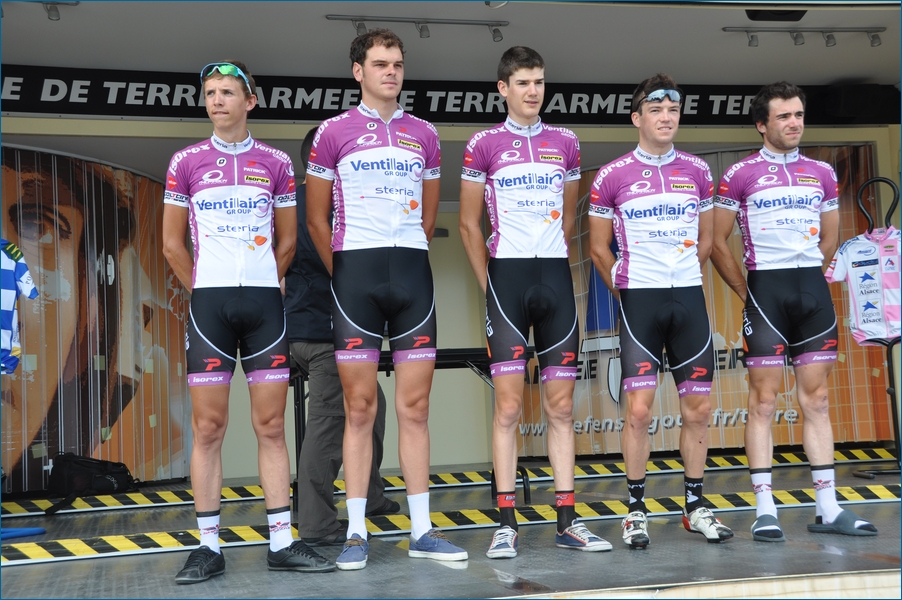
Teuns (left) during his final year at Jong Vlaanderen/Ventilair-Steria

The next edition of the Ronde de l’Isard saw another consistent performance from Teuns – finishing in the top ten every day and ending up third overall. Fifth place in Liège – Bastogne – Liège Espoirs was another highlight of 2013 as he confirmed his talent for racing in the hills. A stage win at the Triptyque Ardennais backed this up.

I know what you’re thinking – he seems a good prospect but a future star? I’d be inclined to agree but his performances in 2014 have been much improved. After three years at Jong Vlaanderen he moved to BMC’s Development Team at the start of this season. At Liège – Bastogne – Liège Espoirs he was narrowly outsprinted by Anthony Turgis in the velodrome (yes, it finishes on a velodrome). Winning the senior version of the race is his dream, and he certainly seems to have the characteristics to suit.

Later in the month, Teuns grabbed his first win of 2014 at the hilltop finish of stage three of the Tour de Bretagne. He finished second overall on GC after a consistent performance. Teuns’ next big result came in Belgium in July, where he lost out in a two-man sprint for the win at Omloop Het Nieuwsblad Beloften.

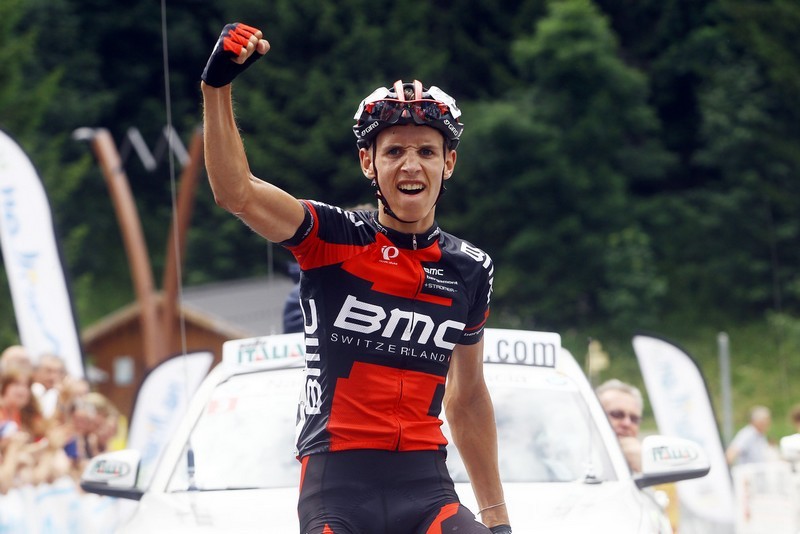
Dylan Teuns wins from the break (girovalledaosta.it)
Celebrating a stage win at the 2014 Giro della Valle d’Aosta (girovalledaosta.it)

His last race before joining BMC’s senior team as a stagiaire was the Giro della Valle d’Osta. Stage 3 saw him solo away from his breakmates with 20km remaining to take the win on the undulating stage to Morillon. The Tour of Utah was his first race as part of the senior squad – he wasn’t eyecatching but took the young riders jersey nonetheless.

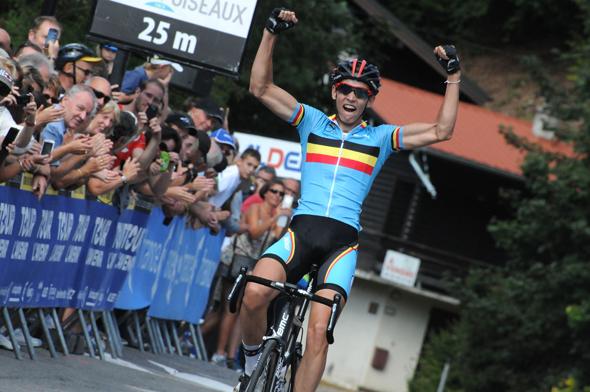
Soon after he took a win at the Tour de l’Avenir. On the summit finish of Carroz d’Arâches he attacked the peloton with 2km remaining and held them all off for his third victory of the season, and his first in the famous Belgian colours.

Teuns wins at the Tour de l'Avenir
Teuns wins at the 2014 Tour de l’Avenir

It was back to BMC in September and off to the Tour of Britain, a race he had a lot of praise for when I spoke to him on the final day. He was in contention for the podium until the stages in London, where he dropped down to tenth overall in the time trial. A highlight of the race was third place on the hilly finish in Bristol.

Sixth at the GP Wallonie followed (teammate Greg Van Avermaet was the winner), and he participated in the U23 World Championship Road Race for the first time. Teuns ended the season on a strong note, taking second at the Piccolo Giro di Lombardia and on the attack from the chasing group in the finale of Paris-Tours.

BMC looks like a good place for Teuns to go next season. With a new group of younger riders at the team and some veterans leaving there should be a good deal of chances for him and others to prove themselves in the WorldTour. Some of the best puncheurs in the sport (Gilbert, Van Avermaet) are already at the team and they seem like ideal mentors for him. If Van Avermaet can help Teuns out with his sprint then he could make a formidable package in hills in years to come.

.

Follow Dylan on Twitter.
What the Russians left behind

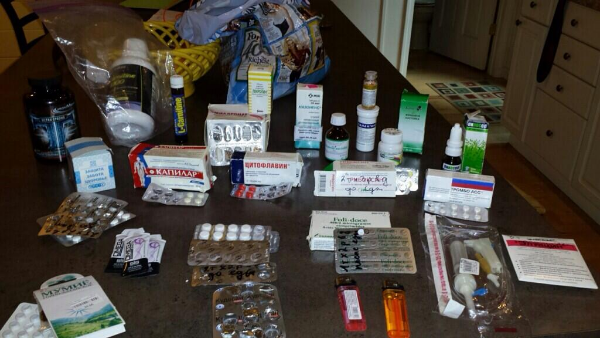
what the russians left behind

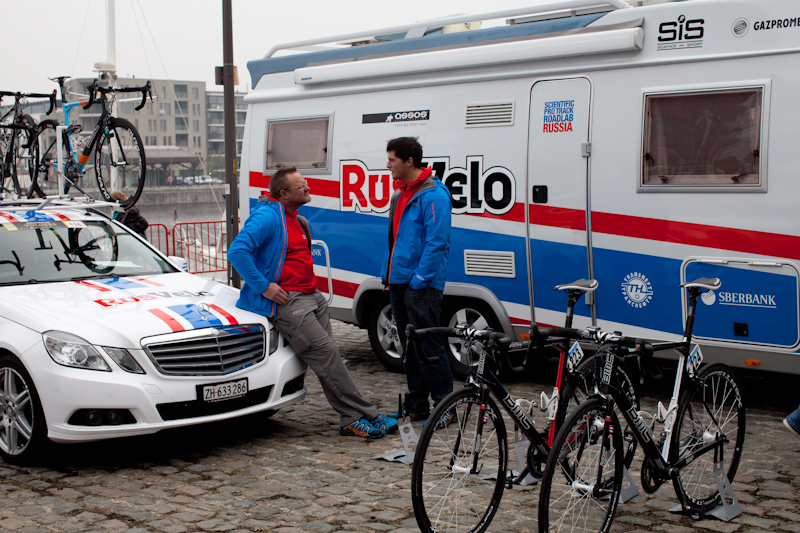
This is an incident that has flown under the radar somewhat – towards the end of July, two riders from the Russian ProContinental team Rusvelo flew over to the United States to participate in the Prairie State Cycling Series (part of the National Criterium Calendar). A few days ago, a photo of what they left in the bins of their host family was posted to the internet.  Continue reading “What the Russians left behind”